
Facial harmonization plan after age 60: priorities

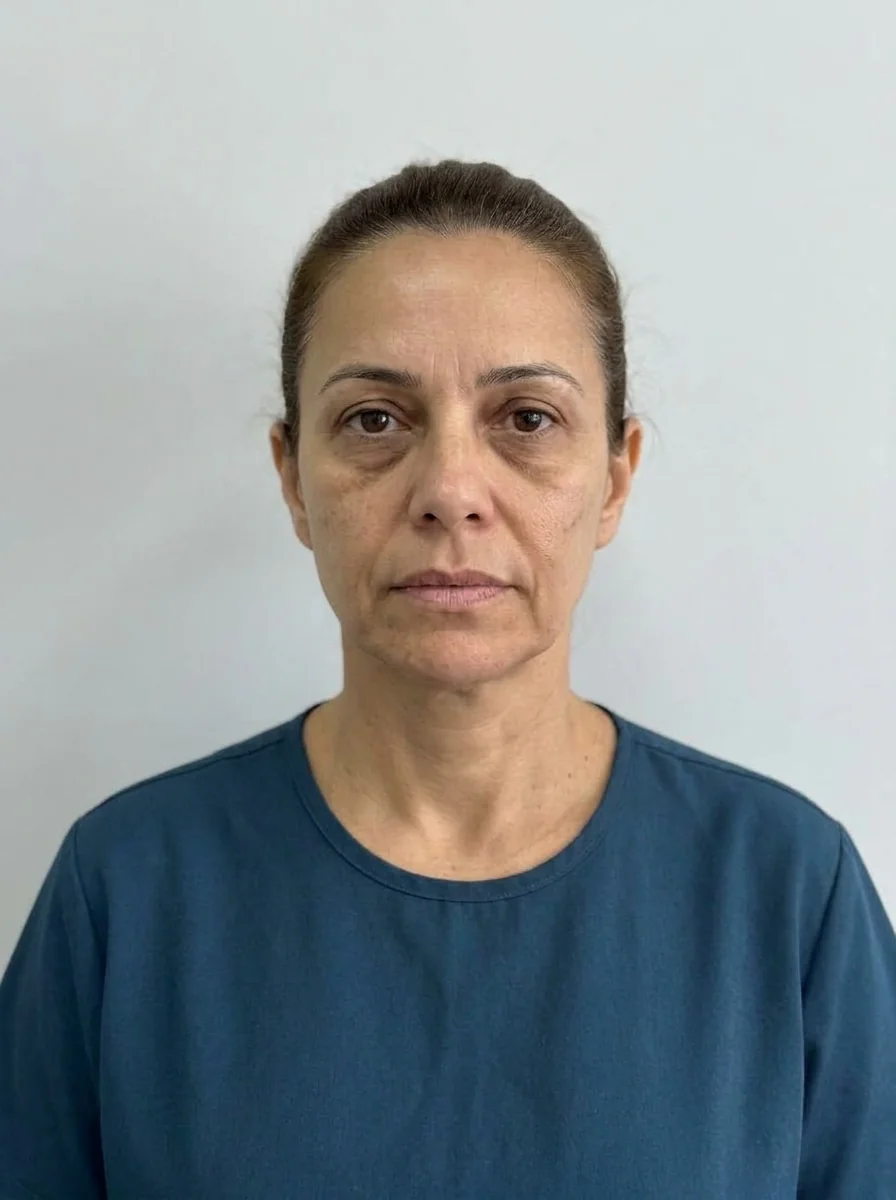 BeforeSimulation
Quick facts
- Focus
- Support, skin quality and a rested look, with restrained volumes
- Safety
- Medical history, medications (anticoagulants) and healing reviewed
- Usual strategy
- Short stages, reassessment and a preference for fewer areas
- Expectation
- A better rested appearance, with no promise of rejuvenation
After 60, the face goes through changes that combine volume loss, bone resorption, laxity and skin changes. Patients at this age almost never want to "look young": they usually want to look rested, firmer, and keep their identity. A facial harmonization plan at this age is therefore more about judgment than about quantity.
What changes in the assessment?
In general, the assessment puts more weight on three axes:
- Structure. Loss of bone support and fat compartments redistributes the face. See facial skeleton before injecting and facial analysis at age 60 or older.
- Skin. Thinner, less elastic, with different healing. See skin thickness in planning.
- General health. Chronic conditions and medications influence risk and management.
Patients over 70 are a topic of their own in patients 70+ in facial harmonization, and communication in older patients in harmonization.
What are the usual priorities?
There is no single list, but reasoning in order tends to work:
| Priority | Question | Options under discussion |
|---|---|---|
| 1. Safety | Can the patient safely have it done? | History, medications, comorbidities |
| 2. Skin quality | Does the skin support the result? | Stimulation strategies, at the professional's discretion |
| 3. Support | Is the midface and temple support lacking? | Restrained volumization of structural areas |
| 4. Contour | Has the jawline lost definition? | Targeted reinforcement, without overdoing it |
| 5. Details | Do the lips and folds bother them? | Moderation and proportion |
This reflects the idea of structure before detail: correcting folds and lips without structural support tends to look heavy. Skin and tissue quality may call for strategies other than filler, such as a collagen biostimulator, decided by the professional.
How do you avoid a "pulled" or heavy face?
Two practical precautions help a lot:
- Work on support, not on filling the wrinkle. Filling folds without treating the support tends to weigh down the lower face.
- Respect expression. A mature face has a history; erasing every mark leads to an artificial look. The request for a natural look carries more weight, as in natural-effect plan.
Also think about what is not a problem: not every line needs treatment. Prioritize what bothers the patient and what changes the overall impression.
How does the simulation fit in?
The simulation helps show the patient a restrained version and helps you decide whether the midface is the key point. However, mature skin has texture and folds that a 2D image does not reproduce faithfully. Treat the image as a direction, not a prediction.
If the patient has trouble seeing, presentation mode and the magnifier, which enlarges only the treated area, help the conversation. See presenting the treated area with the magnifier. Photo precautions for mature skin are in facial analysis at age 60 or older.

How do you plan the pace?
Patients over 60 usually benefit from short stages, with time for settling and reassessment. This also helps with swelling and bruising, which can last longer. Structures such as facial harmonization plan in three sessions are useful, and the interval between them is in interval between sessions.
What else deserves attention?
Some safety points deserve a reminder: hyaluronidase should be available with hyaluronic acid; high vascular risk areas (temples, nasolabial fold) call for extra attention; and the patient needs to understand the risks and recovery time. See safety and complications: overview. The emotional context also counts: the wish to "go back to how I was" deserves a conversation, as in patient who wants to go back to how they were.
What myths get in the way of planning at this age?
Two myths are common. The first is thinking "it is too late now", as if a mature face could not benefit from any care. The second is the opposite: thinking more product fixes everything. Both do the patient a disservice. The middle path is a restrained plan with clear goals and follow-up.
How do you adapt the consultation for an older patient?
Set aside more time, speak clearly and confirm understanding. If the patient uses glasses or a hearing aid, adjust the room so they can see and hear the simulation and instructions well. Give the instructions in writing, in legible print, and, if the patient agrees, include a family member in the conversation.
What about follow-up after the session?
Mature skin may take longer to recover from swelling and bruising. Arrange contact in the first few days and explain the warning signs clearly: disproportionate pain, color change, visual change, heat or discharge call for immediate contact. An easy channel to reach you is worth more than any leaflet. See 24-hour message after the procedure.
Practical summary
After 60, prioritize safety, skin quality and support, with restrained volumes and stages. Review medications, adapt the consultation, use the simulation as a direction and align expectations around a rested, firmer look, without promising rejuvenation.
Documenting the plan and expectations after 60
Note the medications in use, the health conditions that changed the plan, the pace chosen and what the patient understood about a rested, firmer look. Photograph under standardized conditions to compare at follow-up, remembering that thinner skin tends to make the interval between sessions more evident. Also record what was postponed out of caution. The simulation is illustrative and does not predict rejuvenation, and management is up to the qualified professional, after an in-person assessment and according to their professional board.
Frequently asked questions
Is facial harmonization possible after age 60?
Generally yes, as long as there is an individual assessment, adequate health and realistic expectations. The plan tends to be more restrained and the medical history weighs more.
Which areas are usually prioritized after 60?
It depends on the patient. The midface, temples and jawline are often discussed because of volume and support loss, at the professional's discretion after assessment.
Do medications taken continuously change the plan?
They can. Anticoagulants and antiplatelet drugs, for example, increase the risk of bruising. The professional decides how to proceed, and the patient's physician should be consulted when needed.
Does the simulation work on mature skin?
It works as an illustration of a direction. Mature skin has texture and folds that the image does not reproduce faithfully, so it serves to align expectations, not to predict.
Harmy images are illustrative simulations generated by AI from the patient's photo to support the conversation between practitioner and patient. They are not a promise of results. Indication, technique, product and volume are solely the decision of the licensed practitioner. This content is for information only and does not replace a clinical assessment.