
Thin or thick skin: how it changes the HOF treatment plan

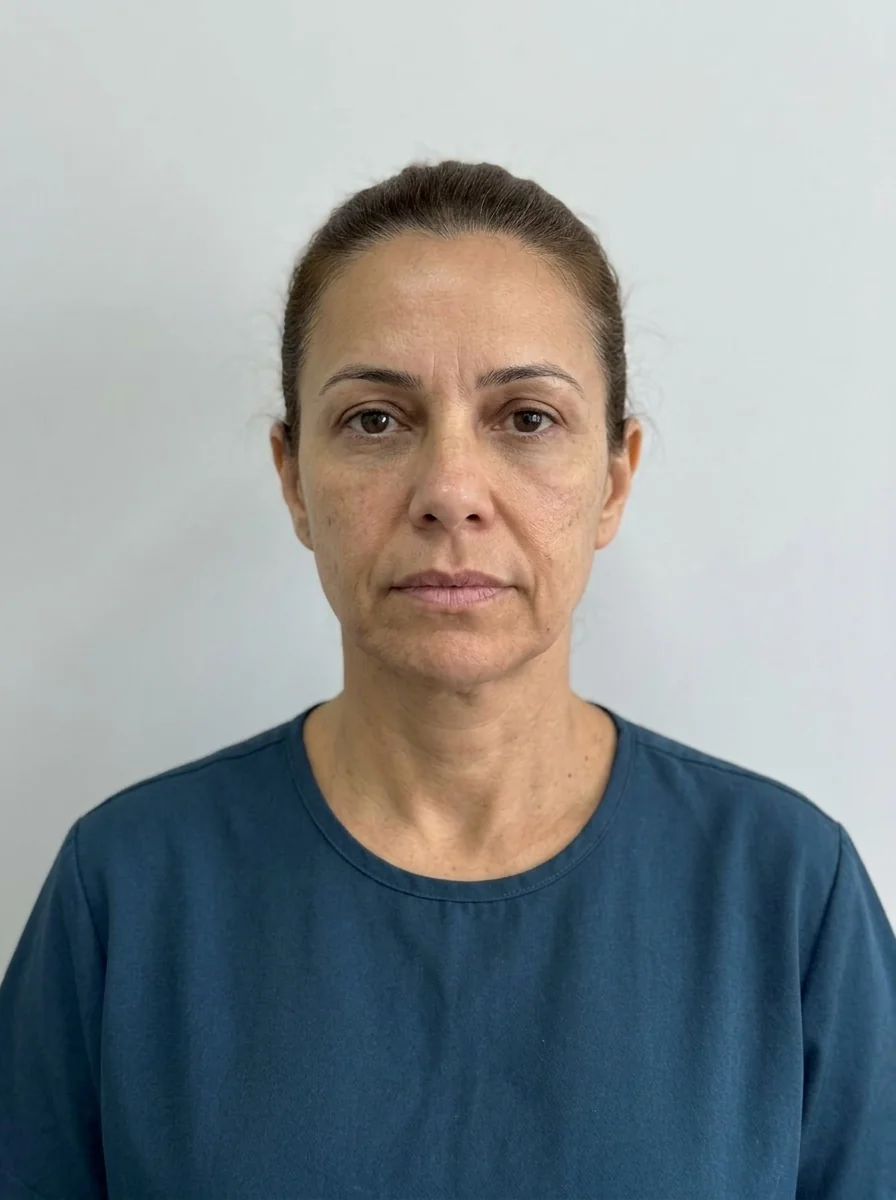 BeforeSimulation
Quick facts
- Topic
- Skin thickness and the plan
- Thin skin
- More translucency and a risk that the product shows
- Thick skin
- More resistance to visible projection and less transparency
- Caution
- Assess area by area, not just the face
Skin is not one thing. The skin of the lower eyelid is a fraction as thick as the skin of the cheek or chin, and thickness varies with age, sex, skin phototype, sun exposure and habits. Ignoring this is one way to plan the same volume for two patients and expect the same effect. Skin thickness should enter the plan as a variable, with an impact on the area, the product, the amount and the expectation.
What changes with thin skin?
Thin skin has less "coverage" over what lies beneath. Common effects:
- Translucency. What is under the skin shows more, including vessels, muscle and product.
- Tyndall effect. Superficial product in thin skin can give a bluish tint. See Tyndall effect.
- Less tolerance for irregularity. Small unevenness becomes visible.
- More sensitivity to swelling and bruising. The change is more noticeable.
These traits are especially relevant in the under-eye area and lower eyelid, which are high vascular risk areas. See tear troughs: types and assessment.
And what changes with thick skin?
Thicker skin hides irregularities and conceals what lies beneath better, but it may call for a different volume strategy. In some patients, the effect of the same amount may be less visible, which tempts the professional to increase the ml. This is a point of attention: more volume is not an automatic solution. See volume by body type in planning and when total volume becomes excess.
| Trait | Thin skin | Thick skin |
|---|---|---|
| Translucency | High | Low |
| Product visibility | Higher | Lower |
| Tolerance for irregularity | Low | Higher |
| Response to swelling | More visible | Less visible |
| Plan strategy | Caution and conservative volumes | Assess the effect before increasing |
The table is a reasoning guide. Thickness varies between areas of the same face, and the decision belongs to the licensed professional, after assessment.
How do you assess the skin?
Integrating skin care into the plan is covered in skin care integrated into the HOF plan and habits that change the plan.
How does skin change the choice of area and product?
Without getting into technique, three planning principles:
- A thin-skinned area calls for more caution. Smaller volumes, more steps and reassessment.
- The product must suit the area. The choice belongs to the professional, based on the area and the skin.
- Alternatives to volumetric injection. For thin skin with reduced quality, other approaches may be considered. See skin booster for the under-eye area and biostimulator for the under-eye area.
And the skin in the simulation?
Harmy generates the projection from the photo and the marked volumes, and the AI does not retouch the skin. The prompt forbids makeup and retouching, which means the texture and apparent thickness of the skin are not altered. But the app does not measure thickness or predict translucency. So the under-eye projection, for example, shows a soft contour change that does not account for the risk of the product showing in thin skin. It is an illustrative simulation, not a promise of results.
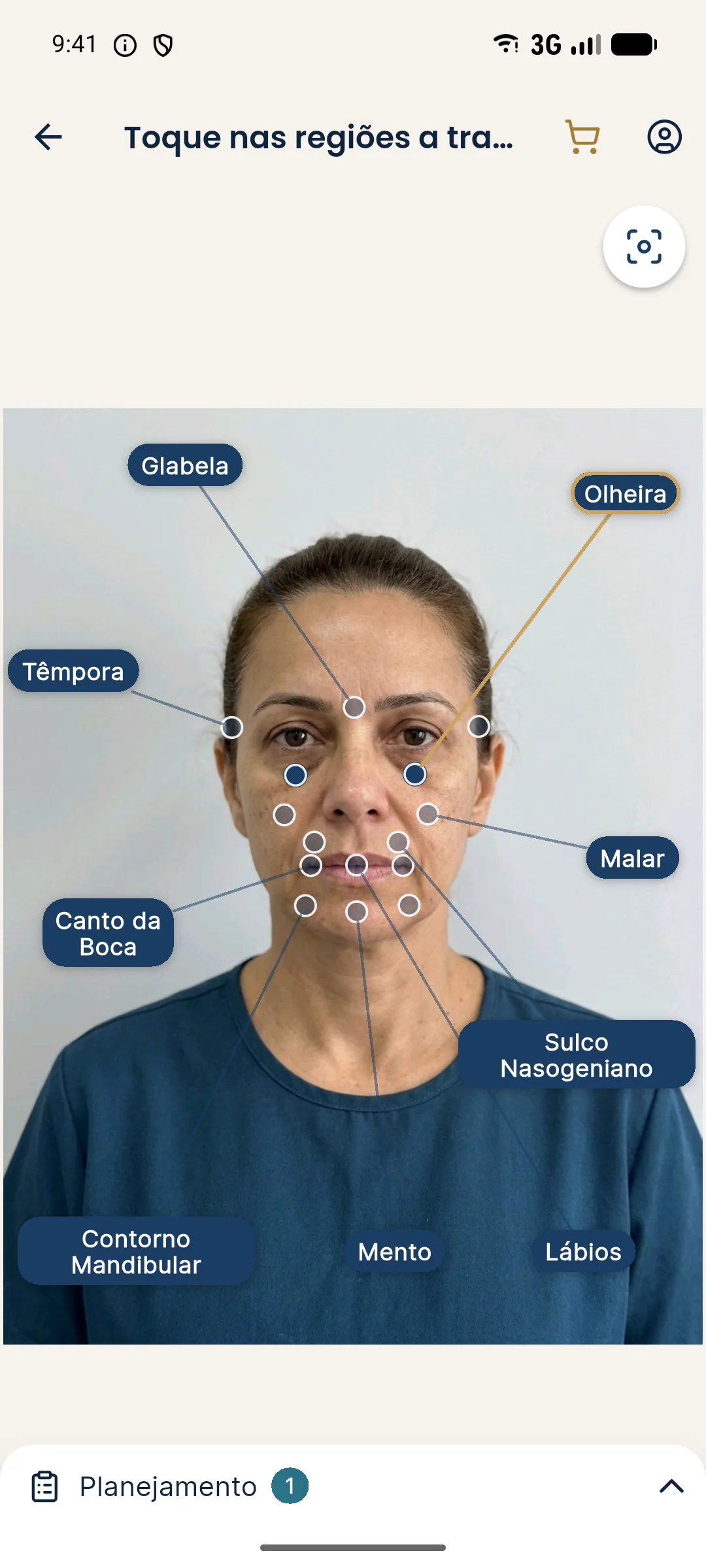
See marking the under-eye area in Harmy and simulation on dark skin and lighting.
How does skin change over time and with habits?
Skin thickness and quality are not fixed. With age, skin tends to thin, lose elasticity and become more translucent. Accumulated sun exposure, smoking and poor hydration speed this up. In women going through menopause, hormonal changes also alter the skin, a topic covered in HOF plan in menopause.
For the plan, this means an assessment made today may not hold in a few years. Skin that took a volume well at 35 may show the product more easily at 50. Periodic reassessment should include the skin, not just the volume.
There are also differences between phototypes. Darker skin has its own characteristics in inflammatory response and pigmentation, and the plan should consider the risk of post-inflammatory hyperpigmentation. See post-inflammatory hyperpigmentation and HOF on Black skin.
A supportive approach is to combine volumetric treatment with skin care and sun protection, guided by the professional. Skin in good condition tolerates treatment better and shows the result better. But remember: advising on skin care is part of the care, not a way to sell products. Keep the recommendation honest and proportionate to the patient's need.
How do you record the skin in the patient record?
Note, by area, the perceived thickness (thin, medium or thick), translucency, the presence of visible vessels, texture and phototype. Photograph with diffuse light and, if possible, with raking light, which reveals irregularities. This record, repeated at each follow-up, shows how the skin is evolving and helps explain to the patient why the plan changed.
Also record the conversation. Tell the patient, in simple words, that the skin around the eyes is thinner, that this influences the choice of product and volume, and that the priority is safety and a natural look. When patients understand the reason, they accept conservative plans and pauses between steps more readily.
Finally, remember that skin thickness is not a reason to refuse or to insist. It is one more variable for deciding carefully. If, after assessment, the risk of the product showing is high and the expected gain is small, the best choice may be not to treat the area at that moment, and to say so clearly, as in when to say no to the aesthetic plan.
Summary
Assess the skin area by area, consider translucency, phototype and habits, and adjust the plan with caution. Thin skin calls for a conservative approach and vascular awareness, and thick skin is not a license for extra volume. The decision belongs to the licensed professional, in line with the rules of their professional council.
Frequently asked questions
Does skin thickness change the filler plan?
It can. Thin skin tends to show the product more easily (translucency and the Tyndall effect), and thick skin may call for a different volume or layer strategy. The decision is individual.
How do you assess skin thickness?
By inspection, palpation and how the skin behaves when pinched, area by area. The skin of the eyelid and under-eye area is different from the skin of the cheek or chin.
Does thin skin call for less volume?
The plan often calls for more caution, with conservative volumes and a careful choice of product, but this depends on the area and on the professional's assessment.
Does Harmy assess the skin?
No. Harmy does not measure skin thickness or quality. The projection is illustrative and does not take these factors into account.
Harmy images are illustrative simulations generated by AI from the patient's photo to support the conversation between practitioner and patient. They are not a promise of results. Indication, technique, product and volume are solely the decision of the licensed practitioner. This content is for information only and does not replace a clinical assessment.