
Facial Harmonization Plan in Menopause: What Changes

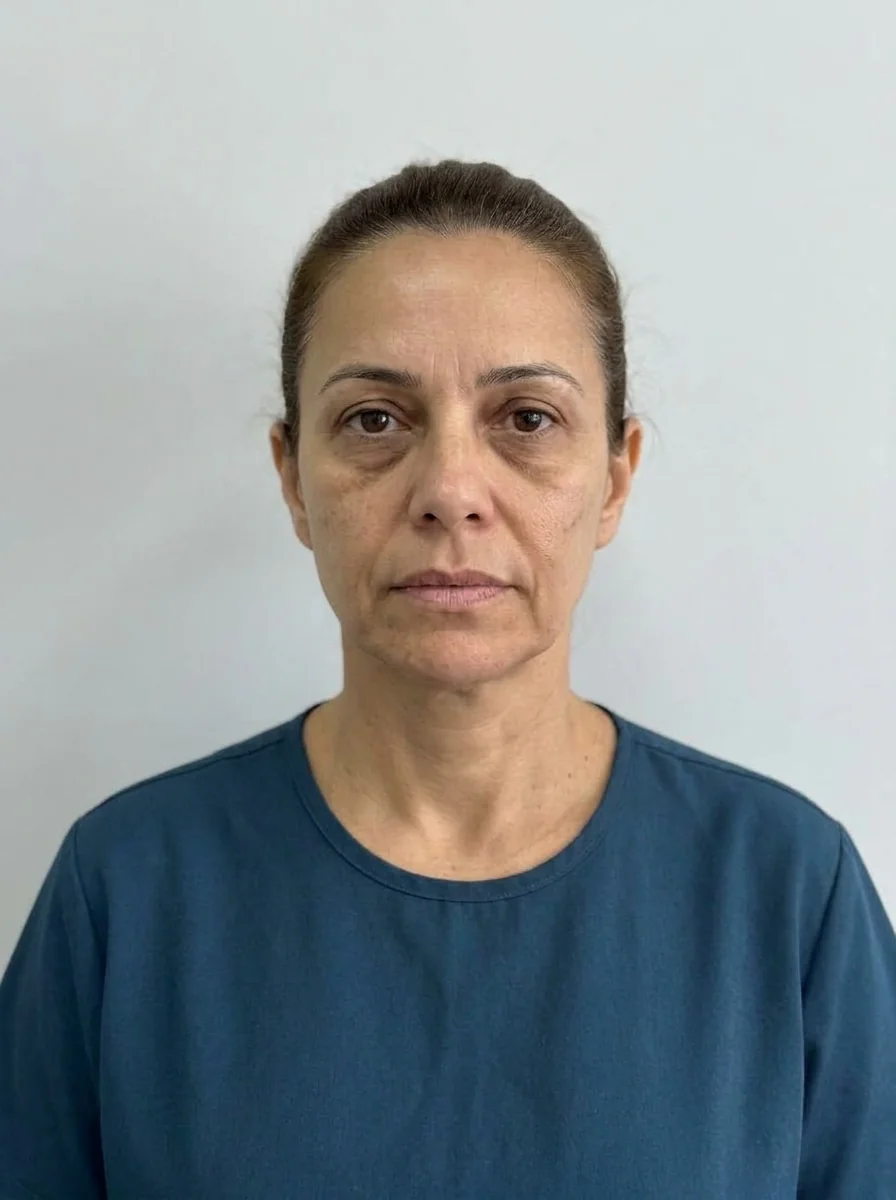 BeforeSimulation
Quick facts
- Usual changes
- Thinner, drier skin, loss of volume and support, fat redistribution
- Strategy
- Skin quality and support before details, with conservative volumes
- Partnership
- Coordinate with the physician when there is hormone therapy or other conditions
- Expectation
- Improved appearance, without promising to reverse age-related changes
Menopause does not change the face overnight, but it coincides with a period when several changes pile up: thinner, drier skin, loss of firmness, fat redistribution, and, in many women, loss of volume in the midface. The result is the classic concern of a "tired, sagging, dull face." The facial harmonization plan needs to respond to this whole picture, not to a single spot.
What usually changes in the face?
The intensity varies widely, but a few axes repeat:
| Axis | What is observed | Implication for the plan |
|---|---|---|
| Skin | Thinner, drier, less elastic | Attention to skin quality before volume |
| Volume | Loss in the midface and temples | Discuss structural support |
| Contour | Less defined jaw, laxity | Take care not to weigh down the lower face |
| Fat | Redistribution, sometimes more in the lower third | Avoid adding volume where it already feels heavy |
| Hydration and radiance | Dull skin | Skin quality strategies under discussion |
The topic is covered from the clinical point of view in menopause and facial aging in facial harmonization, from the concern point of view in menopause and the face, and from the patient's point of view in facial harmonization in menopause.
What is the order of priority?
Three axes, in this order, usually organize the reasoning:
- Skin quality. Thin skin does not "hold" volume well. Strategies such as the collagen biostimulator are discussed by the professional, in the context of the assessment.
- Structural support. Midface and temples, in conservative volumes. See cheekbone filler and temple filler, the latter a high vascular-risk area, with hyaluronidase available.
- Contour and details. Jaw, lips, and folds, once the support is settled.
Jumping from the concern straight to the detail (for example, filling the fold without treating the support) tends to produce a heavy look. See structure before detail and facial analysis at age 50.
How do you adjust the pace?
Patients in menopause usually want a "rested" result, not a transformation. The ideal pace tends to be gradual, with reassessments, because the effect of skin quality stimulation appears over time and because the face may keep changing. The structure of the three-session facial harmonization plan or the 12-month facial harmonization plan helps.
How does the simulation help?
The cheekbone simulation illustrates the effect of a moderate volume in the midface, and it is good support for a conversation about expectations. But it does not reproduce skin quality (radiance, texture), which is an important part of the concern.

See limits of 2D simulation and explaining that a simulation is not a guarantee. Remember: it is an illustrative simulation, not a promise of results.
How do you handle expectations?
Many patients associate the menopausal face with a feeling of loss. An honest conversation acknowledges this and sets realistic goals: looking rested, firmer, without promising a return to the face from before. If the concern comes with intense distress, the care described in facial harmonization plan and patient mental health applies. When the patient says she wants to "go back to how I was," the conversation is covered in patient who wants to go back to how she was.
Which safety precautions deserve emphasis?
Thin skin with less support calls for attention to bruising, irregularities, and nodules. Ask about medications that affect coagulation and conditions that influence healing. Hyaluronidase should be available when hyaluronic acid is used, and high vascular-risk areas call for extra attention. See safety and complications: overview.
What about the other signs of menopause?
Hot flashes and changes in sleep and mood can affect the patient's disposition and the way she sees her own face. Listen with empathy and avoid linking the aesthetic concern to a health problem: referral to the physician is part of the care, without a diagnosis.
How do you follow the progress?
Photograph at each follow-up, with the same light and distance. Skin changes can be slow, and objective comparison helps the patient see what changed. Record what she reports about her skin (dryness, sensitivity, spots) and use it to adjust the plan gradually.
Practical summary
In menopause, start with skin quality and support, use conservative volumes, record hormone therapy and medications in the medical history, explain the simulation's limits regarding skin texture, and align expectations around rested and firmer.
Keep regular follow-up with standardized photos and adjust the plan gradually as the skin responds.
Follow-up record in menopause
Note the use of hormone therapy and other medications, the skin and support concerns the patient brings, and what she understood about the simulation's limits for texture. Repeat the standardized photos at each follow-up to track the pace of the skin's response. Results vary from person to person, the simulation is illustrative, and the course of action rests with the qualified professional, after an in-person assessment and according to the rules of their professional council in Brazil.
Frequently asked questions
What changes in the face during menopause?
Many women notice thinner, drier skin, loss of firmness and volume, and a change in fat distribution. The intensity varies widely from person to person.
Is a biostimulator indicated in menopause?
It can be one of the options discussed for skin quality and support, at the professional's discretion and after an individual assessment.
Does hormone therapy change the facial harmonization plan?
It can influence the skin and should be reported in the medical history. The decision about therapy belongs to the patient's physician; the aesthetic plan adapts to the picture.
Does filler work the same in menopause?
The product behaves according to its own properties and the tissue. Thinner skin with less support may require a different strategy and more conservative volumes.
Harmy images are illustrative simulations generated by AI from the patient's photo to support the conversation between practitioner and patient. They are not a promise of results. Indication, technique, product and volume are solely the decision of the licensed practitioner. This content is for information only and does not replace a clinical assessment.