
Volume by facial type in HOF planning

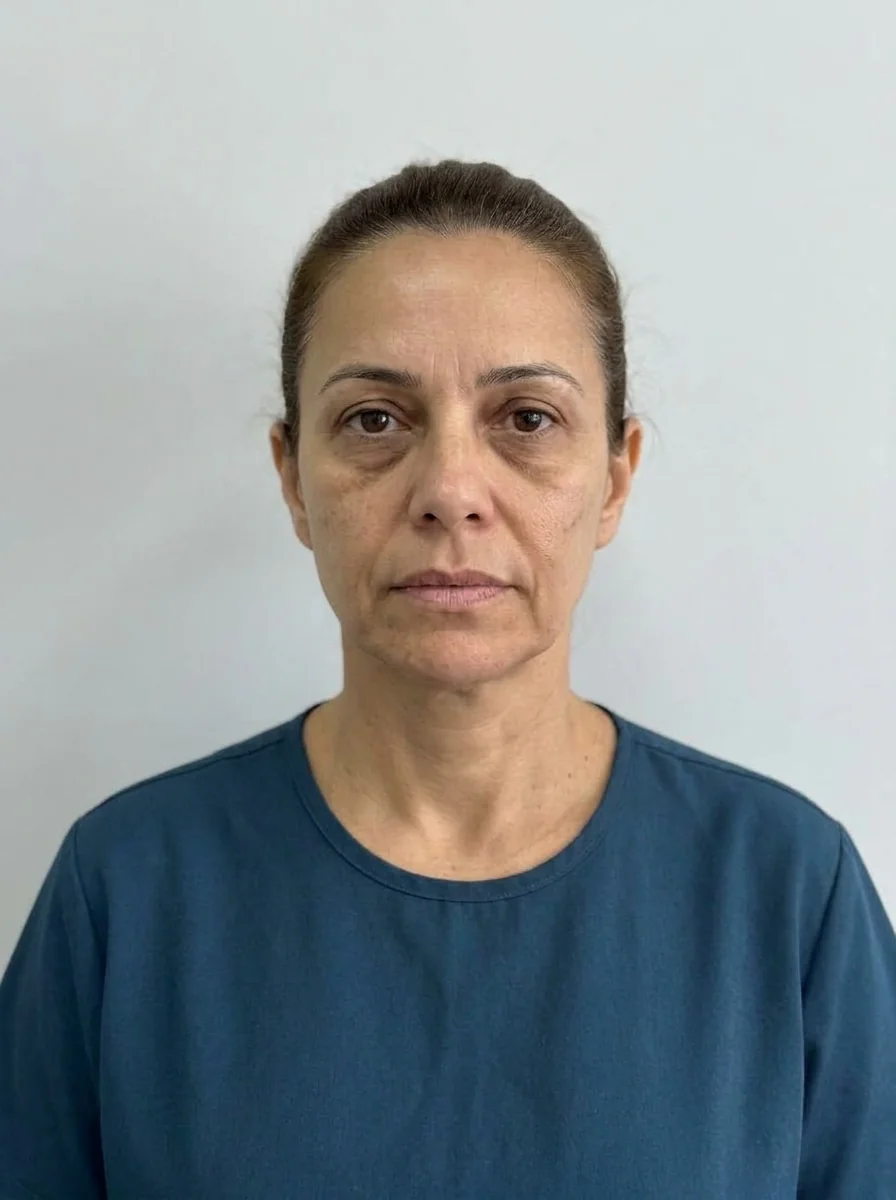 BeforeSimulation
Quick facts
- Core idea
- The same ml gives different results depending on facial type
- Types mentioned
- Lean, full, bony and mixed
- Pitfall
- Copying the volume from a previous patient to another
- In Harmy
- ml from 0.5 to 5 in steps of 0.5, adjusted by area and intensity
- Who decides
- Licensed professional, after assessment
One of the quietest traps in HOF planning is the memory of earlier plans: "for this cheekbone, I usually use this much." The number comes from past patients, generally of different facial types, and is applied to the next one without the question that should come first: what does this face, with this structure and this fat, need? This page treats facial type as a planning variable. It carries no dose table; it carries questions, conversation ranges and cautions.
What is meant by facial type in everyday practice?
There is no single official classification. In clinical routine, practical descriptions are used that combine three things: bone structure (a more angular or more rounded face), facial fat (little, moderate or abundant) and skin quality (thin, thick, firm or lax). The combinations form common profiles: the lean face with prominent bones, the full, rounded face, the bony, angular face, and the mixed one, with areas that differ from each other.
What matters is the practical effect. The same amount of product on a lean face and on a full face produces different readings, and an area that needs support on one face may be saturated on another. For face shape, see planning an oval face, planning a round face and planning an elongated face.
How does each facial type change the reading of volume?
| Facial type | What you observe | What changes in volume reasoning |
|---|---|---|
| Lean (little fat) | Prominent bones and shadows, volume lost in several areas | Small volumes weigh more; irregularities show; caution with thin skin |
| Full (a lot of fat) | Rounded face, heavy cheeks | More volume can widen the face; often the focus is support and definition, not volume |
| Bony (angular structure) | Marked cheekbone and jaw | Avoid volume that overly accentuates angles; assess what is bone and what is soft tissue |
| Mixed | Areas with different characteristics | Plan area by area, without generalizing |
This chart is only a map. In each case, the exam confirms or disproves the impression. More on reasoning about fat in HOF plan for a patient with little facial fat and about skin in skin thickness in planning.
Why is copying another patient's volume a mistake?
Because ml is a consequence of the face, not a property of the area. Two "flattened" cheekbones can have different causes: one from fat loss, the other from low bone structure. The first may respond well to a low volume; the second may not. Applying the same number to both leads to an excellent result in one and an insufficient or excessive one in the other.
There is also the anchoring effect: the first number that comes to mind becomes the starting point, and the reasoning ends up being about adjusting up or down, rather than deciding from scratch. To neutralize this, start with the exam and the goal, and only then think about ml. The general conversation ranges are in ml by area: ranges in planning.
How does facial type interact with sex, age and ethnicity?
Facial type does not exist in isolation. It adds to other variables that also change the conversation ranges: age (which changes fat, skin and bone), sex (which changes proportion and the desired aesthetic) and ancestry (which changes proportions and identity traits). Mixing these factors carelessly leads to generic plans.
To read those layers separately, see volume by sex in planning, HOF planning and ancestry diversity and facial identity: how to preserve it. The golden rule is that the face's identity should not be lost in order to approach an ideal.
What risks appear with each facial type?
On lean faces, thin skin favors irregularities and the Tyndall effect (a bluish look when the product is superficial), as well as greater visibility of swelling and bruising. On full faces, the risk is to accentuate heaviness and lose definition. On bony faces, there is the risk of exaggerating angles and of masculinizing traits that were not wanted. In all of them, the general risks remain: swelling, bruising, asymmetry, nodules and, rarely and seriously, vascular occlusion. When hyaluronic acid is used, hyaluronidase must be available.
Review safety and complications, overview and vascular danger zones of the face.
How to use Harmy with different facial types?
In Harmy, the ml for each area is chosen between 0.5 and 5, in steps of 0.5, and the intensity is Subtle, Moderate or Pronounced. The app does not classify facial type or recommend volume: it simulates what you enter. That makes a useful exercise possible: generate the projection with the ml you had in mind and, if the result looks heavy or weak for that face, adjust before deciding on the plan.
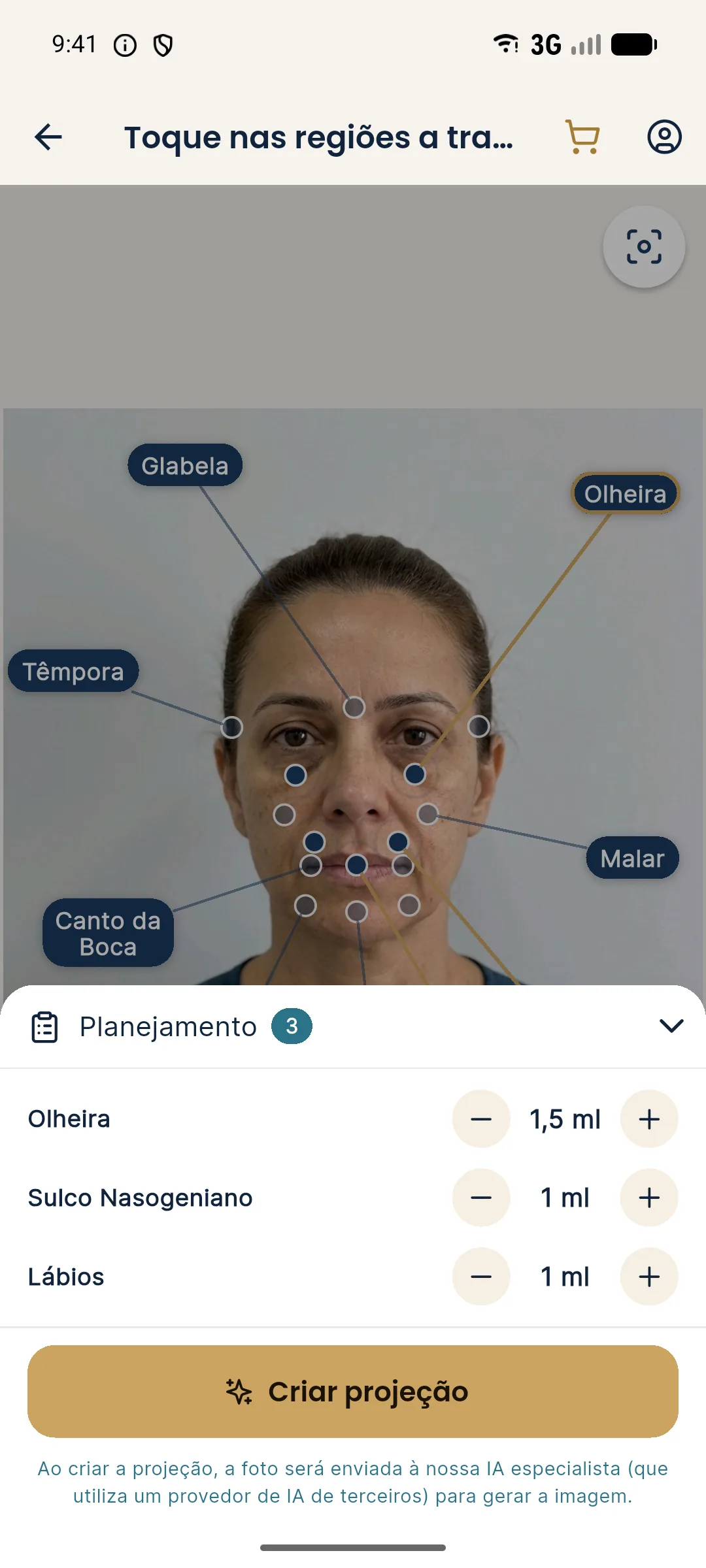
The AI respects the volume and changes only what was marked. On a lean face, the same ml may show as a more obvious change; on a full face, a more discreet one. That difference is visual and illustrates, roughly, what facial type does to volume. But the simulation does not account for the tissue's real response, and the clinical result may differ. See limits of 2D simulation.
How to record facial type in the plan?
In the patient's chart, three lines are enough: the description of facial type, the justification for the ml chosen per area and the review at follow-up. When the face changes (weight loss, pregnancy, age), redo the description. This also helps when another professional takes over the case. See facial treatment plan form: fields and planning HOF for people who lose weight quickly.
What to tell the patient?
This line avoids comparisons with friends and influencers. If the patient brings a photo of someone with a very different facial type, return to their own facial identity.
Checklist before deciding the volume
Quick review
Summary
Facial type (structure, fat and skin) changes how ml is perceived, and that is why volume cannot be copied from another patient. Describe the face in words, start from the goal, begin conservatively and reassess. Harmy simulates the ml entered, without classifying facial type, and serves as an aid for conversation and adjustment.
Frequently asked questions
Does facial type change the ml in the plan?
It changes how the ml reads. On a lean face, small volumes weigh more; on a full face, the same ml can get lost. The ranges only make sense after an individual exam.
Is there a facial type that needs more volume?
There is no rule. Faces with little fat and a lot of lost support may call for more attention to volume, while full faces may need care so they do not look heavy.
How do I classify the patient's facial type?
There is no single official classification. Use practical descriptions (lean, full, bony, mixed) and always record them with standardized photos and clear words.
Does Harmy identify facial type?
No. Harmy detects the face to mark the areas, but it does not classify facial type or recommend ml. You set the ml for each area.
Harmy images are illustrative simulations generated by AI from the patient's photo to support the conversation between practitioner and patient. They are not a promise of results. Indication, technique, product and volume are solely the decision of the licensed practitioner. This content is for information only and does not replace a clinical assessment.