
Planning Facial Harmonization for a Long Face: Areas and Limits

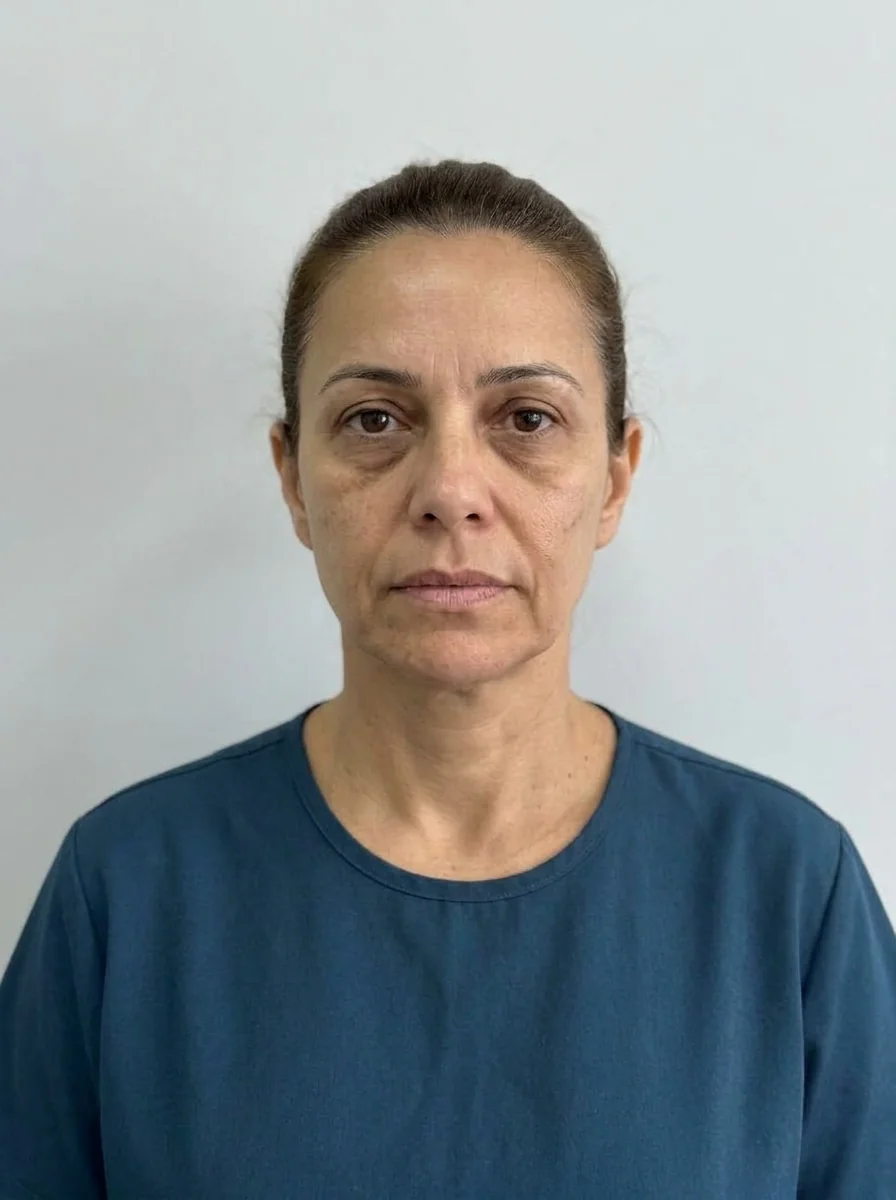 BeforeSimulation
Quick facts
- Characteristic
- Face height greater than width
- Usual goal
- Create a sense of balance without lengthening further
- Avoid
- Projecting the chin downward and adding height where there is already plenty
- Supporting area
- Cheekbone and temples for width; chin for projection, not height
A long face is a shape in which height predominates over width. In general, the patient does not use that expression: they say the face is "long", "thin", or that it "lacks cheeks". The most frequent mistake with this profile is treating it with the same logic as a round or oval face, adding volume where it only increases the sense of length.
How do you recognize the long shape?
In the frontal assessment, look at the relationship between height and width and the distribution of the thirds. The glossary entry on long face shape summarizes the signs. In practice, three clues help:
- the lower or middle third looks long relative to the width of the temples and cheekbones;
- the cheekbone area has little lateral projection;
- the chin is long or drops toward the neck.
It is not a rigid classification. Many faces mix traits from different shapes. The concern and the whole face count for more than the label. The analysis by thirds is in facial assessment by thirds.
What should you avoid?
The central logic is simple: do not add height where there is already plenty. Some examples:
| Choice | Possible effect on a long face | Caution |
|---|---|---|
| Chin projected forward | Can balance the profile | Prefer projection over height |
| Chin enlarged vertically | Lengthens the lower third | Avoid without a clear indication |
| Cheek volume centered too high and forward | Can make the face look thinner | Think about lateral width |
| Jaw strongly defined downward | Reinforces length | Assess the angle and length |
| Very full lips | Draw attention to the lower third | Keep proportion |
Where can you balance width?
Two areas usually come up in the conversation, always at the professional's discretion and after the assessment:
- Cheekbone and zygomatic area. A sense of width and support in the midface, taking care not to weigh it down. See cheekbone filler and zygomatic.
- Temples. When there is volume loss, a hollow temple narrows the upper third even more. See temple filler, an area of high vascular risk that demands special care, with hyaluronidase available.
The chin comes in with caution: the focus is usually projection to improve the facial profile, not added height. To combine chin and jaw, see chin and jaw: combining them in the plan.
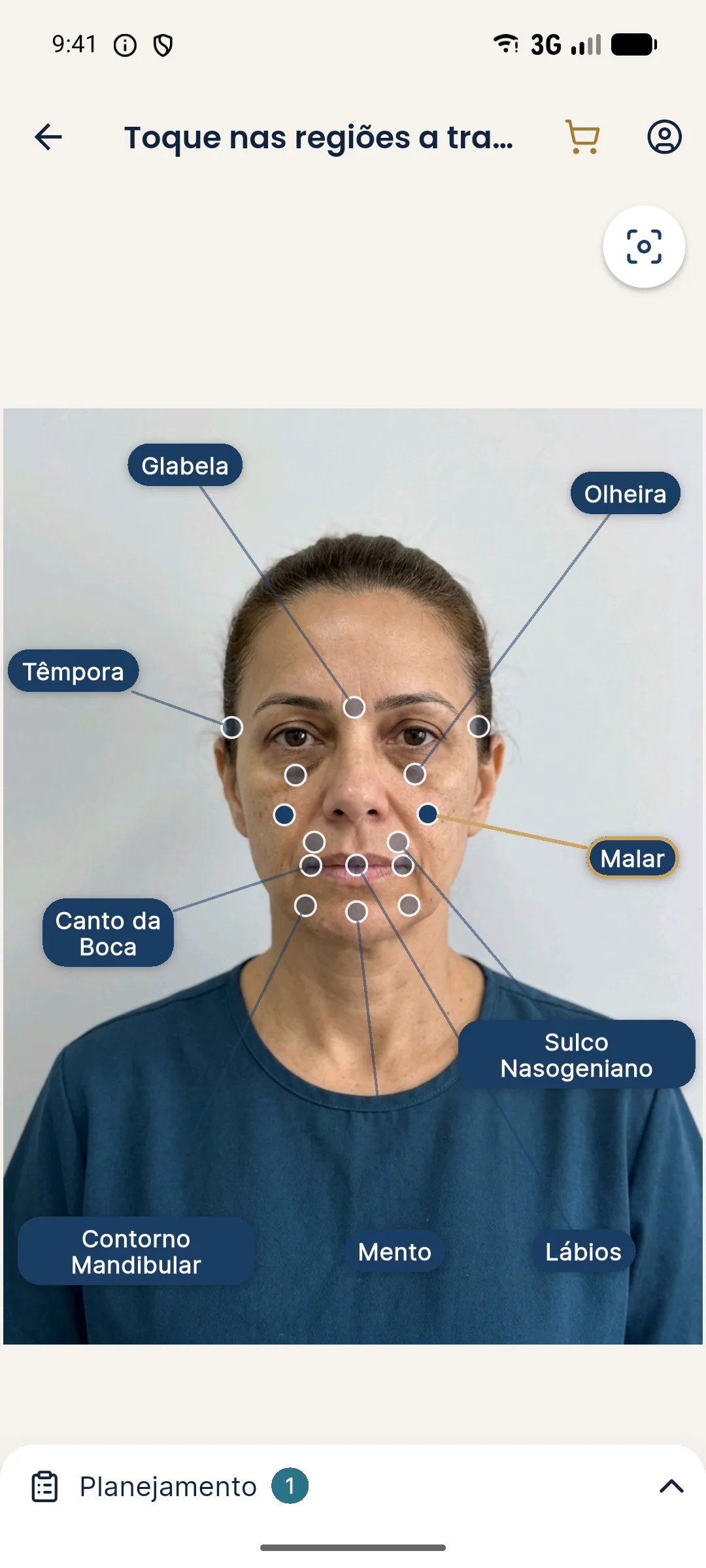
How do you use the simulation here?
The 2D simulation of the cheekbone area illustratively shows the effect of a moderate volume. The benefit on a long face is precisely comparing two options: cheekbone only, or cheekbone plus temples, seeing whether the sense of width changes without adding heaviness.
Keep an important limit in mind: the frontal photo shows width but hides projection. If the plan depends on chin or cheekbone projection, the profile assessment is still necessary. See limits of 2D simulation and comparing Subtle, Moderate and Pronounced intensities.
How do you talk to the patient?
Many patients with a long face want to "fill the cheeks" or "do the chin". Translate the request into proportion: is what bothers them the length, the lack of width or the lack of projection? Photographing from the front and in profile and showing your reasoning helps anchor the conversation in something observable.
How do you close the plan?
Prioritize a few areas and a clear order. A reasonable sequence is to start with structure (temples and cheekbone, if indicated), reassess and only then discuss the chin and the details. The priority logic is in what to treat first in facial harmonization and the patient's concern in long face.
What reading mistakes are common?
The first is confusing a long face with a long lower third. In some patients the length is in the middle third; in others, in the lower; in others, in the upper (high forehead). The area to treat depends on where the length is, and the frontal photo should be read third by third before any decision. See long lower third.
The second mistake is treating thinness as a shape. A face that became longer through weight or volume loss behaves differently from a constitutionally long face, and the plan changes. The third is ignoring dynamics: a face at rest can look long and, when smiling, gain width. Photograph at rest and smiling.
How do you think about balance without overdoing it?
Balance is about perception, not measurement. Small changes in width in the midface are usually enough, and large changes tend to look artificial. Set a modest goal (for example, "the face looks a little less long in the frontal photo") and check it after a restrained step, instead of planning everything at once.
What if the patient does not want to change the shape?
Some patients appreciate a long face and associate it with elegance. In these cases, the plan can be limited to specific concerns (volume loss, folds, wrinkles). Respecting that preference is part of caring for identity, as in facial identity: how to preserve it. The decision not to alter the shape should also be recorded.
Practical summary
On a long face, ask where the length is, avoid adding height, think about width in the midface and projection in the chin, compare two intensities in the simulation and do not promise a change of shape. Photograph from the front and in profile before deciding on any area.
If the patient likes their own shape, the plan can be just maintenance and specific concerns, and that is a perfectly valid conclusion of the consultation.
Frequently asked questions
Does chin filler lengthen the face?
It can, if the volume is placed in a way that increases the height of the lower third. In a long face, the discussion is usually about projection rather than vertical lengthening of the chin, at the professional's discretion.
Which areas help balance a long face?
The cheekbone area and the temples are usually discussed to give a sense of width in the middle and upper thirds. The indication depends on the individual assessment.
Can facial harmonization change the shape of the face?
It can influence the perception of proportion, but it cannot change bone structure. The result is balance, not transformation.
Does the simulation show whether the face will look less long?
It shows an illustrative direction of the marked volume. It does not measure proportion or guarantee the effect on the real face.
Harmy images are illustrative simulations generated by AI from the patient's photo to support the conversation between practitioner and patient. They are not a promise of results. Indication, technique, product and volume are solely the decision of the licensed practitioner. This content is for information only and does not replace a clinical assessment.