
Facial Harmonization Plan for Patients With Low Facial Fat

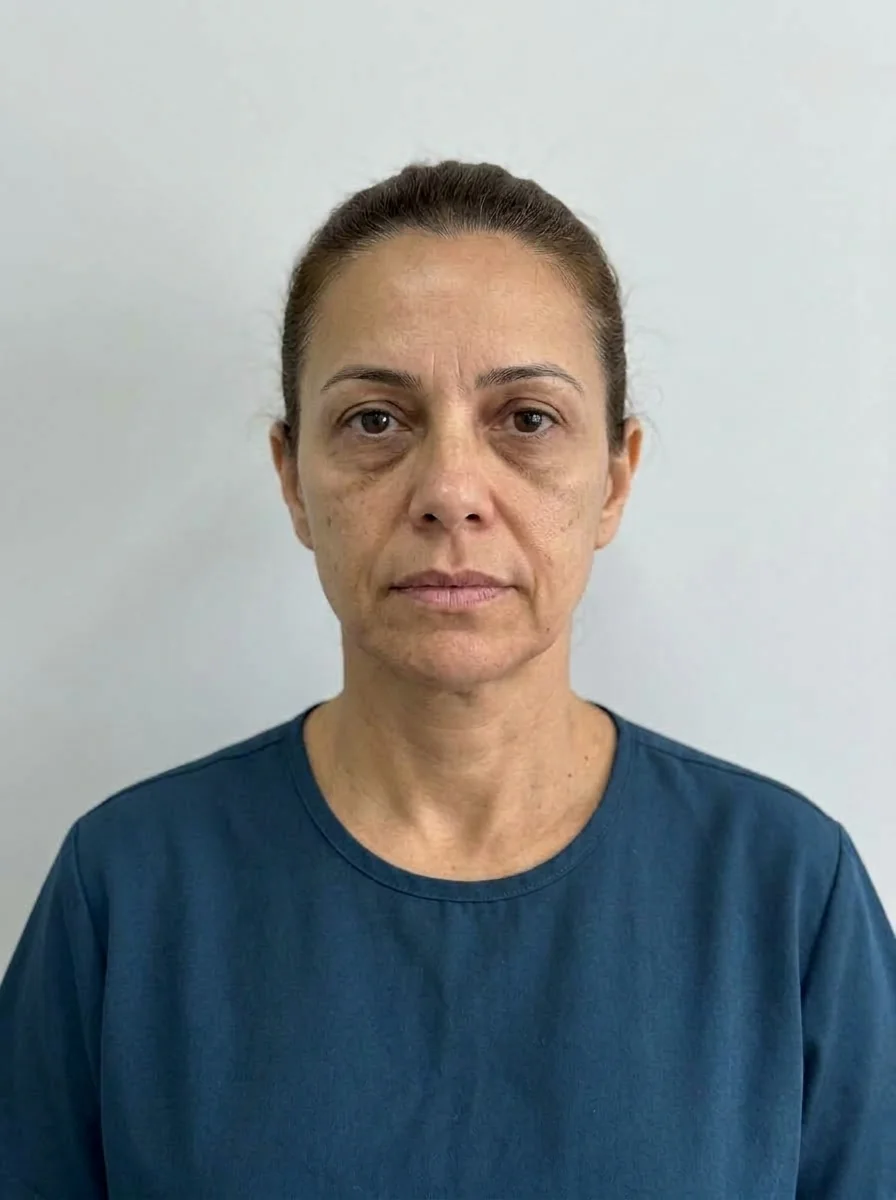 BeforeSimulation
- Highlighted area
Quick facts
- Topic
- Planning for a face with low facial fat
- Main challenge
- Little tissue to hide the product and little skin thickness
- Usual strategy
- Low volume, suitable product, stages, and reassessment
- Typical risk
- Visible irregularity and the Tyndall effect
- Alternatives to discuss
- Biostimulator, habit changes, and realistic expectations
In a face with little fat, the same techniques call for more care. There is less tissue to hide the product, the skin is usually thinner, and the shadows of the bony architecture stand out. This page gathers the planning logic for this profile: what usually works, where filler has limits, and when a frank conversation is worth more than one more procedure. Volumes, products, and techniques always rest with the qualified professional, after assessment and according to the rules of their professional council in Brazil.
Why does a face with little fat need a different plan?
Facial fat is compartmentalized and distributes volume between the superficial and deep layers. When it is scarce, whether by constitution, weight loss, or age, the face easily shows bone and muscle, and any injected product is more noticeable. The anatomy is covered in facial fat compartments.
The central point of planning is to accept that thin tissue is less forgiving. An error in volume, product density, or area shows up sooner, and correcting it takes time. That is why the plan starts from less, not more. See also thin face vs full face in planning and volume by body type in planning.
What questions should you ask before planning?
Before talking about areas, understand the history of this face. Has the weight always been low, or did it drop recently? Was there weight loss from diet, medication, or illness? Is there intense training, smoking, or substance use that changes the tissue? The answers steer the plan and may indicate that the problem is not one for facial harmonization. When the loss is recent, see facial volume loss after weight loss and planning facial harmonization for people who lose weight quickly.
A note on health: if the thinness comes with signs of an eating disorder or unexplained weight loss, the right path is to welcome and refer, not to offer a procedure. This is covered in facial harmonization plan and patient mental health.
Which areas usually come up?
In thin faces, three areas often appear in the concern: hollow temples, an unsupported midface, and under-eye hollows with a pronounced tear trough. Each calls for its own caution.
| Area | What is observed | Specific precaution |
|---|---|---|
| Temples | Concavity, skull-like look at rest | Vascular-risk area; conservative plan and volume |
| Midface (cheekbone) | Lack of support, "sunken" face | Suitable product and stages; avoid excessive width |
| Under-eye (tear trough) | Pronounced shadow and thin skin | High risk of Tyndall and persistent swelling |
| Chin and contour | Hard lines and obvious bones | Decide whether it is bone or soft tissue before filling |
Each area has its own page: temple filler, cheekbone filler, and under-eye filler. For the concerns, see hollow temples, sunken face, and sunken eyes.
What can filler do, and where does it fall short?
It can give support and soften shadows, but it does not create fat or replace the thickness that is missing. When the challenge is thin skin, lower-viscosity products and low volume are usually considered, and the choice rests with the professional. When the problem is bone, compensating with unlimited soft-tissue volume does not help. See when bone is the problem, not volume.
There is also the cumulative effect: someone who repeats volume at short intervals may end up with a heavy, unnatural face. Protection comes from when total volume becomes excess and total volume per session: ranges.
Where does the biostimulator fit?
A collagen biostimulator can be considered in thin skin with good capacity to respond, because it works on quality and support, not by delivering immediate volume. It has its own limitations, such as the need for sessions, the time to respond, and risks such as nodules, and it is not indicated for everyone. The decision rests with the professional. Go deeper in biostimulator and skin quality and biostimulator and filler: combining areas.
For the same reason, it is important to tell the patient that a biostimulator does not "fatten" the face. In someone with little fat, the promise of unlimited volume is the main source of frustration.
How do you use the simulation with this profile?
The simulation helps align expectations. In Harmy, after the frontal photo, you mark the areas, set the ml and intensity, and see the Before and After on the slider. In areas such as the temples, the difference is usually subtle, and that is useful: the patient sees that the expected result is discreet.
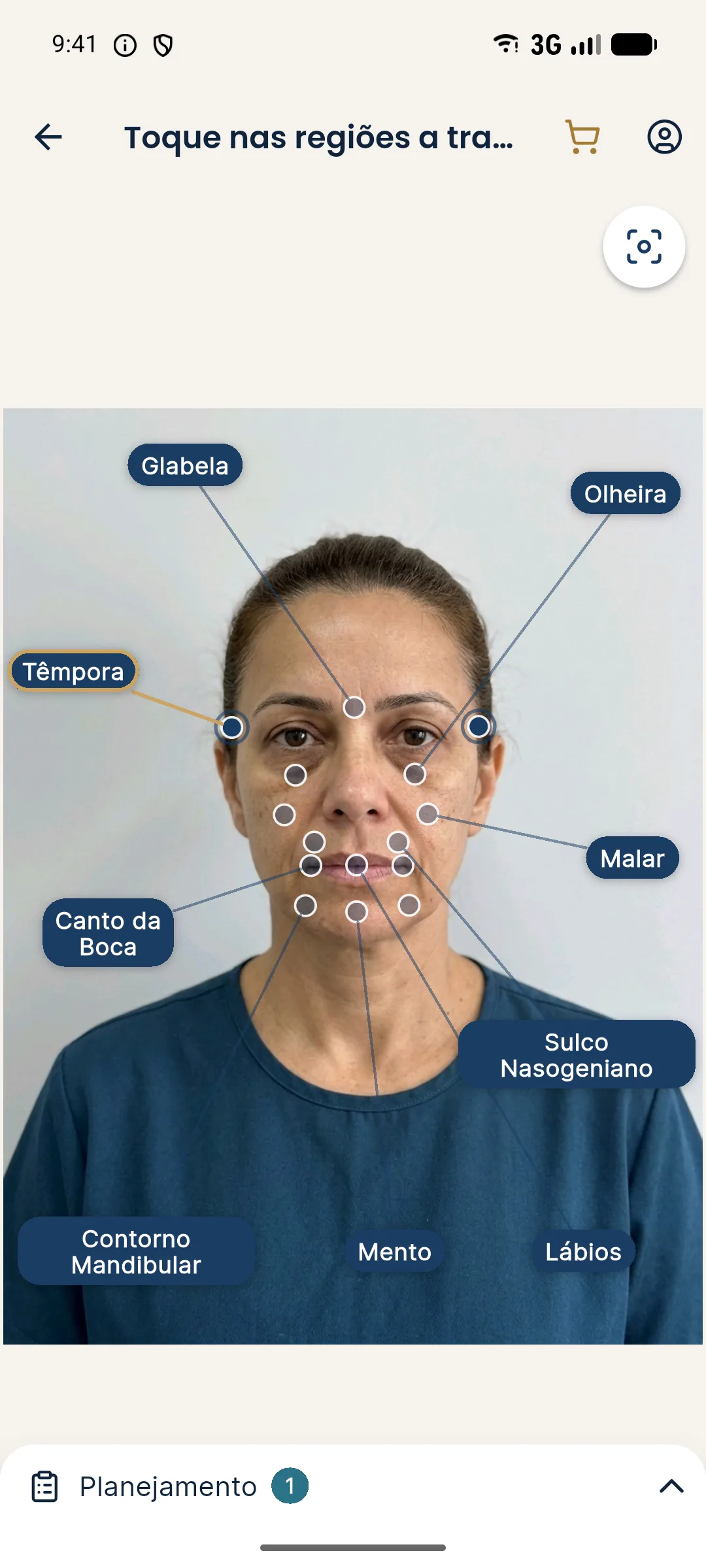
The projection does not show the product's texture, irregularities, or the Tyndall effect, and it works from a single-view photo. Say so in the conversation. It is an illustrative simulation, not a promise of results. More on the approach in limits of 2D simulation and why the simulation should be subtle.
What is the sequence of stages?
The logic of treating little at a time is in conservative volume in the first session and re-planning after the first session.
How do you talk about what facial harmonization does not solve?
In faces that are thin by constitution, part of the appearance does not change with injectables, such as the shape of the bone and the natural thickness of the skin. Say gently what can change and what cannot, and propose a realistic goal, such as softening shadows and improving balance. Also talk about habits that count, such as sleep, sun, and smoking, in habits that change the plan.
Reasoning test
Summary
With low facial fat, the plan needs less volume, more time, and a lot of honesty. Plan few areas, split into stages, choose product and area with caution, assess health, and use the simulation as an aid to expectations, never as a promise.
Frequently asked questions
Can you do filler on a very thin face?
You can, with caveats. With little fat, the product is more visible and irregularities show. In general, conservative volumes are used, split into stages, at the professional's discretion.
Why does a thin face often end up looking filled?
Because there is less soft tissue covering the material. Excess or a poor product choice becomes obvious, which is why the rule is to start low and reassess.
Is a biostimulator better than filler in these cases?
There is no universal best. It works differently and depends on responsive skin and tissue. The choice between the two, or a combination, is the professional's decision after assessment.
Does the simulation show a thin face well?
It shows a subtle idea, only in the marked areas. It does not predict irregularities, Tyndall, or the texture of the product in thin tissue.
Harmy images are illustrative simulations generated by AI from the patient's photo to support the conversation between practitioner and patient. They are not a promise of results. Indication, technique, product and volume are solely the decision of the licensed practitioner. This content is for information only and does not replace a clinical assessment.