
Conservative volume in the first HOF session: why it matters

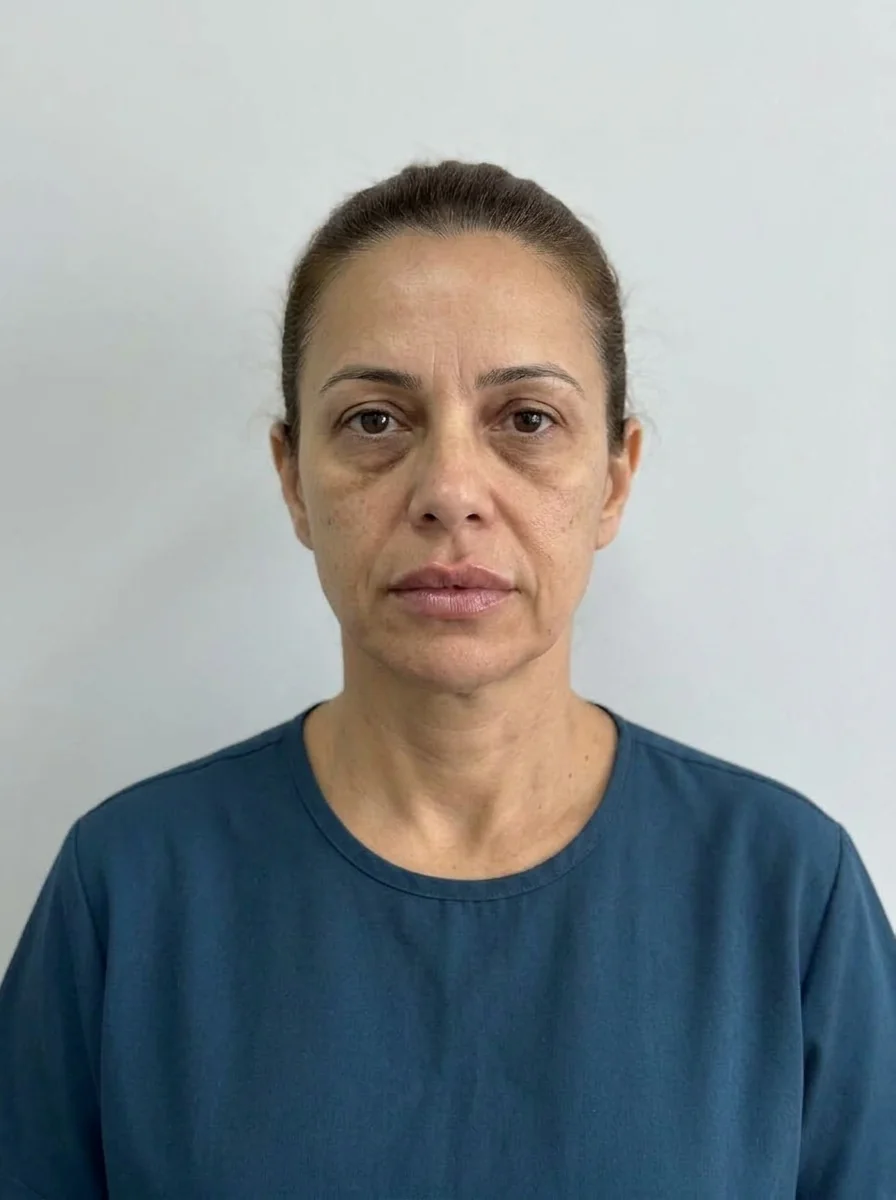 BeforeSimulation
Quick facts
- Principle
- Start low, observe and add, instead of starting high and correcting
- Why
- Swelling masks the result, tissue responds differently and the patient's eye adapts
- Cost of overdoing it
- Dissolving, waiting and rebuilding trust
- Shortcut in Harmy
- First time (lips 1 ml at Moderate; under-eye 1 ml at Subtle)
- Who decides
- Licensed professional, after assessment
The first-time patient almost always arrives with an image in mind and in a hurry: they want to see a difference right away. The experienced professional usually does the opposite and starts with little. It is not timidity, it is method. This page gathers the clinical, commercial and human reasons for conservative volume in the first session, shows how to reason with a patient who wants more and explains how the simulation helps align expectations. The volumes here are ideas for reasoning, not a recommended dose.
Why start with little?
Because the first session is, at the same time, treatment and test. You do not yet know how that tissue responds, how much swelling that patient gets, how they heal, how fast the product is absorbed in that area and how they react to their own image afterward. Low volume reduces the risk of discovering all of this too late.
Five reasons come up again and again in practice:
- Swelling hides the result. In the first days, swelling adds to the volume. Two or three days later, the patient may look and think it is too much or, once the swelling goes down, think it is too little.
- Tissue responds individually. Two people with the same ml can have very different results.
- The eye adapts. After a few days, the patient stops noticing the change and asks for more. An additional stage usually makes more sense once they have gotten used to the first.
- It is easier to add than to remove. Adding is simple; dissolving and rebuilding costs time, trust and well-being.
- It preserves a natural look. Small changes added together look more natural than a single big change.
More on the logic of splitting in when to split the volume across sessions and plan for a first time in HOF.
What conservative volume is not
Conservative volume is not "treating less out of fear." It is calibrating the first stage to what you can read with confidence. Nor does it mean giving up on the goal: it means splitting the path. If the face needs more, the plan says so, and the second stage comes with more information.
It is also not a numeric rule. For a face with little fat, 1 ml can be a lot; for another, it can be little. A range only makes sense in light of the exam. The reference ranges discussed in ml by area: ranges in planning serve as a frame for the conversation, never as a protocol.
| Stance | What it does | Risk |
|---|---|---|
| Planned conservative | Starts low, with stages and follow-up scheduled | Patient finds it slow if they do not understand why |
| Conservative out of fear | Avoids deciding, postpones everything | Plan with no direction and a patient with no confidence |
| Aggressive in the first session | Tries to solve everything at once | Excess, need to dissolve, loss of natural look |
| Under patient pressure | Gives in to the request for "more" | Decision outside clinical judgment |
How to explain it to a patient who wants more?
The question is inevitable: "can you put in more?" The honest answer combines clarity and warmth. Explain the swelling, the adaptation of the eye and the advantage of adjusting later. Show the simulation at low ml and, if the patient wants, show another at higher ml for comparison, always making clear that it is illustrative. Often, once they see the difference between the two, they realize the lower volume already delivers a noticeable change.
If the patient still insists, remember that the clinical decision is yours. You are not obliged to grant a request that goes against your judgment. See when to say no to the aesthetic plan and patient approval of the plan.
How does the simulation help?
In Harmy, the "First time" shortcut marks lips with 1 ml at Moderate and under-eye with 1 ml at Subtle, as a starting point. You adjust each area before creating the projection, choosing the ml (from 0.5 to 5, in steps of 0.5) and the intensity (Subtle, Moderate or Pronounced). For bilateral areas, the ml is the total, split between the two sides.
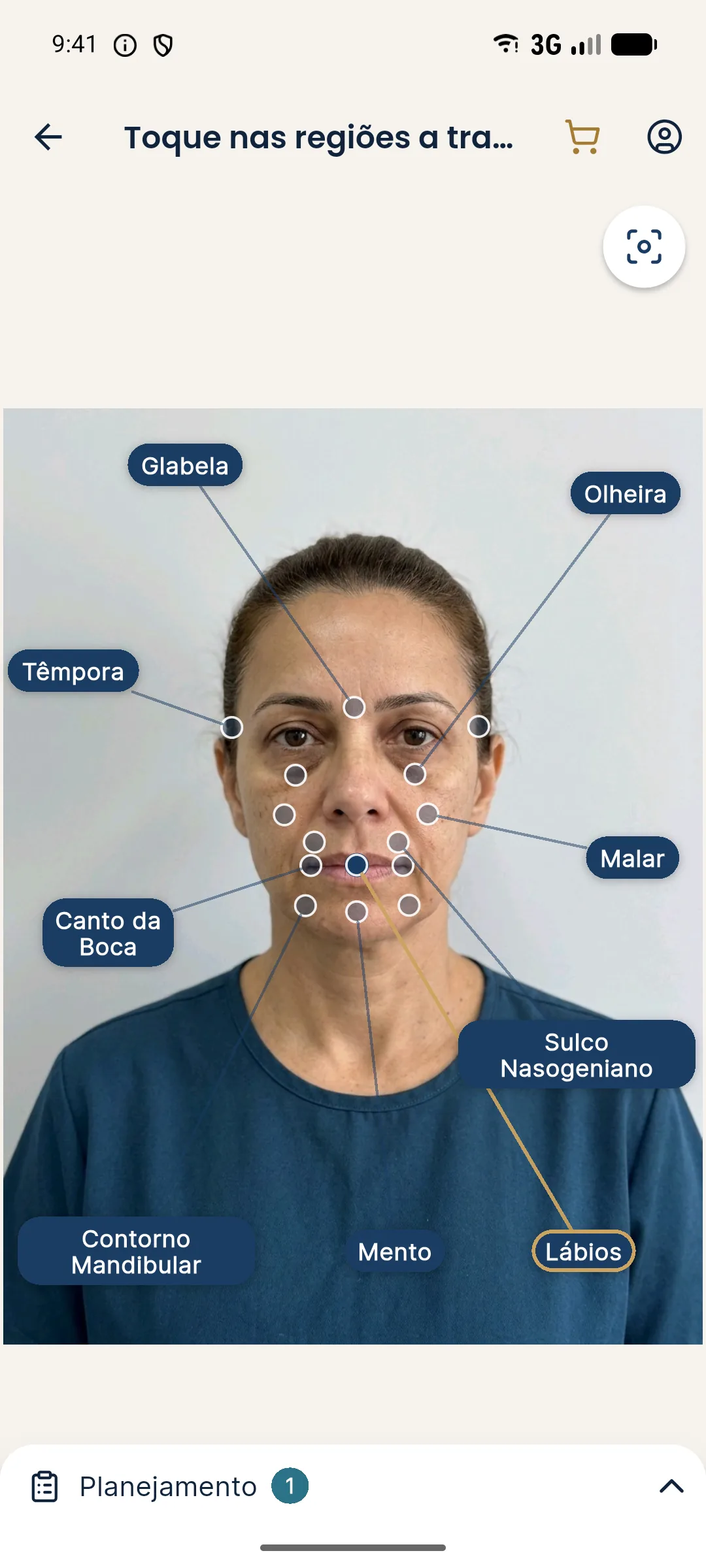
The AI respects the volume and changes only what was marked, with no makeup, skin retouching or change of expression. This produces subtle differences, which is an advantage: the patient sees that conservative volume already brings a noticeable change, and does not build expectations of a transformation. To compare intensities, see comparing Subtle, Moderate and Pronounced intensities.
The limitation: the projection uses a frontal photo and does not show swelling, profile or the tissue's real response. See limits of 2D simulation and why the simulation should be subtle.
What to reassess at follow-up?
The follow-up is the reason to start low. Without it, conservative volume is just small volume. Schedule the follow-up before the patient leaves, with a standardized photo, and organize the assessment in five points: appearance of the area after the swelling has resolved, symmetry, patient satisfaction, comparison with the simulation and the decision on the next stage. See what to reassess at the plan follow-up and reassessment at 3, 6 and 12 months.
Checklist for the conservative first session
Quick review
Summary
Conservative volume in the first session protects the patient from excess, gives the swelling time, respects the eye's adaptation and makes the second stage more precise. Explain the reason, show the simulation at low ml, schedule the follow-up and record your reasoning. Harmy offers the First time shortcut as a marking starting point, not as a dose.
Frequently asked questions
Why start with low volume in the first session?
Because it is easier to add than to remove. Starting low lets you observe the tissue's response, let the swelling subside and decide the second step with more confidence.
What if the patient wants more volume right in the first session?
Explain the reason for caution, show the simulation at low ml and suggest reassessing at follow-up. If the request is out of proportion for the face, the decision to accept it is the professional's.
Does conservative volume mean a weak result?
Not necessarily. It means a result in stages. The first step shows the direction, and the second adjusts, with more information on how that face responds.
Does Harmy have a shortcut for the first time?
Yes. The First time shortcut marks lips with 1 ml at Moderate and under-eye with 1 ml at Subtle, and you can adjust each area before creating the projection.
Harmy images are illustrative simulations generated by AI from the patient's photo to support the conversation between practitioner and patient. They are not a promise of results. Indication, technique, product and volume are solely the decision of the licensed practitioner. This content is for information only and does not replace a clinical assessment.