
When to split the total volume into more than one session

Quick facts
- Core idea
- Splitting means building the result in stages, when the tissue, safety or the patient's adaptation call for it
- Criteria
- Tissue capacity, area risk, swelling, natural look, budget and patient tolerance
- Intervals
- Set by the professional according to product and area; the plan should record them
- Caution
- Splitting is not an excuse for a total volume above what the case can support
The question "can we do everything at once?" comes up in almost every planning consultation. The honest answer is: sometimes yes, sometimes no, and in many cases the best result comes from splitting. Dividing the total volume into sessions is a clinical decision that combines safety, a natural look and the patient's adaptation, and it should be communicated as part of the plan, not as a concession.
This page describes the criteria for splitting, how to set intervals without promising timeframes and how to explain the split to the patient. It does not describe injection technique and does not define volume per session.
Why split instead of doing everything at once?
There are reasons involving tissue, safety, results and the patient. Each one alone already justifies the split.
| Reason | What happens | Effect |
|---|---|---|
| Tissue | The area handles one volume at a time well, and above that there is a risk of excess and an artificial look | Better integration with splitting |
| Safety | Higher-risk areas deserve a session with few variables | A complication is easier to interpret |
| Result | Swelling masks the result in the first days | More precise adjustment in the next stage |
| Patient | A sudden change can be hard to accept | Gradual adaptation of self-image |
| Budget | The investment can be spread out | Workable plan, as in prioritizing by the patient's budget |
The principle of a conservative volume in the first session is covered in conservative volume in the first session and in total volume per session: ranges.
How does the tissue set the limit?
Each area has a capacity to accommodate volume without losing a natural look. Thinner skin, scarce fat or tissue with little give limit what fits at once. Areas with more support accept more. This capacity is assessed by the professional, during the exam, and varies by patient. Factors such as skin thickness in planning and volume by body type come into play.
A useful notion is that the tissue needs time to accommodate the product and return to its normal response. Placing everything at once can produce an initial contour that does not represent the final result, and the temptation to "complete" in the same session leads to excess. The reasoning is in when the total volume becomes excess.
Which areas usually call for extra caution?
Some areas benefit more from splitting because of risk or the sensitivity of the result:
- Lips: small volume changes alter the look a lot, and initial swelling is misleading. See lip filler. A vascular area, with hyaluronidase available.
- Temples and under-eye area: areas with vascular risk and thin skin, where the result is sensitive. See temple filler and under-eye filler.
- Cheekbone and jaw: structural areas where cumulative projection changes the shape of the face. See malar filler and jawline filler.
- Any area for a first-time patient: the patient does not yet know their own response to the product.
The sequence of areas across sessions is covered in what to treat first in facial harmonization and in how many areas to treat per day.
How do you set the interval between sessions?
There is no universal timeframe. The interval is a clinical decision that considers the product used, the area, how long the swelling takes to resolve and the patient's response. The plan's role is to record the expected interval, with a margin, and what will be reassessed before the next stage. The discussion is in interval between sessions in the facial harmonization plan.
Ready-made templates are in facial harmonization plan in two sessions and in three sessions.
How does splitting help the natural look?
By splitting, you gain information. After the first stage, you see how the tissue responded, how the patient feels and whether the change already addresses the concern. Often the second stage is smaller than planned, or unnecessary. This is the strongest argument for splitting: it protects against excess, which is the hardest mistake to undo.
This reasoning is part of the natural-effect plan and of the conservative plan vs full plan. For communication, it helps to say that the plan is a path and that each stage is decided based on the previous one.
What do you say to a patient who wants everything at once?
The conversation needs respect and reasoning. A patient who travels from far away, has a deadline or does not want to come back has legitimate reasons. Explain the reasoning, show the consequences of rushing and, when appropriate, decline clearly. How to say it is covered in how to say no to the patient in facial harmonization and in saying no to a patient who demands treatment today. For patients who live elsewhere, see facial harmonization plan for a patient from another city.
How do you record the split in the plan?
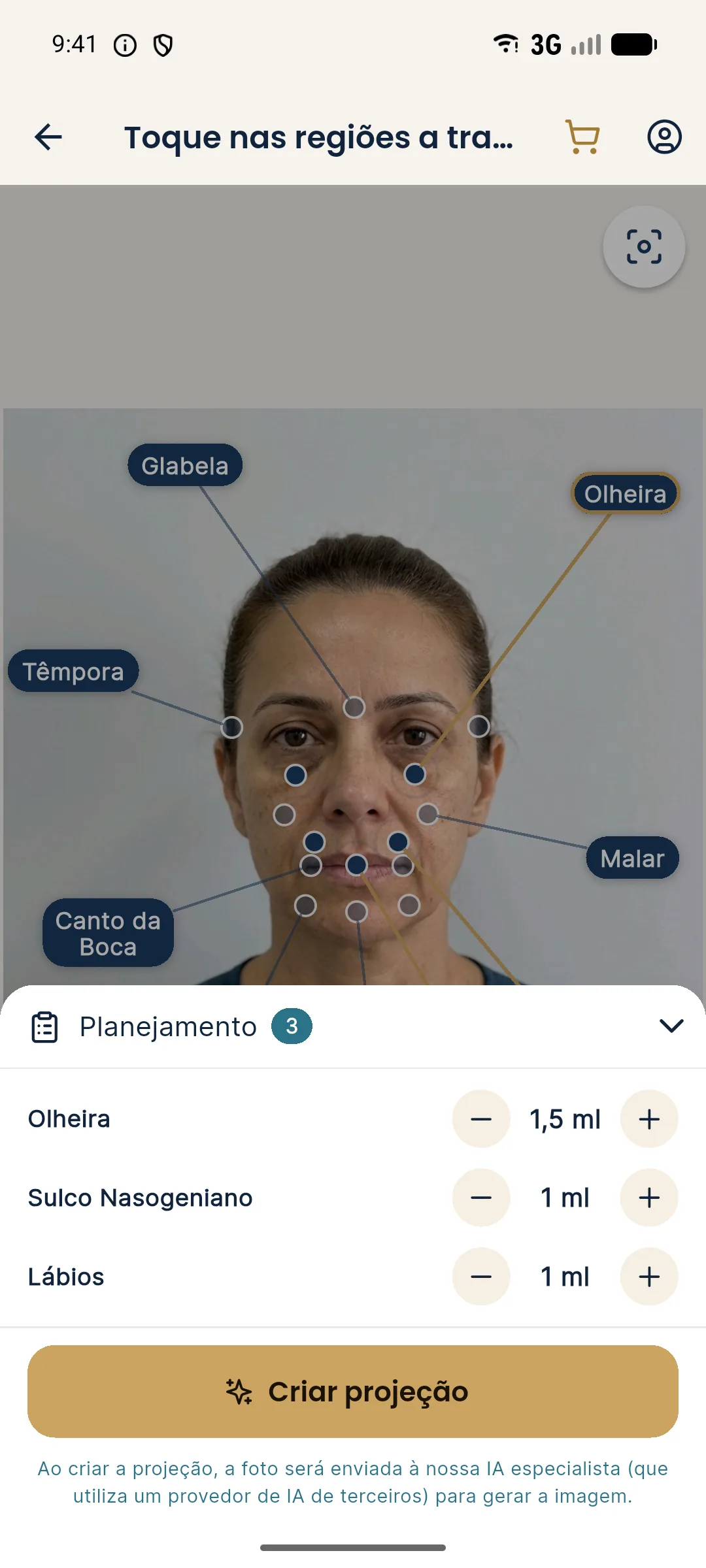
Record the planned volume per stage, the order of the areas, the interval and the reassessment criteria. This keeps the plan from being reinterpreted from memory at the follow-up. Use the plan form and the progress log, as in facial treatment plan form: fields and plan journal: progress record per session.
Frequently asked questions
When is it worth splitting the volume into more than one session?
When the tissue does not handle the full volume well at once, when the area calls for caution, when the patient wants a gradual change or when assessing the first result guides the next stage.
Does splitting the volume change the final result?
It can improve the natural look and precision, because each stage is assessed after the swelling settles. The cost is more time and more visits.
How long should I wait between sessions?
There is no single timeframe. The interval depends on the product, the area and the patient's response, and is set by the qualified professional after assessment.
Does splitting increase the cost?
It can increase the number of consultations and, in some practices, the operating cost. The total volume is the same, though, and the plan should make the value of each stage clear.
Harmy images are illustrative simulations generated by AI from the patient's photo to support the conversation between practitioner and patient. They are not a promise of results. Indication, technique, product and volume are solely the decision of the licensed practitioner. This content is for information only and does not replace a clinical assessment.