
Two-Session Facial Harmonization Plan: How to Split It

Quick facts
- Idea
- Split the plan into two stages with a reassessment in between
- Criterion
- Structure and priority in the first; refinement and complement in the second
- Advantage
- Less volume at a time, less swelling, adjustment based on the actual result
- Risk
- The second session becoming automatic, even without an indication
Splitting the plan into two sessions is one of the simplest and most useful decisions in facial harmonization planning. It trades the rush to resolve everything in one day for the advantage of looking at the result and deciding the next step with real information. But splitting also has pitfalls: the main one is becoming a sales strategy in disguise.
When does splitting make sense?
Some situations call for splitting almost by default:
- Many areas in the plan. Treating everything at once piles up swelling and makes it harder to assess each response.
- High total volume. Less product at a time is usually safer and more comfortable.
- A wary or new patient. Starting small builds trust and leaves room to adjust.
- Uncertainty about the effect. Seeing the result in one area helps decide about the next.
- Areas that influence each other. Working on the cheekbone changes how the nasolabial fold and the under-eye area read, for example. See the domino effect between facial areas.
On the other hand, splitting may be unnecessary when the plan has a single area, or when the second stage would be mere repetition.
What goes in the first session and what goes in the second?
The most common criterion is structure first, detail later: what supports the face goes in the first stage; what refines goes in the second. See the logic in structure before detail and what to treat first in facial harmonization.
| Stage | Focus | Hypothetical example |
|---|---|---|
| Session 1 | Structural areas and main concern | Cheekbone and chin, with conservative volumes |
| Reassessment | Response, symmetry, patient acceptance | Photos without swelling and a conversation |
| Session 2 | Refinement and complement | Lips or under-eye area, if still indicated; touch-up of what was already done |
This is a hypothetical example for illustration only. The actual choice of areas and volumes depends on the assessment and is up to the professional. To calibrate, see ml per area: ranges in planning.
What is the interval between sessions?
The interval should cover swelling resolution and product settling, so that the reassessment reflects the actual result and not the puffiness. This time varies with the product and the area and should be decided by the professional. The general discussion is in interval between sessions in the facial harmonization plan and swelling gets in the way of comparing results.
How do you use the simulation in the split?
The simulation helps show both stages. You can generate a projection of the first stage and another of the full plan, and the patient sees what changes at each step. This makes the plan visible and helps justify the split.
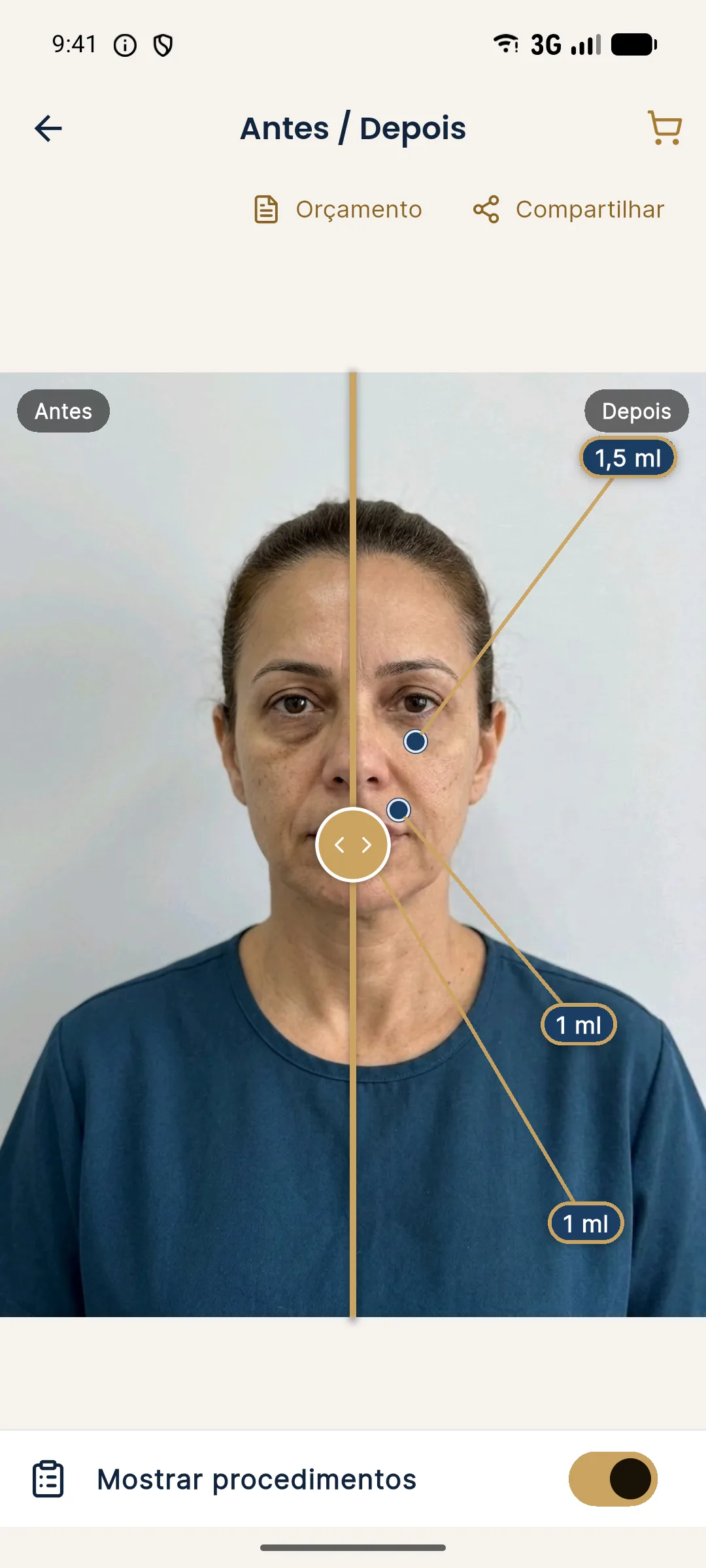
Remember that each projection uses one credit, so plan ahead: two projections per plan are usually enough. The image is an illustrative simulation and does not promise the result of either stage. See comparing projection and actual result.
How do you talk about the quote?
The quote needs to make the split clear: what is included in each session, whether there is a follow-up fee, and whether the second stage is planned or conditional. Transparency avoids the feeling of being "billed in installments." See how to explain the quote by area and the three-session facial harmonization plan for a split with more stages.
What should you record?
Record the full plan and the proposed split, what was done in session 1 (areas, ml, product, lot), the follow-up date, the photos from each stage, and the decision about session 2. If the patient decides not to have the second, record that too. To organize photos and projections by patient, see organizing projections by patient.
What mistakes should you avoid in the second session?
The first is repeating the original plan without reassessing. The second session should answer the question "what is still missing?", not "what had I planned?". The second is treating an area that was already treated just because "there is still room." The third is giving in to a patient who, after liking the result, wants to add areas with no indication.
What if the first session resolves everything?
Great. Record the conclusion, celebrate in moderation, and guide maintenance. A clinic that says "you do not need the second" gains credibility. If a quote was issued for the second stage, update the record and offer a future review, with no commitment.
What if the result of the first session is disappointing?
Before acting, wait for settling and assess with a standardized photo. If the result is truly below expectations, talk frankly and propose an adjustment. Avoid treating the second session as a "correction" billed separately without explanation. See communicating a below-expected result.
Practical summary
Split when there is a clinical reason: many areas, high volume, or a need to reassess. Put the structure in the first session, book the follow-up already at session 1, treat the second as conditional, and make the quote clear about what belongs to each stage.
If the first resolves the concern, the second simply does not happen, and that is a good outcome of the plan.
What to note between the first and second sessions
After the first session, record what was applied, in which areas, the follow-up date, and the criterion for deciding whether the second happens. At the follow-up, photograph without swelling and in the same position as the first photo, and note what the patient thought of the result so far. If the second is dropped, write down why. The simulation is illustrative, results vary from person to person, and the decision rests with the qualified professional, according to the rules of their professional council in Brazil.
Frequently asked questions
When does it make sense to split the plan into two sessions?
When there are several areas, a high total volume, a patient who prefers to go slowly, or a need to reassess before continuing. Splitting lets you adjust based on the result.
What is the interval between the two sessions?
It depends on the product, the area, and the response. In general you wait for settling and for the swelling to resolve before reassessing. The professional sets the interval.
Is the second session mandatory?
No. It only happens if the reassessment shows an indication and the patient agrees. The first session may already resolve the concern.
Does splitting increase the cost?
There may be extra scheduling or follow-up costs, and this should be clear in the quote. The gain is in predictability and control over the result.
Harmy images are illustrative simulations generated by AI from the patient's photo to support the conversation between practitioner and patient. They are not a promise of results. Indication, technique, product and volume are solely the decision of the licensed practitioner. This content is for information only and does not replace a clinical assessment.