
How to say no to a patient who demands treatment today

Some patients arrive with a deadline in mind: the wedding is next week, the flight is tomorrow, the social media photo has a date. Others simply cannot stand waiting. In both cases, the patient's hurry tends to push the professional toward a decision they would not make calmly. Here, the no protects the result and safety, and should not be mistaken for unwillingness to help.
This page gives criteria for deciding what is possible on the day, phrases to hold the pace of the plan and a way to turn urgency into a timeline. It complements declining to treat a few days before an event and I have an event coming up.
Why is hurry a warning sign?
Because urgency tends to come with high expectations and little margin for the unexpected. The body reacts to the procedure with swelling and sometimes bruising, and that timeline is not negotiable. Someone who demands everything today also tends to decide without reading the consent form and without reflecting. A professional who gives in accumulates a risk the patient has not yet understood.
When can "today" be acceptable?
Not every quick decision is a problem. Assess with simple questions.
| Question | If yes | If no |
|---|---|---|
| Was the medical history taken and is there no contraindication? | Can proceed | Postpone and address the finding |
| Did the patient understand and sign the informed consent without rushing? | Can proceed | Repeat the explanation |
| Is the indication clear and the plan defined? | Can proceed | Plan first |
| Is there time to recover before a commitment? | Can proceed | Postpone or reduce the plan |
| Is the patient calm and decided, without ambivalence? | Can proceed | Give them time |
How do I say no while keeping the door open?
Three moves help:
- Acknowledge the reason for the hurry. "You have an important event" shows the urgency was heard.
- Explain the cost of hurry in practical terms. Swelling, bruising, temporary asymmetry and no margin to adjust.
- Offer what can be done. A smaller stage, a nearby date, a form of care that does not depend on a procedure.
And if they insist?
Repeat the guidance in the same tone, without over-justifying. If the insistence escalates, propose a pause. Giving in on the third attempt teaches that insisting is enough. The broader structure for declining is in how to say no to a patient in facial harmonization, and the opposite case, the undecided patient, in undecided patient.
This format is also described in explaining why more than one session is needed and in staged simulation for the patient.
What can the simulation do about urgency?
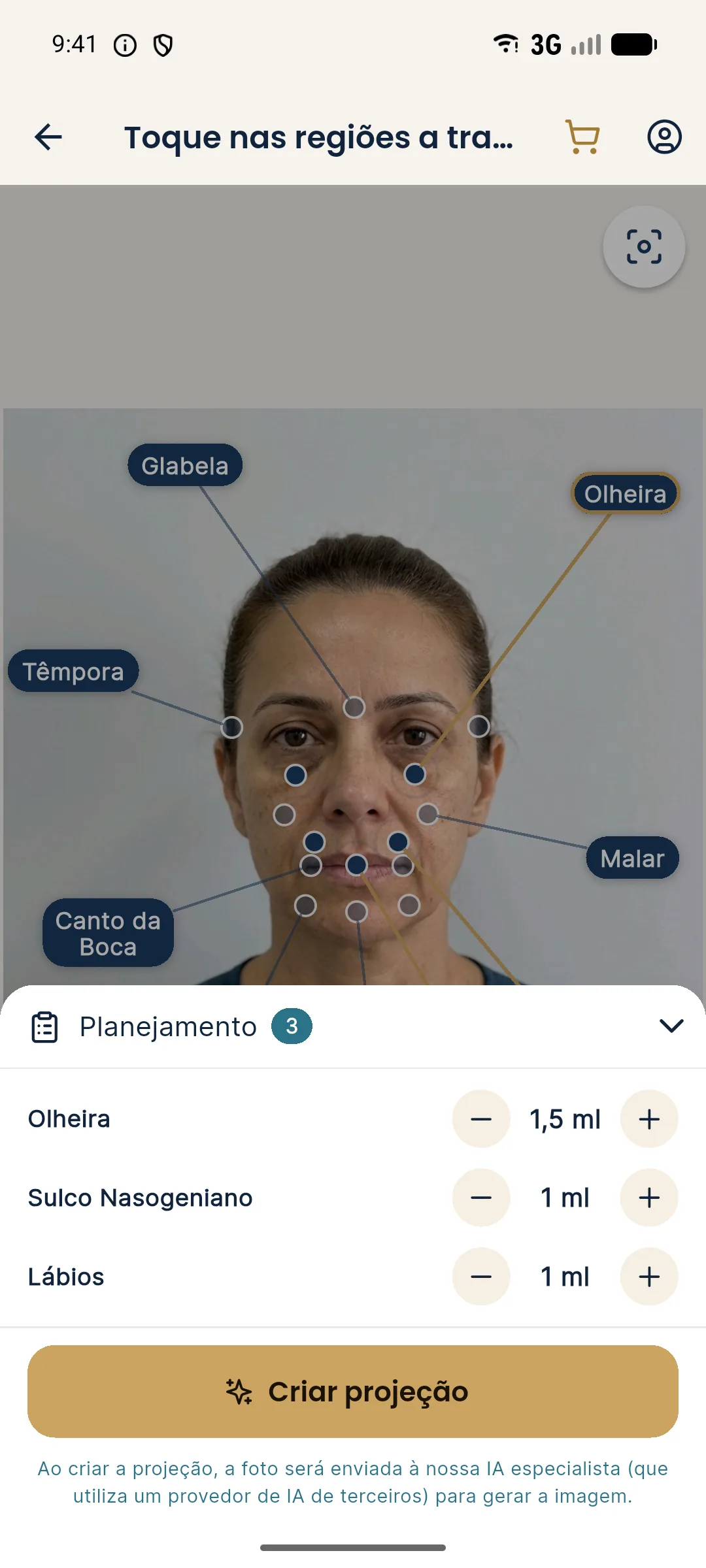
The projection helps turn hurry into a plan. Instead of saying "we can't do everything today", you show a staged version and explain what each stage leaves for later. The patient sees the path and understands that time is part of the result. It is an illustration, not a promise, and the notice must be given.
What if the patient has already paid or traveled?
Do not let the financial matter or the trip decide for the clinic. If the indication is safe, the procedure can go ahead, and if it is not, explain clearly and sort out the practical matters afterward. Agreeing on rescheduling rules in writing keeps the "I already paid" pressure from forcing a decision. See aligning expectations in writing.
What do I tell the team and reception?
The patient's hurry usually reaches reception first, by message or phone: "can the doctor do it today?". Agree on a standard answer that promises neither a time slot nor a procedure before the assessment, for example "we will schedule an assessment, and the professional decides what is possible". That way the decision stays clinical and the patient arrives with the right expectation.
And the record?
Write down the request, the deadline the patient stated, the assessment, the decision (postpone or do in stages), the guidance on swelling and bruising, and what was agreed. If the patient insisted and you held your decision, record it without adjectives. The record shows the decision was clinical.
When the patient feels your decision is about them and not about the schedule, the no becomes trust and the pace of the plan stops being an obstacle.
Frequently asked questions
How do I handle a patient who wants the procedure today, with no planning?
Explain that the plan needs assessment and time, offer the first stage that can be done safely and schedule the next ones. If there is no indication or safety for that day, say no and propose a date.
Can I decline the procedure on the same day as the consultation?
Yes. Depending on the assessment, consent and safety, the professional may choose to do it another day. Deciding calmly is part of good practice.
What do I tell a patient who has an event and wants treatment the day before?
Explain that swelling and bruising may appear and take days to go away, and that the ideal is to treat well in advance. If there is no time, propose postponing or doing a more restrained procedure.
Is treating on the same day a problem?
Not necessarily. In some cases the professional assesses and treats on the same day. The point is that the patient's hurry should not decide the timing of the procedure on its own.
Harmy images are illustrative simulations generated by AI from the patient's photo to support the conversation between practitioner and patient. They are not a promise of results. Indication, technique, product and volume are solely the decision of the licensed practitioner. This content is for information only and does not replace a clinical assessment.