
Showing the simulation in stages: one area at a time

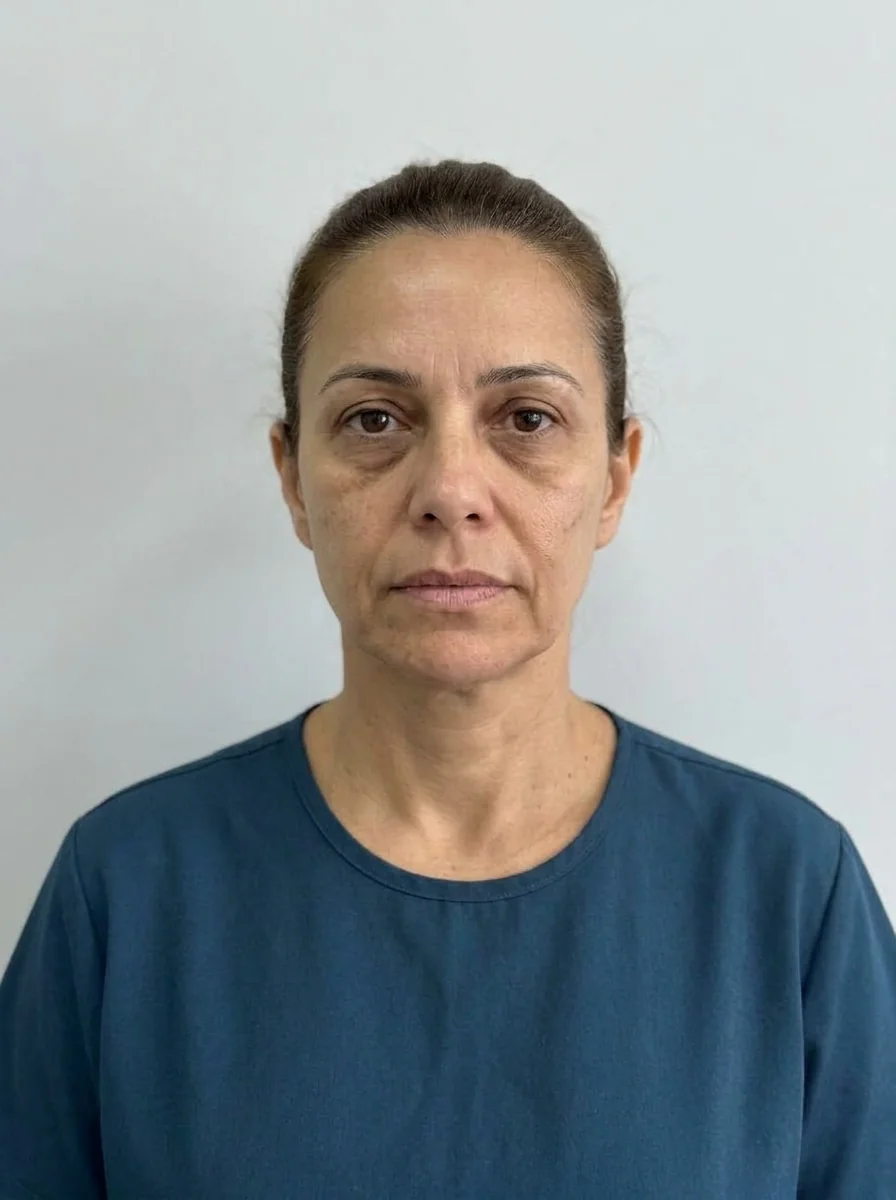 BeforeSimulation
A harmonization plan with four or five areas is usually presented as one block: one image, one list, one price. For the professional, that is coherent. For the patient, it is too much information at once, and they tend to react to the total (the price, the volume, the change) instead of understanding each part.
Showing the simulation in stages, one area at a time, solves that. Below: how to build that sequence, what to say at each step and how to document it. Everything here is about communication, left to the judgment of the qualified professional, in line with the rules of their professional board in Brazil.
Why split the simulation?
Because patients decide better when they understand the role of each piece. A few practical reasons:
- Limited attention. After two or three areas, the patient loses the thread.
- Visible priority. The order shows what is essential and what is an add-on.
- Control. They can accept stage 1 and wait on the rest.
- Honesty. One area at a time makes clear what each intervention suggests, instead of mixing effects.
- Safety. In many cases, the professional prefers to assess the face's response before moving forward.
This is not a sales strategy in disguise. If it becomes one, the patient notices. The criterion is that the split must make clinical and communication sense, not only commercial sense.
How do you build the sequence?
One possible order starts from the patient's concern:
| Stage | Criterion | Example line |
|---|---|---|
| 1 | The area that bothers the patient most | "Let's start with what you mentioned most" |
| 2 | The area that supports the result of the first | "This one helps hold up what we saw" |
| 3 | A refinement area | "Here it would be an adjustment, and it can wait" |
| 4 | Maintenance or add-on | "Only after we see how your face responds" |
The real order depends on the case. On a face with volume loss in the midface, the cheekbone may be stage 1, with lips or chin coming later. On another, the chin itself may be the priority. There is no universal recipe, and the decision is yours.
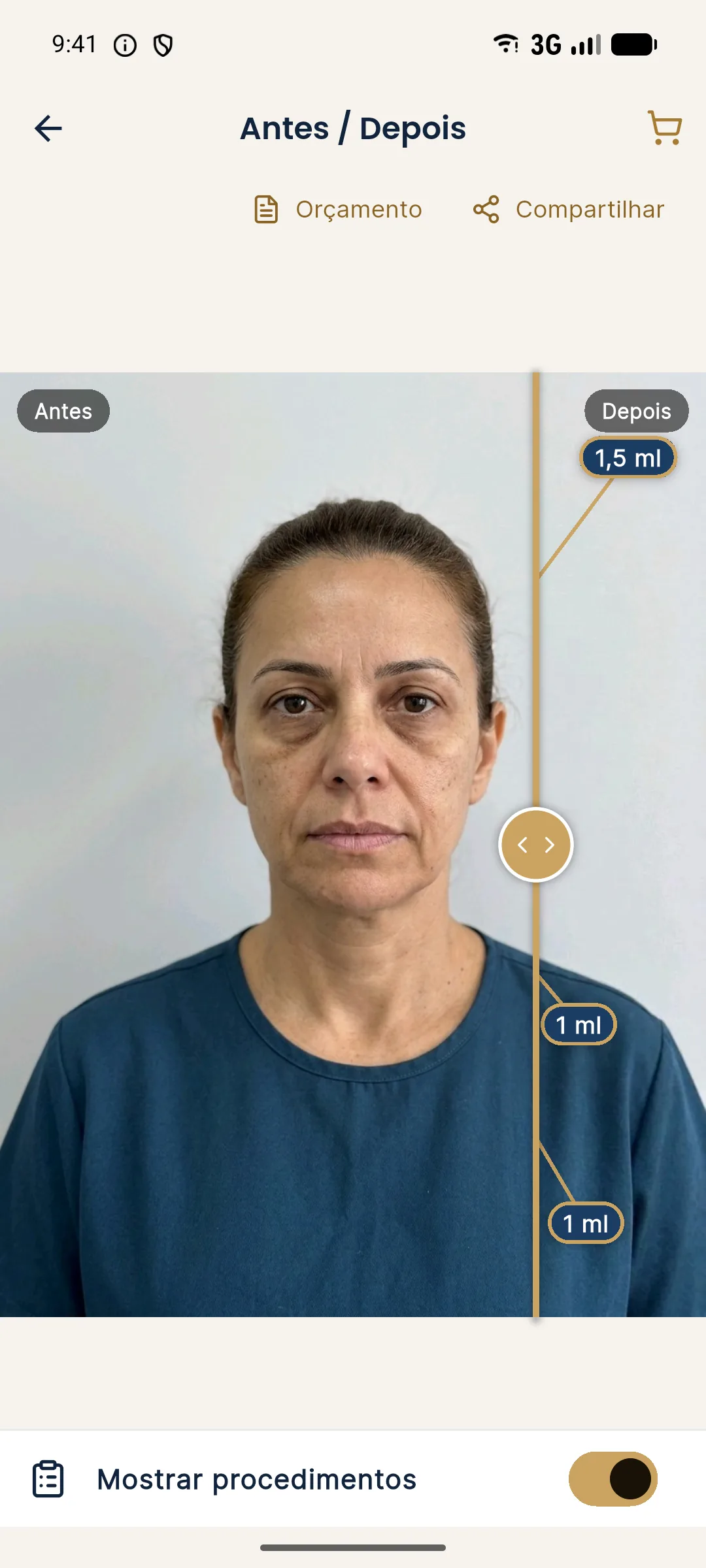
Step by step in the consultation
- Show the Before photo alone first and ask the patient to say what they see. That anchors the conversation.
- Present the first stage with a single area marked. Use the slider and let the patient move the line.
- Explain the ml of the stage, in plain language, and the intensity chosen.
- Ask for their reaction. "What do you think about starting here?"
- Move on to the second stage only if the patient wants to. Show a new projection, not the sum.
- Close with the overall design. If there is a full plan, present it last, as an overview, and say that each stage can be decided separately.
Plan ahead how many projections you will generate, so you do not spend credits for nothing. The sample patient (a fictional person) is useful for practicing the sequence without the cost of a real patient.
What should you say about order and priority?
The conversation about order has three messages:
- What comes first and why. "Starting with the cheekbone provides a base for the rest."
- What can wait. "The chin can be assessed later, once the face settles."
- What can change. "If at the review you feel you want a different priority, we adjust."
The word "adjust" matters: the staged plan is not a closed contract. The simulation is illustrative and the sequence is a proposal, not an obligation. See also showing the zone map in the conversation and the patient's priority list.
What about a staged quote?
The price follows the same logic. Instead of a single number, present the quote by stage, with the ml and the price per area. That makes it easier for the patient to decide only the first stage. The Harmy quote in PDF calculates the price per ml of each area from the price table saved in My clinic, with a discount and validity in days. For the financial conversation, see how to explain the quote by area and building a quote by ml in Harmy.
What about the interval between stages?
The time between one stage and the next is a clinical decision. Factors that usually come into play:
- the face's response to the previous stage, including swelling;
- new concerns from the patient;
- the feeling of "it looks good" or "I want more";
- the schedules of the patient and the clinic.
Talk about the interval as a range and a possibility, never as a promised date. If the person has an event, see I have an event coming up.
What to document?
- Which stages were proposed and in what order.
- Which stage the patient accepted.
- What was left open and the condition for resuming.
- That the images were presented as illustrative.
The informed consent should cover what will be done at each stage, and the patient record holds the progress.
Frequently asked questions
Why show the simulation in stages?
Because a plan with several areas at once overloads attention and makes deciding harder. Stages let the patient understand the role of each area and the proposed order.
Does Harmy generate one image per stage?
The app generates one projection per session, with the areas and ml marked in that session. To show stages, you can create separate projections, with fewer areas in each.
Does showing in stages increase the chance of closing the plan?
That is not the goal and there is no promise. The purpose is clarity: the patient understands what each stage proposes and decides with more confidence.
Do I have to follow the order of the stages?
The order is a proposal left to the professional's judgment. It takes into account the concern, the anatomy, safety and what the patient wants to prioritize.
Harmy images are illustrative simulations generated by AI from the patient's photo to support the conversation between practitioner and patient. They are not a promise of results. Indication, technique, product and volume are solely the decision of the licensed practitioner. This content is for information only and does not replace a clinical assessment.