
Aligning Expectations About Swelling and Bruising Pre-Treatment

Swelling and bruising are the two most common events after an injectable procedure, and the two that generate the most panicked messages the next night. In large part, the problem is not the event itself but the surprise: the patient thought it would not happen, or would be smaller, or would last less time.
Aligning on this before you start changes the experience. This page proposes a chart by area to hand to the patient, the conversation that goes with it and what to document. Timelines are usual ranges, at the discretion of the qualified professional, after assessment.
Why does the patient get so alarmed?
Because the face is visible, and any change shows up in meetings, photos and on social media. Many patients book a procedure before an event and do not account for recovery time. Others compare themselves with someone who "didn't even have a mark." Without a clear explanation, normal swelling turns into suspicion of a mistake.
There is also a clinical risk: if the patient learns that "everything is normal," they may be slow to report a sign that is not. That is why the conversation must separate what is expected from what warrants contact.
What is expected, and in what order?
The most commonly cited events are:
- Swelling (edema). Usually greatest in the first days and gradually decreasing. It can differ from one side to the other.
- Redness and tenderness at the site. Usually mild and short-lived.
- Ecchymosis and hematoma (bruising). They can appear hours or days later, change color over time and gradually fade.
- Small palpable irregularities. They may be felt in the first days, generally due to the product settling and to swelling.
- Mild pain or discomfort. Usually improves quickly.
Chart of expected events by area
The chart below is a conversation guide, not a protocol. The times are usual ranges and vary with the product, the technique and the patient.
| Area | What the patient usually notices | Usual range for improvement | Note for the conversation |
|---|---|---|---|
| Lips | Visible swelling, temporary asymmetry, tenderness, sometimes bruising | From days to about two weeks | The area swells easily, and the patient should avoid booking events soon after |
| Under-eye area | Swelling, sometimes bruising or a bluish tone that causes worry | From days to a few weeks | Thin skin makes bruising more visible |
| Cheekbone | Diffuse swelling, tenderness, small purple dots | From days to about two weeks | Swelling can mask the result in the first days |
| Nasolabial fold | Local swelling, tenderness | From days to about two weeks | Watch for warning signs in this area |
| Chin and jawline | Swelling, a feeling of extra volume, sometimes bruising | From days to a few weeks | The final contour is only assessed once the swelling subsides |
| Glabella and forehead (toxin) | Small red dots, sometimes slight bruising | A few days | The toxin's effect appears later, not the same day |
When should the patient contact the professional?
The patient needs to know the signs that cannot wait for the follow-up. Give them in writing, along with the contact channel:
Do not reassure by message without seeing the patient when the report suggests something outside the expected. Ask for a standardized photo and, if in doubt, call them in for assessment.
What changes the risk of bruising?
The medical history should ask about medications that affect clotting, supplements, alcohol, a tendency to bleed and recent use of anti-inflammatories. See anticoagulants and injectable procedures. Advice on stopping or continuing any medication belongs to the prescriber and to the professional performing the procedure; the patient should not stop on their own.
How do you help the patient plan their schedule?
Ask before booking: is there an event, trip, shoot or commitment where appearance matters? If so, propose the procedure date with a margin. Many professionals suggest leaving a reasonable interval before important events, but the timing is your decision. The broader timeline chart is in aligning expectations about time.
What should go in the patient record?
- The conversation about swelling, bruising and warning signs.
- Relevant medications and supplements reported.
- Upcoming events the patient had.
- Instructions given in writing and the contact channel.
- Any same-day complication.
The patient record and the informed consent close the conversation. For model phrases, see aligning expectations in writing.
Frequently asked questions
How long does swelling last after filler?
In general, swelling is greatest in the first few days and fades over a few days to two weeks, depending on the area, the product and the patient. The timeline for each case is assessed by the professional.
Is bruising after filler normal?
It is a relatively common event that usually appears in the first hours or days and gradually fades. Bruising that grows a lot, comes with intense pain or with a change in skin color should be reported to the professional.
How can I avoid bruising with filler?
There is no guarantee of avoiding it. The professional reviews medications, supplements and habits in the medical history and advises what is needed. The patient should not stop any medication without guidance.
When is swelling after a procedure cause for alarm?
When it is disproportionate, asymmetrical and growing, or comes with strong pain, redness, heat, fever or a change in color. In these cases, the patient should contact the professional immediately.
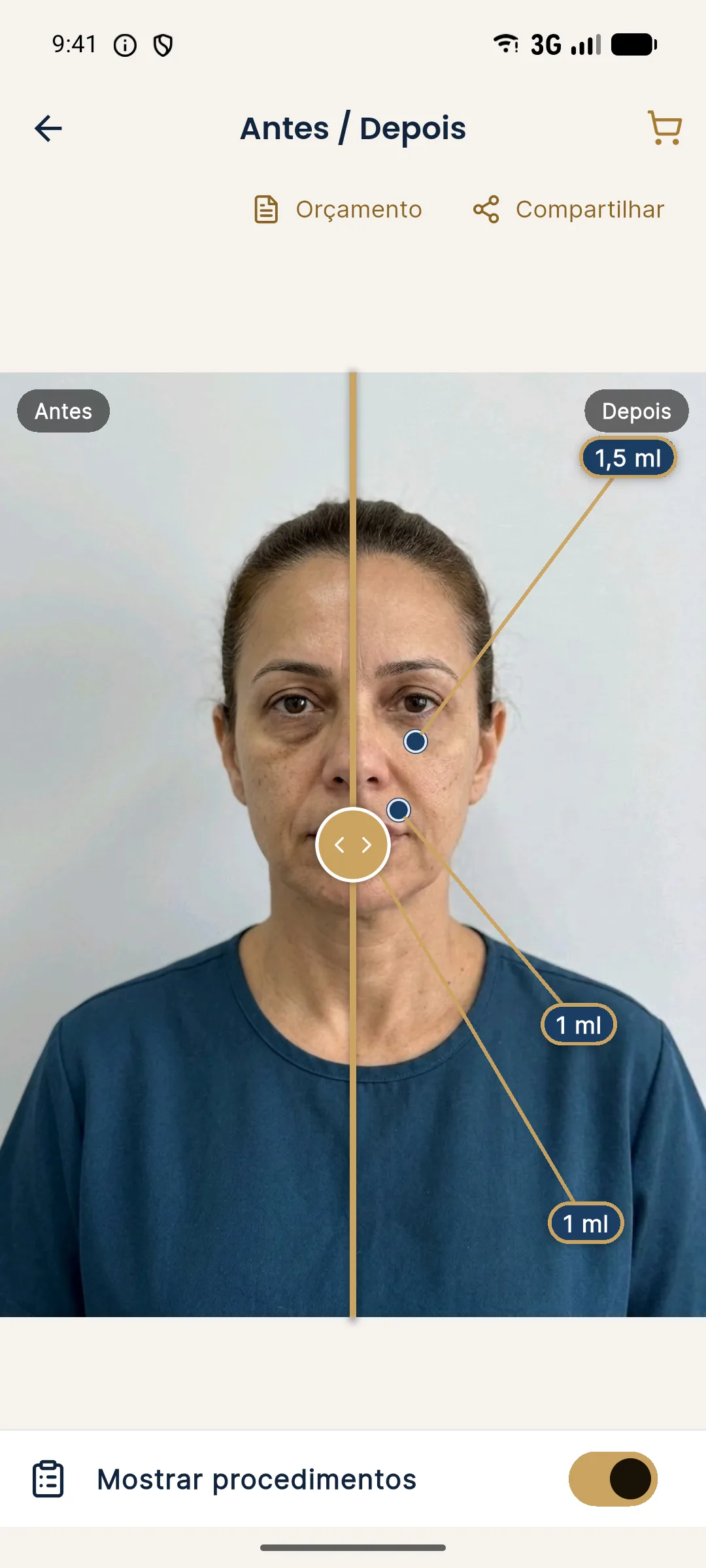
Harmy images are illustrative simulations generated by AI from the patient's photo to support the conversation between practitioner and patient. They are not a promise of results. Indication, technique, product and volume are solely the decision of the licensed practitioner. This content is for information only and does not replace a clinical assessment.