
When the problem is the bone, not the volume
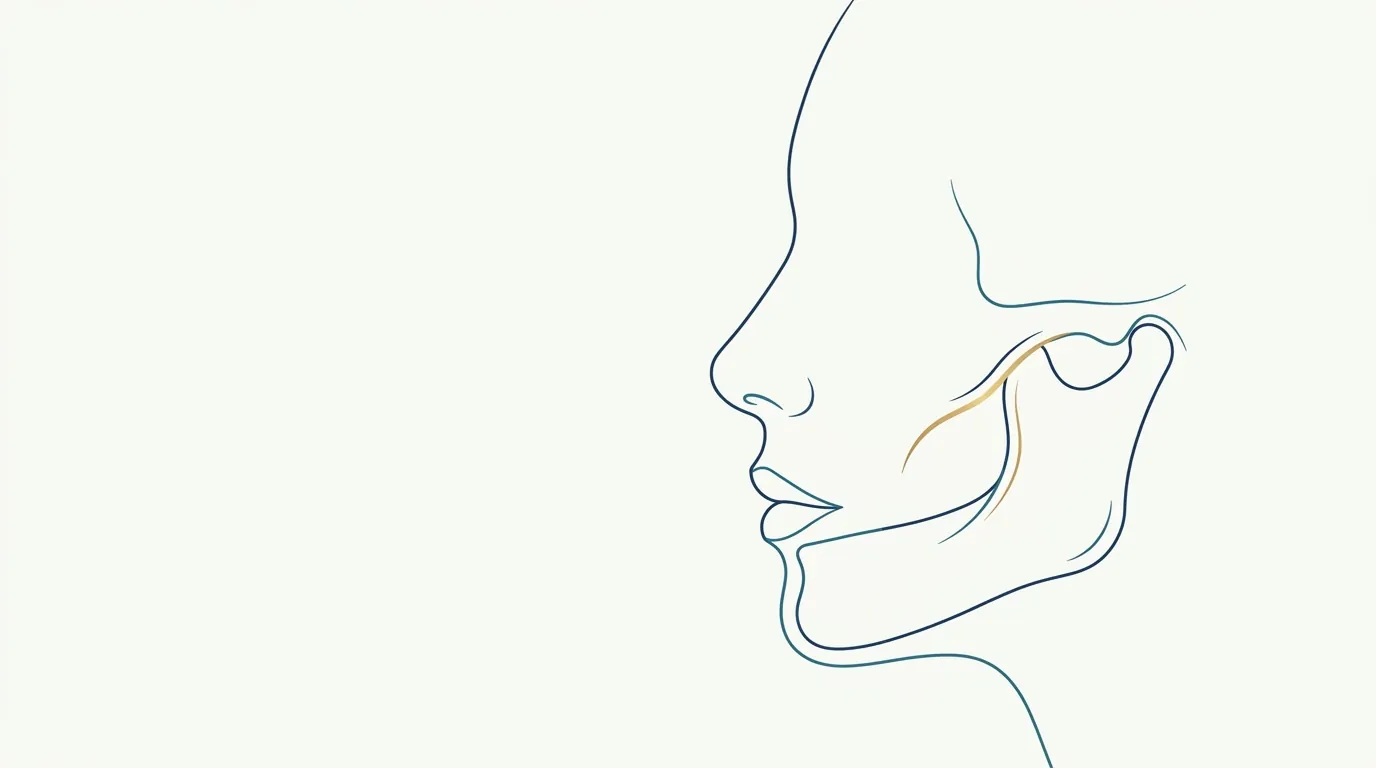
- Nerve
- Highlighted area
Quick facts
- Principle
- Volume adds tissue, not bone; when the deficit is skeletal, volume has a ceiling
- Signs
- Evident retrusion in profile, occlusal change, palpable bone asymmetry, a concern that does not change with modest volume
- Action
- State the limit, consider an orthodontic or surgical assessment and use volume as a complement
- Caution
- Adding volume beyond the tissue the area can support produces an artificial look and may worsen proportion
Filler is a volume tool. However refined, it adds tissue where tissue is missing. When what is missing is bone, volume can improve the look within certain limits, but it does not correct the cause. Going past those limits produces the opposite of the desired effect: puffy faces, artificial projections, distorted proportions.
This text helps you recognize when the skeleton is the problem, explain the limit to the patient and refer safely. It covers planning and assessment, at a review level, and does not describe technique.
What does "the problem is the bone" mean?
It means the look that bothers the patient comes from a bony relationship, not from soft tissue loss. Examples: a recessed chin due to a short mandible, a flattened cheekbone due to zygoma hypoplasia, a concave profile due to an underdeveloped maxilla, contour asymmetry due to differences in the bones. In these cases, the face has little support, and the soft tissue follows the bone.
Terms such as retrogenia, micrognathia and malar hypoplasia describe these situations. The initial reading is in facial skeleton before injecting.
Which signs suggest a skeletal cause?
No sign alone is proof. Together, they help raise the hypothesis:
- Evident retrusion in profile, not explained by loss of volume in the chin or cheekbone.
- Occlusal change, such as Angle class II or class III, open bite or crossbite.
- Palpable bone asymmetry, with a difference in height or projection between sides.
- A long-standing concern, present since youth, rather than one that set in with aging.
- A very convex or concave profile, per the facial convexity angle.
- Modest volume does not change the reading of the profile: the patient asks for more and more, without reaching the goal.
Assessment by imaging and cephalometry belongs to the specialist, but recognizing the suspicion is within reach of the facial harmonization professional. Profile reading is in facial profile analysis: checklist.
What is the ceiling of volume?
Volume increases the projection of skin and soft tissue, and that changes the look. However, there is a point where the skin stretches, the contour loses definition and the result stops looking natural. In a face with a significant bone deficit, that point is reached early. The classic sign is a "puffy" face instead of a "projected" one.
| Situation | Role of volume | Comment |
|---|---|---|
| Mild bone deficit | Can improve the look | Result depends on the soft tissue |
| Moderate bone deficit | Complement, with a limit | Expectations need to be calibrated |
| Significant bone deficit | Limited role | Orthodontic or surgical assessment recommended |
| Bone asymmetry | Partial camouflage | Does not correct the bone, and the patient should know |
The notion of excess and accumulation is in when the total volume becomes excess and in pillow face and how planning avoids it.
In which areas does this show up most?
Chin and jaw: retrogenia and micrognathia appear as a recessed chin and a short mandible. Chin filler and jawline filler can improve the look in mild cases, at the professional's discretion. In a significant deficit, orthodontics or orthognathic surgery are described paths. See ideal chin projection by sex.
Cheekbone and zygoma: malar hypoplasia leads to a flattened midface. Malar filler is used, carefully, to improve projection. The limit is the same, and the goal is discussed in ideal malar projection. The area requires vascular attention, and hyaluronidase must be available when the product is hyaluronic acid.
Maxilla and midface: maxillary hypoprojection changes the relationship between nose and lip. See maxillary projection and midface in profile.
Jaw contour and angle: asymmetry from a bone difference can be partly camouflaged, but not evened out. See ideal jaw angle by sex.
How do you talk to the patient about this limit?
Frankly, without discouraging. The patient wants to know what is possible, and deserves to hear that the answer may be partial. Use images, show the relationships in the profile and explain the role of each specialty. Avoid promises. The conversation about what harmonization does not solve is in explaining what harmonization does not solve.
The decision is the patient's, and informed. If they choose volume, document that the limit was explained, per the duty to inform, and use a conservative scenario.
How does Harmy fit in?
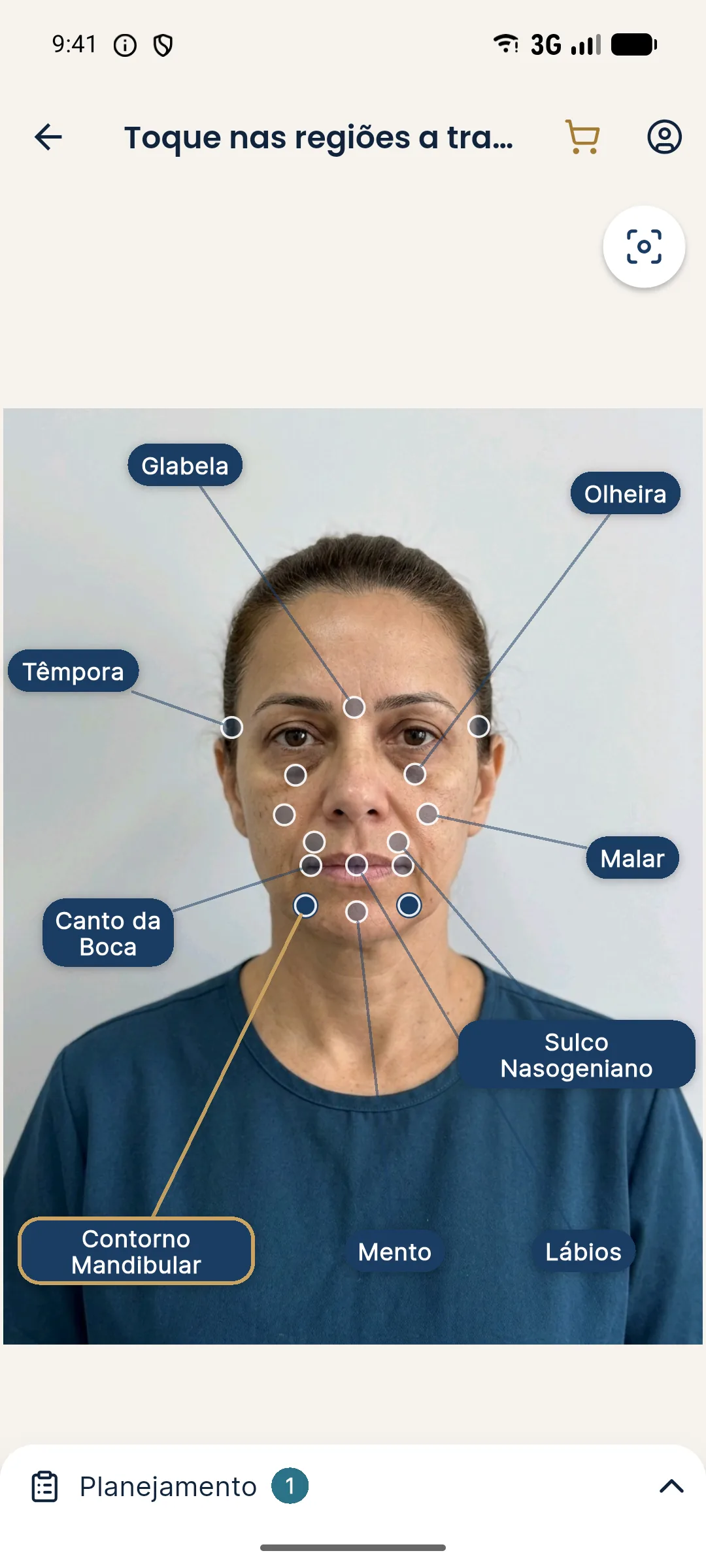
The app simulates volume on a frontal photo. It does not assess bone, occlusion or profile, so it should not be used to suggest that volume solves a bone issue. It can help in discussing what volume changes and what it does not, showing that a high-ml projection does not alter the structure.
When and how to refer?
Referring does not mean losing the patient. It means widening the care. Consider referring when:
- there is an evident occlusal change or a bite complaint;
- the profile is greatly altered and the patient wants a structural change;
- the bone asymmetry is marked, with functional impact;
- volume has already been tried without solving the concern;
- the patient shows interest in surgical solutions.
The referral may be to orthodontics, oral and maxillofacial surgery or plastic surgery, depending on the case and the rules of your board. Keep the relationship: many patients combine approaches, with volume as a complement. See facial harmonization plan after orthodontics and handing a plan over between professionals.
Frequently asked questions
Does filler correct a bone deficiency?
It does not correct the bone. It can improve the look of projection in mild to moderate deficits, but with a relevant skeletal deficit volume has a limit and an orthodontic or surgical assessment may be needed.
How do I know if the problem is bone?
Palpation, standardized profile photos, an occlusion assessment and, when indicated, imaging and cephalometry help. Suspicion arises when the recession is evident and the concern is not explained by soft tissue loss.
What should I do when volume does not solve it?
Explain the limit to the patient, consider referral to orthodontics, oral and maxillofacial surgery or another specialty, and keep volume as a complement when it makes sense.
Does Harmy show whether the problem is bone?
No. The app uses only the frontal photo and simulates volume. It does not assess bone, occlusion or profile, and that reading is clinical.
Harmy images are illustrative simulations generated by AI from the patient's photo to support the conversation between practitioner and patient. They are not a promise of results. Indication, technique, product and volume are solely the decision of the licensed practitioner. This content is for information only and does not replace a clinical assessment.