
Facial harmonization plan during and after orthodontics
Quick facts
- Idea
- Orthodontics can change the lips, chin and profile; planning before it ends can lead to rework
- Rule of thumb
- Reassess the profile once the main tooth movement is over
- Partnership
- Align timing and goals with the patient's orthodontist
- Caution
- Fixed braces and lip injections call for attention to comfort and mucosal injury
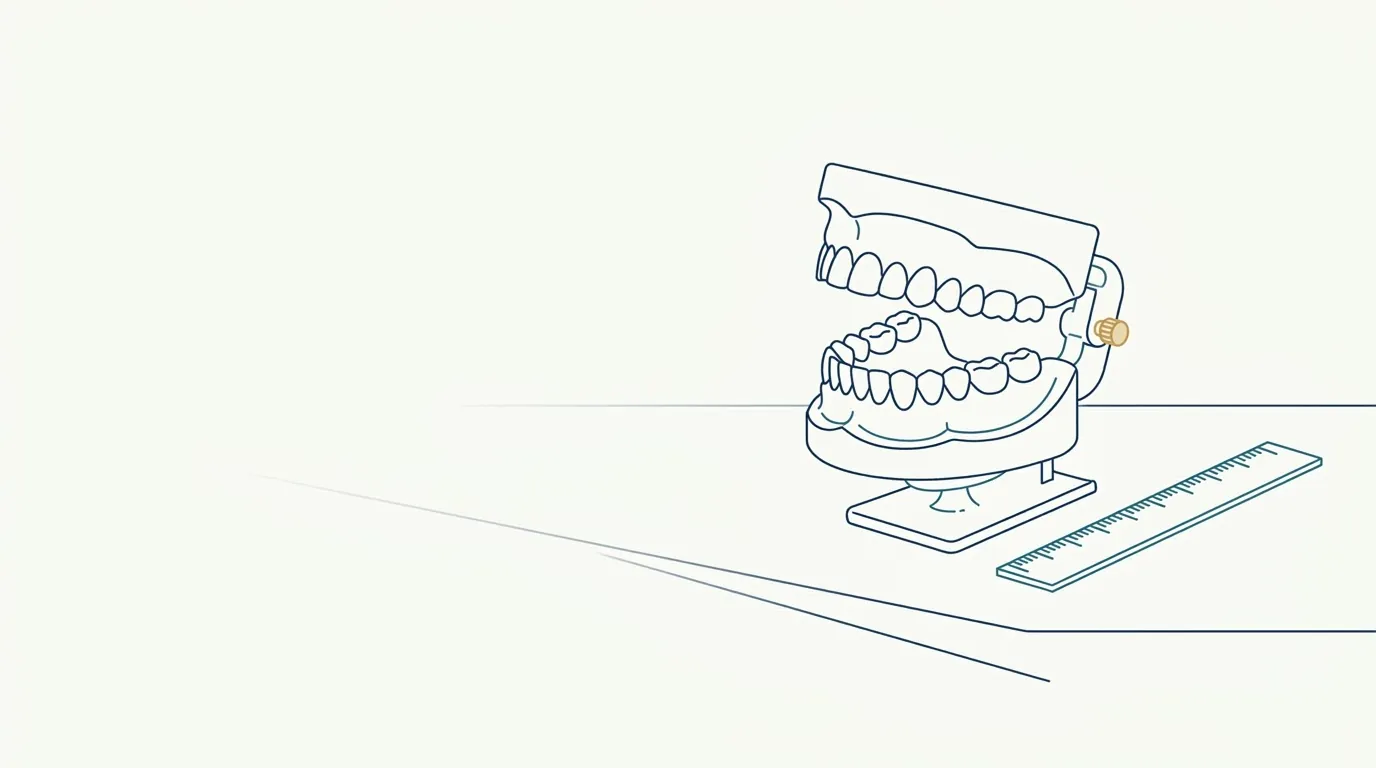
Orthodontics moves the teeth, and the teeth support the lips. When the position of the incisors changes, the projection and position of the lips can change with them, and so does the profile. Planning facial harmonization in the middle of that movement is like measuring a wall while it is being moved: today's number may not hold tomorrow.
How does orthodontics influence the profile?
Tooth movement can alter the position of the incisors relative to the lips, the space for the smile and the relationship between the lower lip and the chin. In many cases, this changes the profile significantly. The effect is individual, depends on the type of movement (retraction, protrusion, expansion) and is predicted by the orthodontist in their treatment plan.
For harmonization planning, the takeaway is: today's profile may not be the final profile. See orthodontics and facial profile in harmonization, harmonization or orthodontics and orthodontics and profile change.
When to wait and when to do it?
There is no single rule. A general breakdown helps organize the conversation:
| Moment | General stance | Why |
|---|---|---|
| Before starting orthodontics | Talk with the patient and the orthodontist; avoid changing the profile beforehand | The orthodontic plan may change the need |
| During the main movement | Generally, wait | The profile is still changing; risk of rework |
| Retention or finishing phase | Assess | The profile is close to final |
| After the braces are removed | Full reassessment | Stable base for planning |
There are exceptions. A toxin procedure, for example, follows a different logic from chin filler. The decision is the professional's, and the orthodontist's opinion counts.
What should you reassess after the braces?
When the braces come off, it is worth repeating the assessment as if it were a new patient, paying attention to:
- Lip position and projection. They may sit further in or out than before.
- Lip-chin relationship. The chin may look more or less recessed.
- Buccal corridor and smile. The smile arc changes. See buccal corridor and smile and smile analysis in harmonization.
- Mouth corners. Their resting position may change. See mouth corners, marionette lines and chin.
- Profile. With a standardized profile photo. See profile facial analysis.
Many concerns the patient attributed to "thin lips" or "a small chin" disappear or change after braces. Planning before them may treat a problem that will no longer exist.
Fixed braces and lip injections: what to consider?
Fixed braces (brackets and wires) make contact with and press against the lip mucosa. A lip with increased volume can rest harder on the brackets, causing discomfort, ulceration or injury. This is part of the timing decision. In addition, the mucosa may be sensitive and hygiene in the area needs attention. See braces and lip filler for the patient's view.
How does the simulation help?
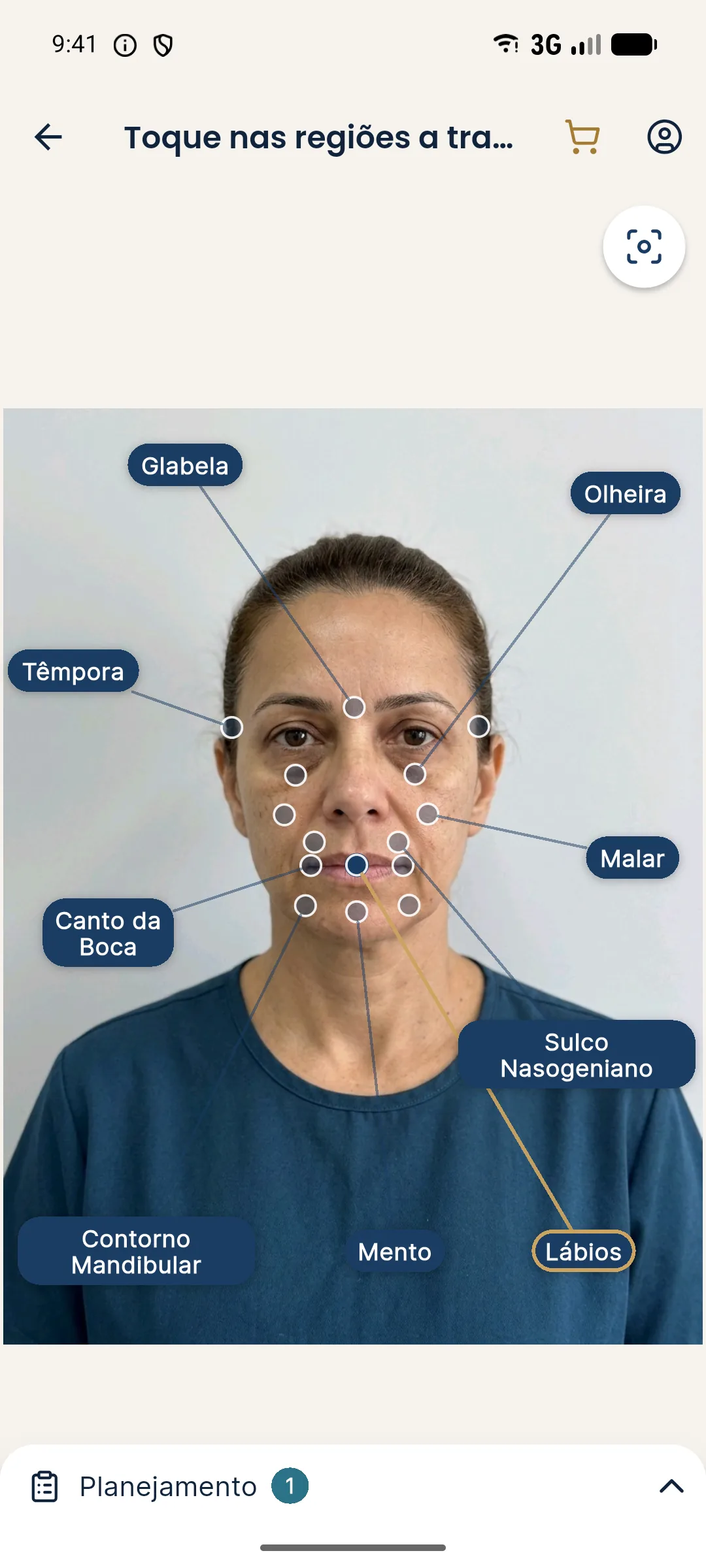
Harmy's simulation uses only the frontal photo, so it does not show the profile change that orthodontics may bring. Its use here is limited and should be honest: it serves to show the illustrative effect of a lip volume, not to predict the face after orthodontics.
Record the date of the photo and the orthodontic phase, and redo the simulation when the braces come off. Keeping versions is practical: see keeping simulation versions per follow-up. The limits of the image are in limits of 2D simulation.
How do you organize the timeline?
The same reasoning applies to other interventions that change structure, such as orthognathic surgery and harmonization. When the plan involves several professionals, a single plan sheet helps: see facial treatment plan sheet.
What questions should you ask the patient and the orthodontist?
To the patient: what is the expected finish date? Are extractions or surgery planned? What did the orthodontist say about the final profile? To the orthodontist, with permission: will the incisors be retracted or protruded? What is expected for lip support? Does wearing a retainer change anything? These answers avoid weeks of planning around a profile that is going to change.
What if the patient is in a hurry because of an event?
Scheduled events create pressure. The honest way out is to separate what is safe to do now, in restrained volume and without depending on the profile, from what should wait. If the desired procedure depends on the final profile, explain that doing it now may mean redoing it. The decision is the patient's, made with information.
How do you document the partnership?
Note in the patient record the orthodontist's contact, the date of the conversation, what was agreed and the patient's permission. If orthodontics ends and the profile is different, the record shows why the harmonization plan was postponed and protects the trust with the patient and the colleague.
Practical summary
Wait for the profile to stabilize before planning lips and chin, talk to the orthodontist with the patient's permission, check the mucosa before injecting when braces are fixed, and redo the photo and simulation at the end. Record the orthodontic phase at every visit.
Frequently asked questions
Can I do facial harmonization while the patient wears braces?
It depends on the procedure and the timing. Often it is preferable to wait until the main movement is over, because the profile changes. The professional assesses case by case, preferably together with the orthodontist.
Does orthodontics change the lips and chin?
It can change the position and projection of the lips and their relationship with the chin, depending on how the teeth move. The effect is individual and is assessed by the orthodontist.
Does lip filler get in the way of braces?
Fixed braces can press against the lip and cause discomfort or mucosal injury in lips with increased volume. This is part of the decision on when to do it.
Do I need to talk to the orthodontist?
Coordinating is recommended, because the orthodontist knows the movement plan and the expected finish date, and that affects the timing of the harmonization.
Harmy images are illustrative simulations generated by AI from the patient's photo to support the conversation between practitioner and patient. They are not a promise of results. Indication, technique, product and volume are solely the decision of the licensed practitioner. This content is for information only and does not replace a clinical assessment.