
1/3 to 2/3 Proportion in the Lower Third of the Face
- Nerve
- Highlighted area
Quick facts
- Proportion
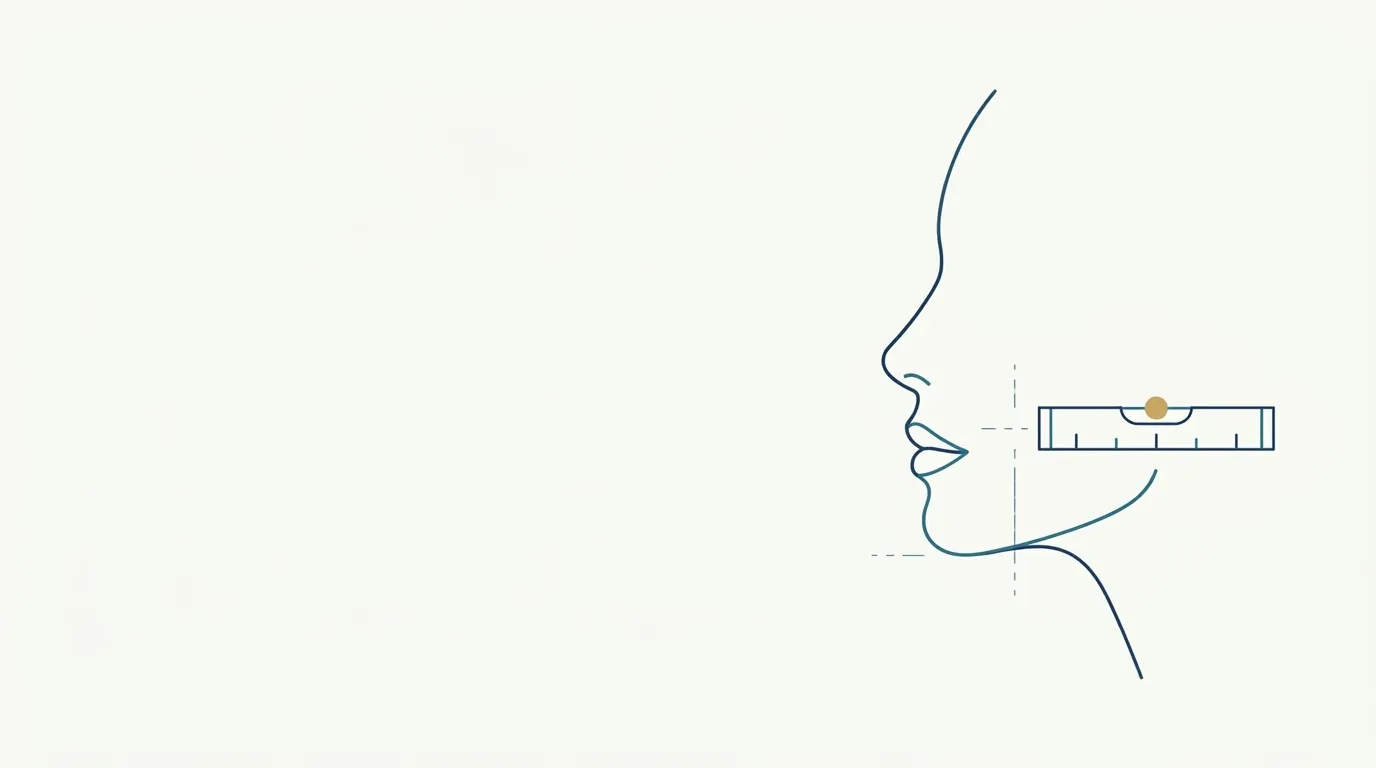
- In the lower third, the upper lip takes up about one third of the height, and the lower lip with the chin about two thirds
- Measuring points
- Subnasale, stomion and menton, on a standardized frontal photo
- Use
- An assessment reference that guides lips, philtrum and chin; not a numerical goal
- Caution
- Variation by population, age and sex is large; the proportion does not replace reading the smile and the profile
Dividing the face into proportional parts is an old tradition that runs through art and anthropometry. In the lower third, one of the most cited relationships is one to two: the upper lip takes up about one third of the height between the base of the nose and the chin, and the lower lip plus chin takes up about two thirds. When you look at a patient's face, this relationship works as a flag that something is out of proportion.
Here you will see what each measuring point is, how to apply the proportion without turning it into dogma and how it fits into the decision among lips, chin and contour.
How is the proportion measured on the photo?
Three points are enough. The subnasale is where the base of the nose meets the upper lip. The stomion is where the lips meet, with the mouth at rest. The menton is the lowest point of the chin in the frontal plane. The subnasale-stomion distance and the stomion-menton distance are compared.
The photo must be frontal, with a neutral expression, relaxed mouth, teeth not forcibly in contact and the head in the horizontal plane. Any smile or contraction changes the measurement. The standard is in reference lines on the frontal photo and in neutral expression in the planning photo.
What does the proportion suggest when it is off the standard?
The reading is always about hypotheses, not diagnoses. Each hypothesis leads to a type of investigation:
| Finding | Hypotheses to investigate |
|---|---|
| Upper lip long relative to the whole | Constitutional lip height, premaxilla position, lip ptosis with age |
| Short upper lip | Loss of vermilion volume, philtrum retraction, increased incisor display |
| Short lower lip and chin | Retrogenia, short jaw, lack of chin volume |
| Long lower lip and chin | Elongated chin, excess submental tissue, increased lower facial height |
The length of the upper lip and the philtrum change tooth display, which is covered in incisor display and in smile analysis in facial harmonization. A disproportion that looks "like the lip" may be the chin, and vice versa. That is why the relationship with the profile matters, as in ideal chin projection by sex.
What does the proportion rest on, and what are its limits?
The division into thirds and the one-to-two relationship come from classical canons and from facial anthropometry studies. They are useful as a common language, but have clear limits:
- Variation by population: lip, nose and facial height patterns differ between groups, as in facial proportions vary between populations.
- Variation by age: over time, the upper lip may lengthen and the vermilion thin.
- Variation by sex: the male lower third tends to be larger and more angular than the female.
- Occlusion: Angle class II and III and deep bites change the height of the lower third.
- Canons are not a rule: the discussion is in neoclassical canons of the face and in does a facial aesthetic ideal exist?.
How does the proportion guide the choice among lip, chin and contour?
The useful question is: where is the disproportion, and how does it show when the patient smiles and talks? Three lines of investigation:
- If the upper lip is short or thin: look at the vermilion, the Cupid's bow and the philtrum. Lip filler is one possible answer, at the professional's discretion, after assessment. The lips are a highly vascularized area, and the labial arteries call for care; hyaluronidase must be on hand.
- If the lower lip and chin look short: assess the projection and height of the chin. Chin filler is a possible route when there is a soft tissue deficit, keeping the limit of bone in mind.
- If the lower third is long: consider whether volume treatment helps, or whether the problem is skeletal and calls for a specialist assessment.
The combination texts help with the decision: lips and chin: combining them in the plan, lips and mouth corners: combining them in the plan and complete lower third in the plan. There is also the case of a lower third larger than the middle third.
And the smile, does it count toward the proportion?
It does, a lot. The proportion is measured at rest, but the patient lives smiling and talking. An upper lip that looks long at rest may show little tooth when smiling, and vice versa. The dynamics are assessed in dynamic facial analysis in expression and in smile arc and lower lip curve. The buccal corridor is also part of the reading.
How to explain it to the patient without making them feel "measured"?
Avoid presenting numbers as a verdict. Show the photo and use the language of balance: "this part is a little smaller relative to the other, and that changes how the smile reads". Preserve what they like and what identifies them. The care is the same as described in facial identity: how to preserve it.
Frequently asked questions
What does the 1/3 to 2/3 proportion of the lower third mean?
It means that, from the subnasale to the menton, the stretch from subnasale to stomion (upper lip) takes up roughly one third, and the stretch from stomion to menton (lower lip and chin) roughly two thirds.
Does everyone need to follow this proportion?
No. It is an assessment reference. Variations by ancestry, sex, age and occlusion are common, and are often part of the patient's identity.
Does enlarging the upper lip correct the proportion?
It depends on the cause. The disproportion can come from the lip, the chin, the height of the jaw or the occlusion, and the assessment should identify the source before choosing where to act.
How does Harmy help with this analysis?
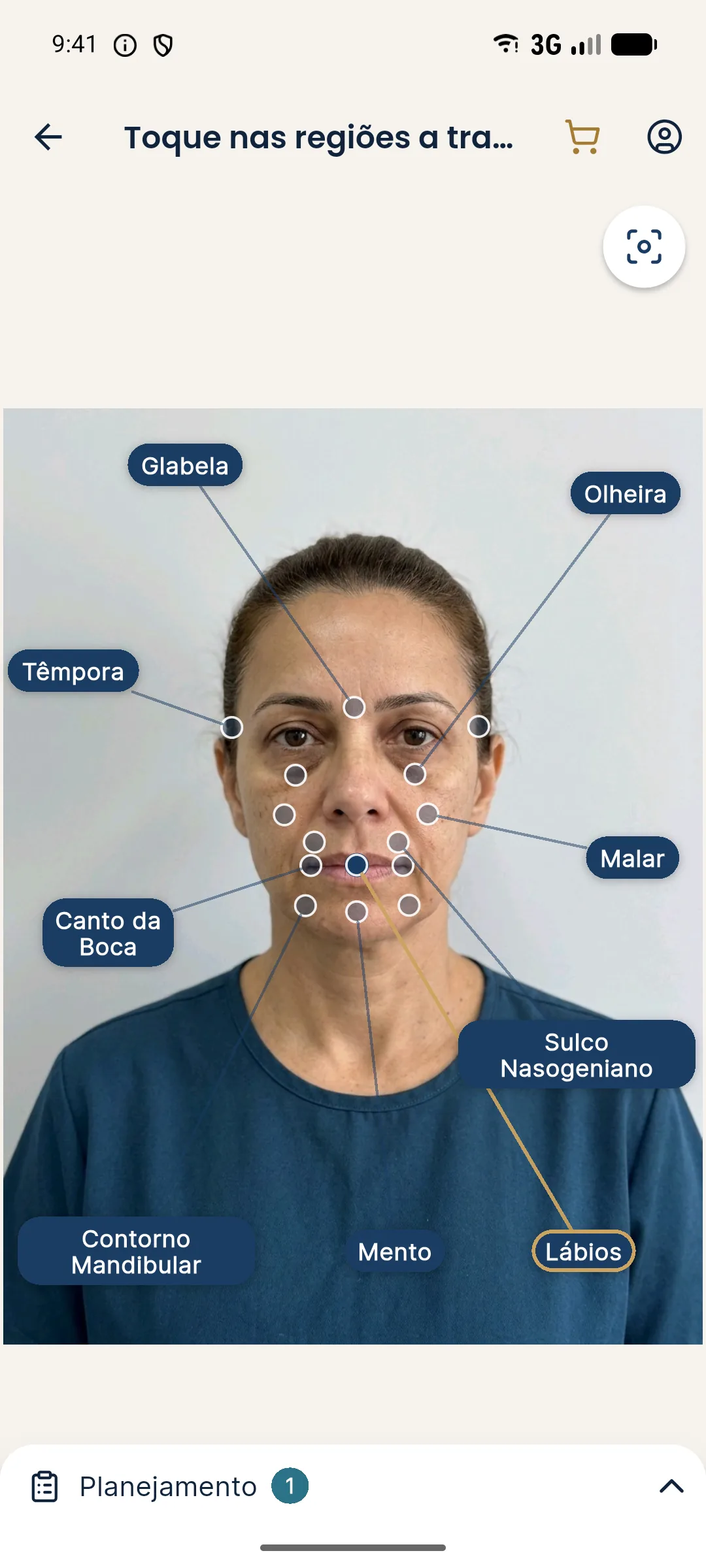
The app lets you mark Lips and Chin on the frontal photo and project the effect of ml and intensity. The proportion itself is measured by you, on the standardized photo.
Harmy images are illustrative simulations generated by AI from the patient's photo to support the conversation between practitioner and patient. They are not a promise of results. Indication, technique, product and volume are solely the decision of the licensed practitioner. This content is for information only and does not replace a clinical assessment.