
Lower third larger than the middle third: how to plan
- Nerve
- Highlighted area
Quick facts
- Topic
- Vertical disproportion with a dominant lower third
- First step
- Measure before concluding, in a standardized photo
- Areas that weigh most
- Cheekbone (to gain midface), chin and lips (to adjust the lower third)
- Limit of facial harmonization
- Bone and dental height cannot be corrected with injectables
- Who decides
- A licensed professional, after assessment
Not every face has three equal thirds, and that is not a problem in itself. The question arises when the lower third dominates how the face reads and the patient feels the face is "heavy at the bottom," "long" or "missing a middle." Planning in this scenario takes more honesty than technique: part of what the patient sees is bone and dental height, which facial harmonization does not correct. The rest may be perception, and there the plan has room. This page organizes the reasoning, without a protocol and without a promise.
How do you confirm that the lower third is larger?
Measure before concluding. Visual impression is influenced by hair, beard, makeup, head angle and even expression. Use a standardized frontal photo, with the head in the Frankfurt plane, a neutral expression and good lighting. Mark the reference points at the hairline, the glabella, the base of the nose and the chin, and compare the three distances. The measuring routine is in reference lines on the frontal photo and facial assessment by thirds.
Then separate real disproportion from perceived disproportion. A flattened midface can make the lower third look larger without the measurement changing. A very projected chin or a very defined jawline can do the same. That distinction is the heart of the decision.
What can facial harmonization do, and what can it not?
Facial harmonization works on the volume and contour of soft tissue and, to some extent, on perceived projection. It does not change bone length, tooth position or the vertical height of the face. That is why the honesty rule applies: when the disproportion is predominantly skeletal, harmonization helps to compensate, not to correct. See when the bone is the problem, not the volume and facial skeleton before injecting.
In some cases, assessment by other professionals (orthodontist, oral and maxillofacial surgeon) is part of the path, and saying so clearly protects both the patient and the professional.
| Origin of the disproportion | What is observed | Role of facial harmonization |
|---|---|---|
| Skeletal (increased lower facial height) | Bone and dental measurements outside the average | Limited; refer for specific assessment |
| Soft tissue (very projected chin, heavy jawline) | Dominant lower contour | Avoid adding volume; plan to reduce emphasis |
| Hypotrophic midface | Flat cheekbone, tear trough, fold | Support the midface with low ml |
| Combination | Several causes added together | Prioritize the one of greatest weight and split into stages |
Which areas go in, and which to avoid?
When the midface is what "is missing," the cheekbone and, at times, the infraorbital region enter the reasoning. The goal is not to make the midface "grow" in height, but to improve support and projection so that the reading of balance improves. Cheekbone planning is in ideal cheekbone projection and the overview of the third in complete midface in the plan.
In the lower third, the caution is the reverse: avoid adding volume to the chin, jawline and lips without need. A very projected chin lengthens the face even more. A very square jawline widens the base of the face. Very full lips reduce the visual distance between the nose and the chin, but can make the mouth dominant. None of this is a rule: the exam decides. More in one-third, two-thirds proportion in the lower third and plan to project the chin.
What risks and limits should be in the consent form?
The same as for any filler: swelling, bruising, asymmetry, nodules and, rarely and seriously, vascular occlusion. When hyaluronic acid is used, hyaluronidase must be available. In addition, it is worth recording in the consent form that facial harmonization does not change bone structure and that any improvement is one of perception. The idea of a "balanced" result should be described as a goal, not as a guarantee. The consent template per procedure is in informed consent per procedure.
Also record the alternatives discussed, such as referral to orthodontics or surgery. This strengthens the consent and the relationship with the patient.
How do you use the Harmy simulation in this case?
In Harmy, you can simulate the Cheekbone with conservative ml and compare it with the original face to show the gain in midface support. The AI respects the volume and changes only what was marked, so the difference is subtle.
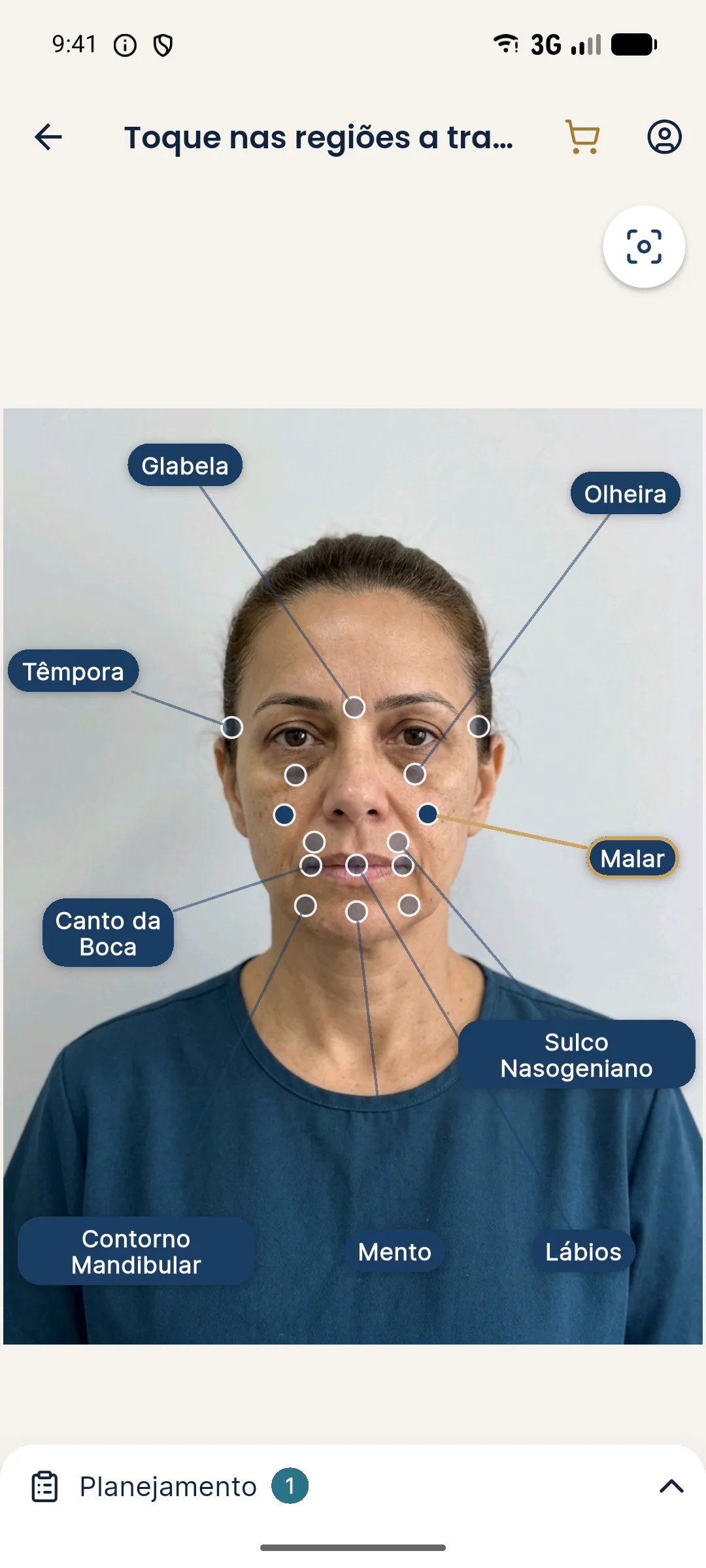
Here the limitation matters more than ever: Harmy does not measure the thirds, does not perform anthropometric analysis and uses only the frontal photo. The projection does not change the height of the lower third and should not be presented as proof that the proportion will be corrected. Use the image only to show the effect of the ml entered on the marked area.
See also AI facial analysis: what it measures and limits of the 2D simulation.
How do you split the plan into stages?
The logic of low volume and reassessment is in conservative volume in the first session and conservative plan vs. complete plan.
What should you tell the patient?
This line is honest and opens room for a referral, if needed. If the patient insists on more volume in the lower part, go back to the numbers from the measurement and offer to show what the simulation indicates.
Check before planning
Quick review
Summary
A lower third larger than the middle first calls for measurement, then honesty about what is bone and what is soft tissue. Facial harmonization can help with the perception of balance, generally by supporting the midface and avoiding added volume in the lower third. The plan is conservative, in stages, with clear consent and the simulation used as support for conversation.
Frequently asked questions
How do you know whether the lower third is really larger than the middle?
With a standardized frontal photo and marking of the reference points to measure the thirds. Visual impression is misleading, so the measurement in the photo is the starting point.
Can facial harmonization reduce the lower third?
It does not reduce bone height. In some cases it can improve perceived proportion by giving more presence to the midface or adjusting projection, but there are limits and the patient needs to know.
Does filling the cheekbone help with this disproportion?
It can help balance the reading by giving the midface more support. The effect is one of perception and depends on the face. It does not change bone measurements.
Does Harmy measure the thirds of the face?
No. Harmy detects the face and marks the areas to treat, but it does not perform anthropometric measurement or issue reports. You measure the thirds yourself.
Harmy images are illustrative simulations generated by AI from the patient's photo to support the conversation between practitioner and patient. They are not a promise of results. Indication, technique, product and volume are solely the decision of the licensed practitioner. This content is for information only and does not replace a clinical assessment.