
AI Facial Analysis: What It Measures and What It Does Not
Quick facts
- What the AI does
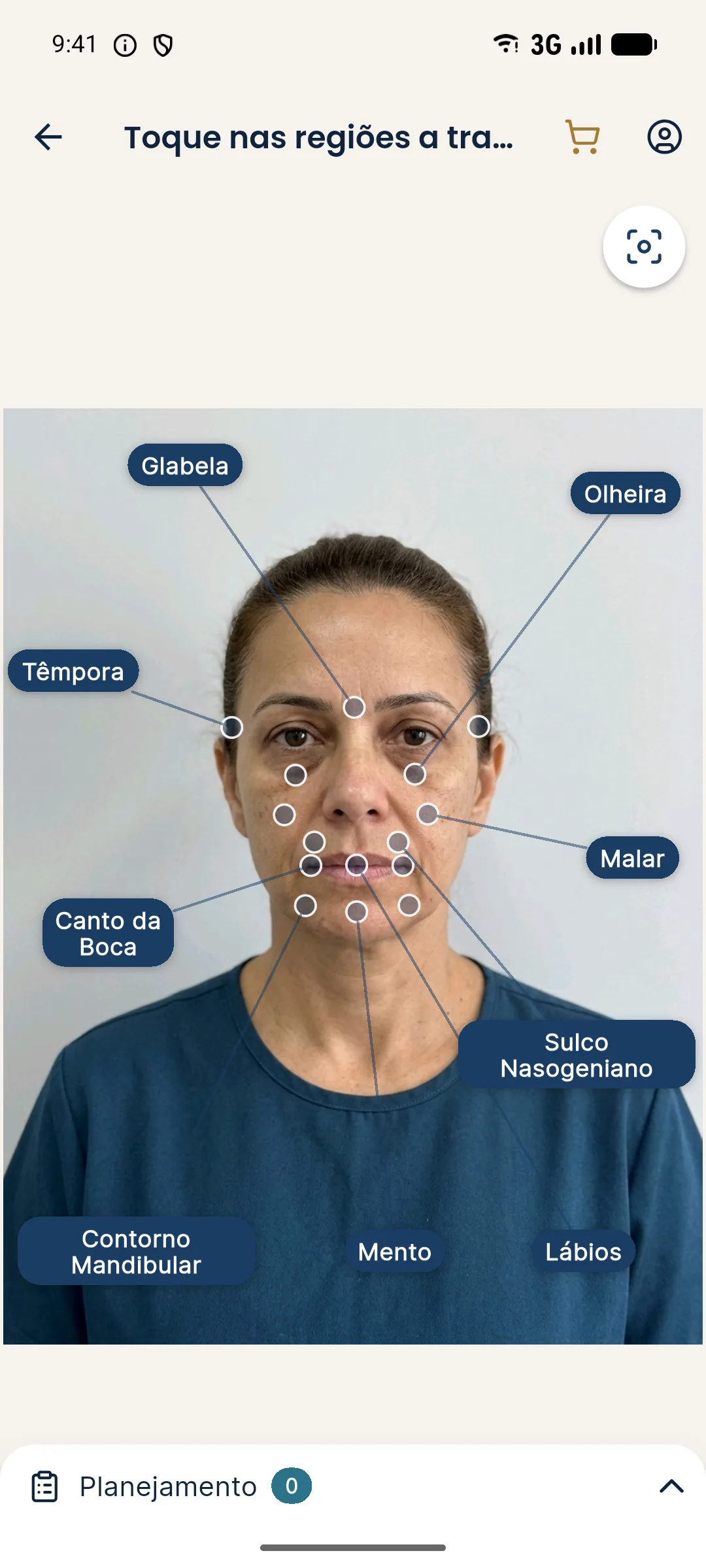
- Detects the face and marks reference points on the photo, on the professional's device
- What it does not do
- It does not diagnose, does not recommend procedures and does not measure skin quality or vascular risk
- Main precautions
- Data bias, off-standard photos, privacy and overconfidence in the number
- Decision
- Always the licensed professional's, after an in-person assessment
"Artificial intelligence facial analysis" is a broad label. It can mean anything from a detector that finds the eyes and mouth in a photo to software that promises to give the face a "score". For the facial harmonization professional, understanding what each type of tool does, and what it does not, is the difference between using it as support and delegating a clinical decision to it.
This page explains what AI actually measures, where it tends to err, what ethical and privacy precautions apply and where it fits in the assessment flow described in facial analysis in facial harmonization: step by step. It connects to digital visual planning in facial harmonization and AI simulation: what it changes and what it does not.
What does "detecting the face" mean?
Most tools start from a simple technical step: detect the face and locate reference points (eyes, brows, nose, mouth, contour). From the points, the software calculates distances, angles and ratios between them. Everything that follows (proportion, symmetry, "score") is arithmetic on those points.
| Layer | What happens | What it delivers |
|---|---|---|
| Face detection | Finds the face in the image | Framing and cropping |
| Reference points | Marks eyes, nose, mouth and contour | Basis for any measurement |
| Measurements | Calculates distances, angles and ratios | Numbers for proportion and geometric symmetry |
| Interpretation | Compares with ranges or models | Suggestion, "score" or comparison (this is where the risk lives) |
The closer to the last layer, the more the tool stops measuring and starts opining, and the more care it demands. Measuring the distance between the eyes is a geometric fact; saying the face is "below the ideal" is a model choice.
What does AI not measure?
The list of what is left out is long, and it is exactly the one that matters in the office.
- Skin quality and thickness, texture, spots and elasticity.
- Layers of the face: bone, fat compartments, ligaments and muscles.
- Vascular anatomy of the patient and risk of complications.
- Movement: what the face does when smiling, speaking and frowning. See dynamic facial analysis in expression.
- Health, medications and contraindications, which depend on the medical history.
- Expectation and emotional context of the patient.
- Identity: what makes that face recognizable and what the patient does not want to change.
That is why a tool that suggests areas and volumes from the photo is extrapolating. It can serve as a starting point for conversation, but it does not replace the layered reading described in facial skeleton before injecting.
Where does AI err and why?
The most common errors are not sophisticated. They come from the image and the data.
The last two items deserve attention. Systems trained on few faces from certain groups tend to fail more on them: they detect shifted points, misread dark skin under poor lighting, or apply reference ranges from another population. See facial harmonization planning and ancestry diversity, simulation on dark skin and lighting and facial harmonization in Black skin. The Fitzpatrick phototype is a scale of sun reaction, not of detection quality, but it reminds us that skin diversity is part of the problem.
To reduce errors, standardize the photo before any analysis: standardized clinical photography, lighting for the planning photo and neutral expression in the planning photo.
How to deal with the built-in beauty bias?
Tools that score the face carry an idea of beauty, almost always derived from data and specific cultural standards. That is a double problem: the patient may read the score as truth, and the professional may be pushed toward a standard that was not the patient's. No number defines beauty. See does a facial aesthetic ideal exist?, filter face: how to handle unrealistic references and facial proportions vary between populations.
Privacy, LGPD and consent
A photo of the face is personal data, and biometric analysis may be treated as sensitive data under LGPD (Brazil's data protection law). This brings practical obligations: inform the patient about what happens to the image, obtain clear and specific consent, limit use to the agreed purpose and store it securely. If the tool sends the photo to third parties, the patient must know beforehand. See consent and LGPD in photos and the informed consent.
What exactly does Harmy do with AI?
It is worth separating two stages, because they are different and it is important to tell the patient so.
Harmy does not diagnose, does not give the face a "score" and does not suggest procedures on its own: the choice of areas, ml and intensity (Subtle, Moderate or Pronounced) is yours. The image is an illustrative simulation, from a frontal photo, and is not a promise of results. See limits of 2D simulation and warning text for illustrative simulation.
How to integrate AI into the flow without delegating the decision?
A safe flow keeps AI at both ends, as support, and the professional in the middle.
In short, AI is good at repetitive, geometric tasks, bad at judging beauty and unable to replace the clinical exam. Use it to gain time and clarity, record what you did and always keep the decision on product, area and volume with the licensed professional, according to the rules of their professional council.
Frequently asked questions
What does AI facial analysis measure?
Generally, it detects the face and marks reference points and contours on the photo, from which it calculates distances, angles and proportions. It measures image geometry, not health or clinical indication.
Does AI facial analysis replace the professional's assessment?
No. It organizes points and measurements, but it does not examine layers, vascular risk, skin quality, medical history or expectation. The clinical decision remains with the licensed professional.
Can the AI make mistakes in analyzing the face?
Yes. A tilted photo, shadows, glasses, hair over the face and ethnic variation can shift points or bias measurements. That is why the reading requires human checking.
How does Harmy use AI in facial analysis?
Harmy detects the face and calculates contours on the device itself, so you can mark the areas. The projection image is generated by a third-party AI, with the professional's acceptance in the app.
Harmy images are illustrative simulations generated by AI from the patient's photo to support the conversation between practitioner and patient. They are not a promise of results. Indication, technique, product and volume are solely the decision of the licensed practitioner. This content is for information only and does not replace a clinical assessment.