
Facial Proportions Vary Between Populations
Quick facts
- Topic
- Facial measurements vary between populations, and no single standard fits every patient
- Risk
- Applying one population's template to another and erasing features that are part of identity
- Practice
- Use references as an observation guide, compare with the patient's own face and ask what they recognize as theirs
- Caution
- Avoid generalizations by group; variation within each population is large
When planning works with measurements, lines and proportions, there is a question that is rarely asked out loud: which population did these numbers come from? A good share of the classic references in facial aesthetics were described in specific groups, with limited samples, and then spread as if they applied to everyone. The result, in practice, is a silent risk: plans that push diverse faces into the same mold.
This page shows where variation appears, what can be considered and how to protect the patient's identity without giving up on method. It does not generalize by group, because variation within each population is large.
Why are textbook references not universal?
Because they come from measurements on particular samples, often of selected photographs. Neither the golden ratio nor the neoclassical canons came from a study representative of humanity. They are historical observation tools. The discussion appears in neoclassical canons of the face and in does a facial aesthetic ideal exist?.
Modern facial anthropometry recognizes variation, and the facial harmonization literature increasingly includes work describing patterns in specific populations. The practical conclusion is simple: treat measurements as a guide, not a target.
In which features does variation show most?
In almost all of them. The ones that most affect planning are:
| Area | What tends to vary | Where to go deeper |
|---|---|---|
| Nose | Base width, tip projection, angles, nasal index | nose and upper lip: combining them |
| Lips | Natural thickness, upper to lower ratio, vermilion definition | lips |
| Cheekbone | Projection, height, width and relationship with the orbit | ideal malar projection |
| Chin and jaw | Projection, width, angle | ideal jaw angle by sex |
| Face width | Facial index, bizygomatic distance | planning a wide face |
| Skin | Thickness, phototype, tendency to pigment | simulation on dark skin and lighting |
There is also the relationship between features: a nose with a wide base, for example, coexists with lips and cheekbones of their own proportion, and the whole makes sense together. Adjusting one structure to "look like the textbook" can unbalance the others.
What is the risk of a single standard?
It is the risk that the plan pushes the patient toward a face that is not theirs. It shows up in subtle ways:
- Slimming the nose or increasing tip projection by default, without the patient having asked.
- Standardizing the lips to a volume and proportion that disregard the natural shape of the mouth.
- Projecting the cheekbone into the shape most common in references, and changing how the face reads in terms of origin.
- Lightening or evening out skin tones in the image, without the patient's intent.
The consequence is loss of identity, dissatisfaction and, in some cases, psychological distress. Care on this point is covered in facial identity: how to preserve it, respecting ethnic features in the facial harmonization plan and facial harmonization planning and ancestral diversity.
How to adapt the method without losing rigor?
A planning method does not depend on a single standard. It depends on looking carefully and comparing with the patient's own face. A few practical principles:
- Start with identity: ask what the patient likes about their face and wants to keep. That becomes the "preserve" list.
- Compare with the patient: old photos, the opposite side and family context, when they mention it, give better references than the textbook.
- Use references as clues: lines and angles guide observation, but the goal comes from the conversation.
- Show conservative scenarios: the patient recognizes their own face in small changes and pulls away from large changes that do not look like them.
- Record what was preserved: this protects the plan in case of future questioning.
The method is refined by reading the face in thirds, as in facial analysis in facial harmonization step by step and facial assessment by thirds.
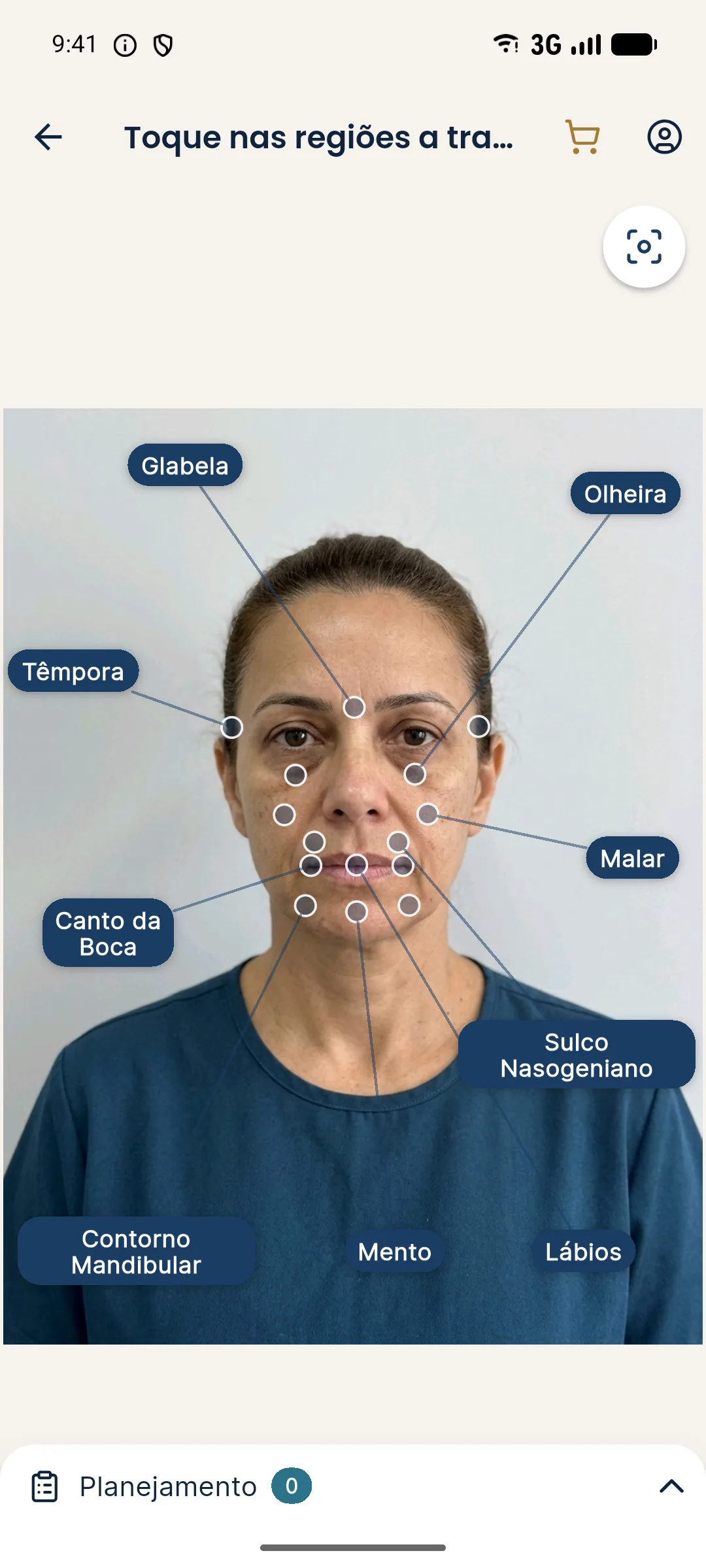
How do the photo and the lighting interfere with this reading?
A lot. Poorly calibrated cameras and lighting change contrast, shadow and color, and can make features look different from what they are. On darker skin, inadequate lighting erases volumes and flattens contours, which hurts the reading. Guidance is in lighting for the planning photo, in simulation on dark skin and lighting and in white balance.
A common mistake is to conclude that the person "has little volume" when the light was flattening the face. Adjust the light before measuring.
And what to say when the patient brings a reference photo?
The reference photo is a starting point for conversation, not an order. Ask what they see in it that they would like to have: the contour, the mouth, the gaze. Then show what fits their face. References from people of a different ancestry, or from faces edited with filters, call for a frank conversation about limits, as in filter face: how to handle unrealistic references and in the patient's old photo as a reference.
Frequently asked questions
Is there an ideal facial pattern for everyone?
No. Proportions of the nose, lips, cheekbones and profile vary between populations and between individuals. A single pattern tends to ignore features that are part of the patient's identity.
Can I use textbook measurements on any patient?
You can use them as an observation guide, with caution. Many references were described in specific populations, and applying them without adaptation can lead to unsuitable goals.
How do I avoid altering the patient's face too much?
Ask what they like and want to keep, compare with old photos and show conservative scenarios, letting them recognize their own face before deciding.
Does Harmy change ethnic features in the simulation?
The projection changes only the marked areas, according to ml and intensity. It should not be used to impose a standard, and the criterion for the goal is always clinical and the patient's own.
Harmy images are illustrative simulations generated by AI from the patient's photo to support the conversation between practitioner and patient. They are not a promise of results. Indication, technique, product and volume are solely the decision of the licensed practitioner. This content is for information only and does not replace a clinical assessment.