
Respecting a patient's ancestral traits in a harmonization plan
Quick facts
- Topic
- Identity and ancestral traits in the plan
- Principle
- The goal is harmony within the patient's own face, not a single standard
- Key question
- What about your face do you want to keep?
- Risk
- A standardized face and loss of family resemblance
- Tool
- Old photo, conversation and subtle simulation
Every face carries a story: a grandfather's nose, the shape of a mother's eyes, the jaw width shared by a whole family. These traits are part of how patients recognize themselves and how others recognize them. A facial harmonization plan that ignores this risks producing a face that is technically proportionate and unfamiliar to the person wearing it. This page is about how to plan without erasing identity.
Why does this care matter?
Facial aesthetics lives with the temptation of a standard. Social media, filters and repeated references create a model face that spreads across all populations. By applying that model to patients of diverse origins, the professional may, without meaning to, move the face away from its ancestry and deliver a resemblance nobody asked for. Beyond the ethical dilemma, there is a practical consequence: the patient may feel like a stranger in the mirror and blame the procedure.
The topic connects with facial harmonization planning and ancestral diversity, facial proportions vary across populations and facial identity: how to preserve it.
What questions should you ask at the consultation?
The best tool is conversation. Ask before you analyze, and write down the answers in the patient's own words.
The answers give direction to the plan and also create a record that the professional listened before proposing anything. See active listening in the facial harmonization consultation and the patient's old photo as a reference.
How do you tell harmony from standardization?
Harmony is internal coherence: the parts talk to each other within that patient's face. Standardization is fitting the face to an external model. The difference shows up in concrete decisions, such as chin projection, the curve of the cheekbone, the shape of the lips and the definition of the contour. Each one has a range of natural variation between people, and that range is wider than textbooks suggest.
| Area | Standardization (to avoid) | Harmony with identity (to aim for) |
|---|---|---|
| Lips | Same volume and arch for everyone | Proportion consistent with the patient's face and mouth |
| Cheekbone | High projection as the default | Support that fits their bone structure |
| Chin | A pronounced chin for everyone | Balance with the nose and lips of their own profile |
| Jawline | A straight, angular line on everyone | Definition that respects the width and shape of their origin |
| Eyes | Under-eye hollows always erased | Softening without erasing the patient's expression |
See how proportions vary in plan for a wide face, planning a round face and differences between female and male faces.
How do you handle references from another origin?
The patient may bring a photo of a celebrity and ask for "a nose like this" or "a chin like this." The reference is a starting point for understanding the desire, not a technical target. Ask what attracts them in the image: the delicacy, the definition, the sense of elegance? Often the desire can be translated into a subtle adjustment that fits the patient's structure, without copying someone else's face.
When the structural difference between the patient's face and the reference is large, be honest: some things facial harmonization cannot deliver. See filter face: how to handle unrealistic references and when bone is the problem, not volume.
What if the request would distort the face?
Some requests, by volume or by combination of areas, move the patient far from their own face. The professional has a duty to warn, propose alternatives and, in cases of deep disagreement, decline the plan. This conduct is ethical and clinical, not prejudice. Document the conversation and the alternatives offered. See how to say no to the patient in facial harmonization and when to say no to an aesthetic plan.
How does the simulation help, and where does it fall short?
A subtle projection is a good ally: by changing only the marked areas and at a modest volume, it shows the patient that the face is still theirs. In Harmy, the AI respects the volume and does not alter skin, expression, hair or background, which reinforces the sense of preserved identity. Try comparing two intensities, Subtle and Moderate, on the same area, so the patient can see the limit at which the face is still recognizable.
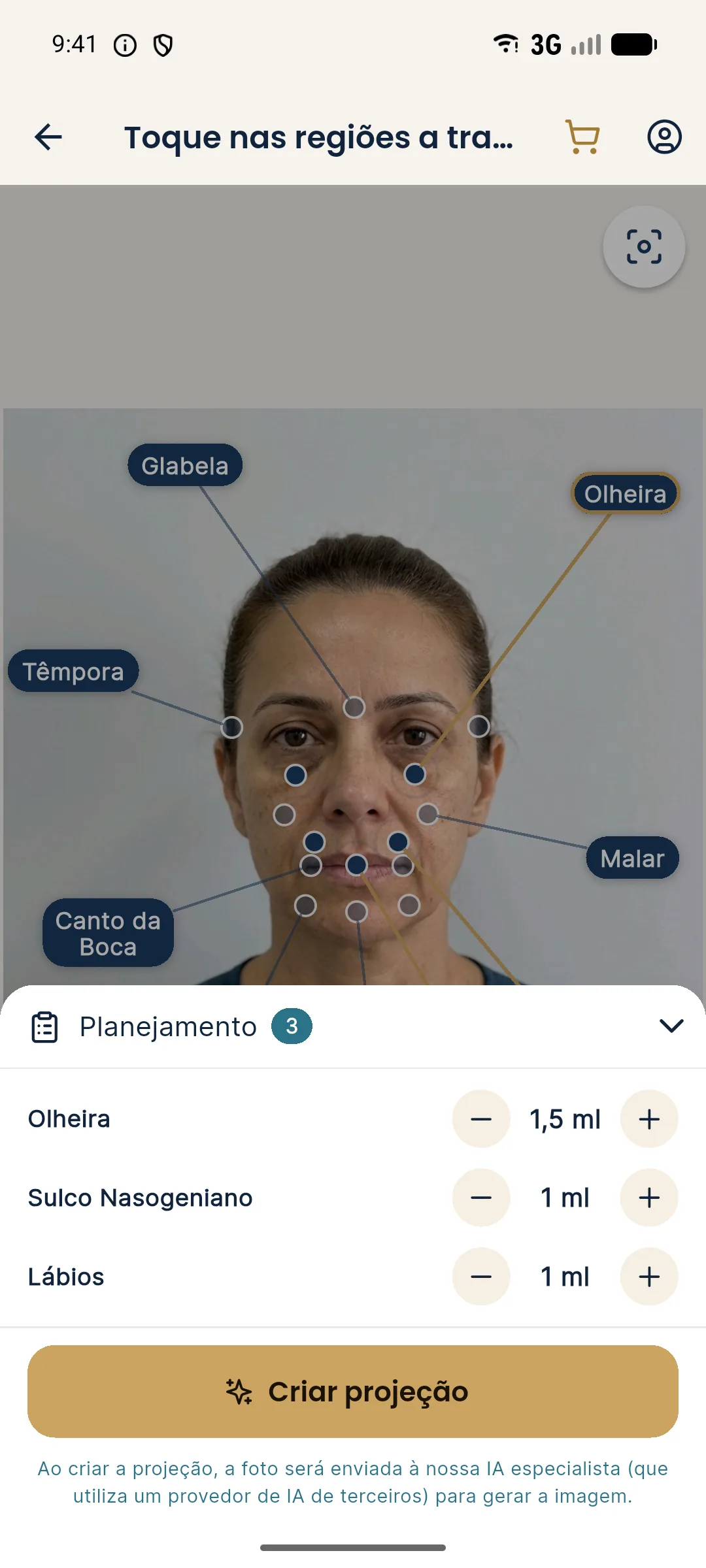
The limitation is well known: the projection starts from a frontal photo and does not show profile, bone or movement. For profile and structure, an in-person exam is essential. See comparing Subtle, Moderate and Pronounced intensities and why the simulation should be subtle.
How do you record what the patient wanted to preserve?
Write into the plan the features the patient asked to keep, in their own words. At follow-up, return to that list: "you asked to keep the shape of your eyes; how do you feel about it?" This habit reinforces that the professional keeps their word and creates a satisfaction measure based on what matters to the patient, not only on what the professional sees.
Frequently asked questions
What does respecting ancestral traits mean in facial harmonization?
It means planning harmony from the face the patient has, preserving the elements tied to family, ethnicity and culture that they want to keep, instead of moving them toward a single standard of beauty.
How do I know what the patient wants to preserve?
By asking. Ask which features they value, which remind them of relatives and what they refuse to change. Old photos and photos of relatives, if the patient wants to bring them, help the conversation.
Does the simulation help avoid a standardized face?
It helps when it is subtle and done only on the chosen areas. In Harmy, the projection changes only what was marked, which makes it easier to show that the face's identity is kept.
Can the professional refuse a request that would distort the face?
They can talk it through, propose alternatives and, if they judge it inappropriate, decline the plan. This ethical stance should rest on clinical assessment and on the rules of their professional council.
Harmy images are illustrative simulations generated by AI from the patient's photo to support the conversation between practitioner and patient. They are not a promise of results. Indication, technique, product and volume are solely the decision of the licensed practitioner. This content is for information only and does not replace a clinical assessment.