
Plan for a wide face: what changes in the strategy

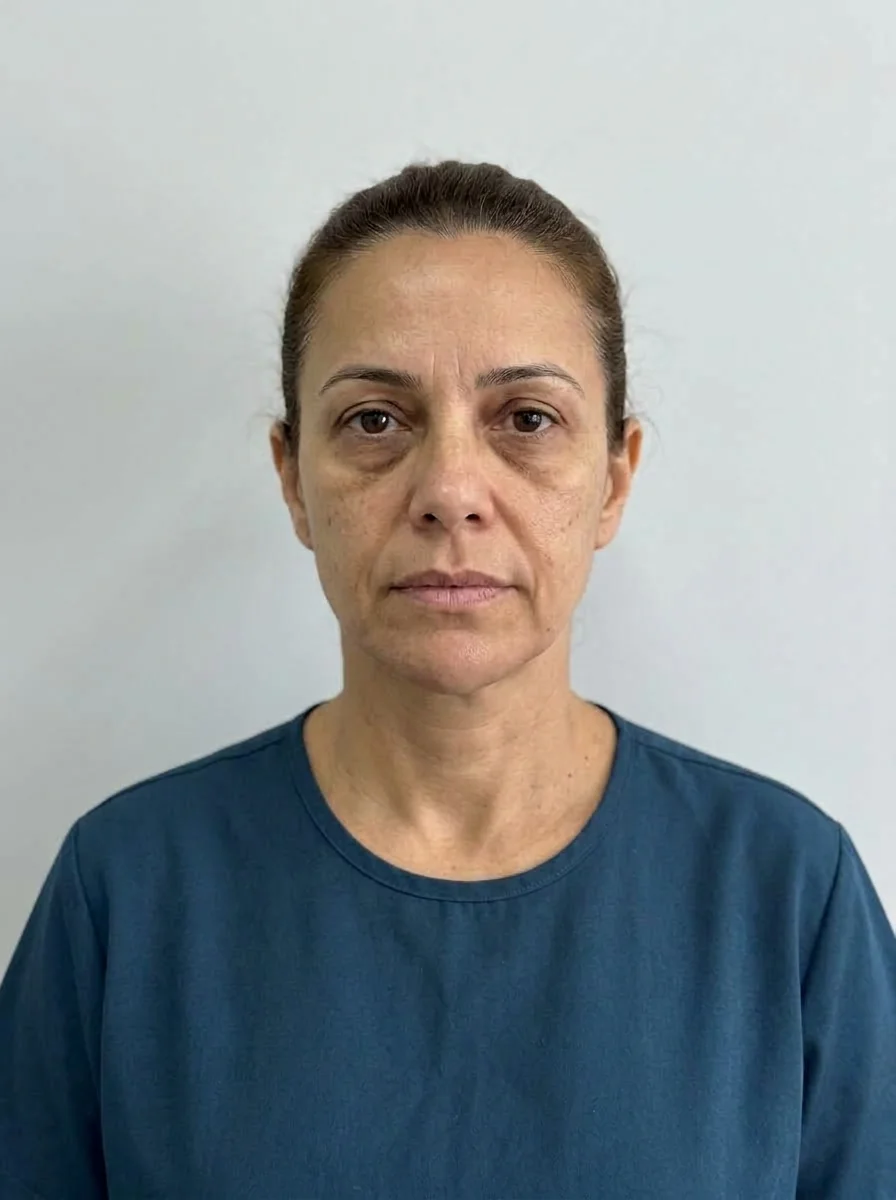 BeforeSimulation
- Highlighted area
Quick facts
- Topic
- Facial harmonization plan for a wide face
- Core strategy
- Avoid lateral volume and focus on the center and the lower third
- Cause to investigate
- Bone, masseter, fat or skin
- Typical risk
- Making the width worse by filling the cheek or lateral jaw
- Limit
- Facial harmonization does not reduce bone width
A wide face is a concern that gets mixed up with several causes: wide bone, hypertrophic masseter, lateral fat, heavy skin, or simply the proportion between the thirds. For facial harmonization, the golden rule differs from other profiles: what you avoid can matter more than what you do. This page shows what changes in the strategy, where to focus and how to talk about what does not change.
What characterizes a "wide" face?
From a planning standpoint, a wide face is one in which the bizygomatic or bigonial width looks large relative to the height. The facial index and the rule of fifths give language for this, but what matters is the patient's perception and the cause. Reading the shape (round, square, heart, oval) guides the conversation. See round face shape, facial index, face width by fifths and planning a round face.
How do you tell the causes apart?
| Cause | How to recognize it | Approach to consider |
|---|---|---|
| Bone (zygomatic arch, mandibular angle) | Firm width on palpation, no change with expression | Facial harmonization has a limit; discuss alternatives |
| Hypertrophic masseter | Increases when clenching the teeth, bruxism, pain | Consider toxin, with care and judgment |
| Lateral fat | Soft volume in the cheek and jowl | Consider a specific approach, do not fill |
| Skin and laxity | Descent of the contour | Biostimulator, threads and skin quality, depending on the case |
| Proportion | Short middle and lower thirds | Add central and vertical projection |
For the first two items: wide zygomatic arch, square face from bruxism and jaw and masseter: combining in the plan. For fat: cheeks too large and face too full.
What is the logic of "central focus"?
If the face looks wide, the eye needs to be drawn to the center and the vertical. That means anterior projection of the middle third (not lateral), a chin with good projection, a nose in proportion and a rested look. The classic mistake is filling the lateral cheek to "give contour" and ending up widening even more. See wide face, plan to slim the face and cheekbone and jaw: combining in the plan.
Which areas can be included?
The chin is usually the center of the plan: giving anterior projection visually lengthens and slims the lower third. The anterior middle third (paranasal region and medial cheekbone) can receive support without widening. The temples call for care, because excess volume widens the upper third. The masseter can be assessed for toxin. The jaw, when included, is approached with a focus on defining the contour without adding lateral width. See chin filler, cheekbone filler and chin and jaw: combining in the plan.
How does the simulation help, and where does it fall short?
In Harmy, the projection only adds volume, and subtly. That is useful for a wide face if the plan is central projection: showing that the chin or the anterior middle third gains presence without widening. But the simulation does not reduce width, does not change bone and does not remove fat. Say this clearly. Avoid marking Cheekbone with high ml: in bilateral areas, the ml is the total, split between both sides, and lateral volume can accentuate the concern.
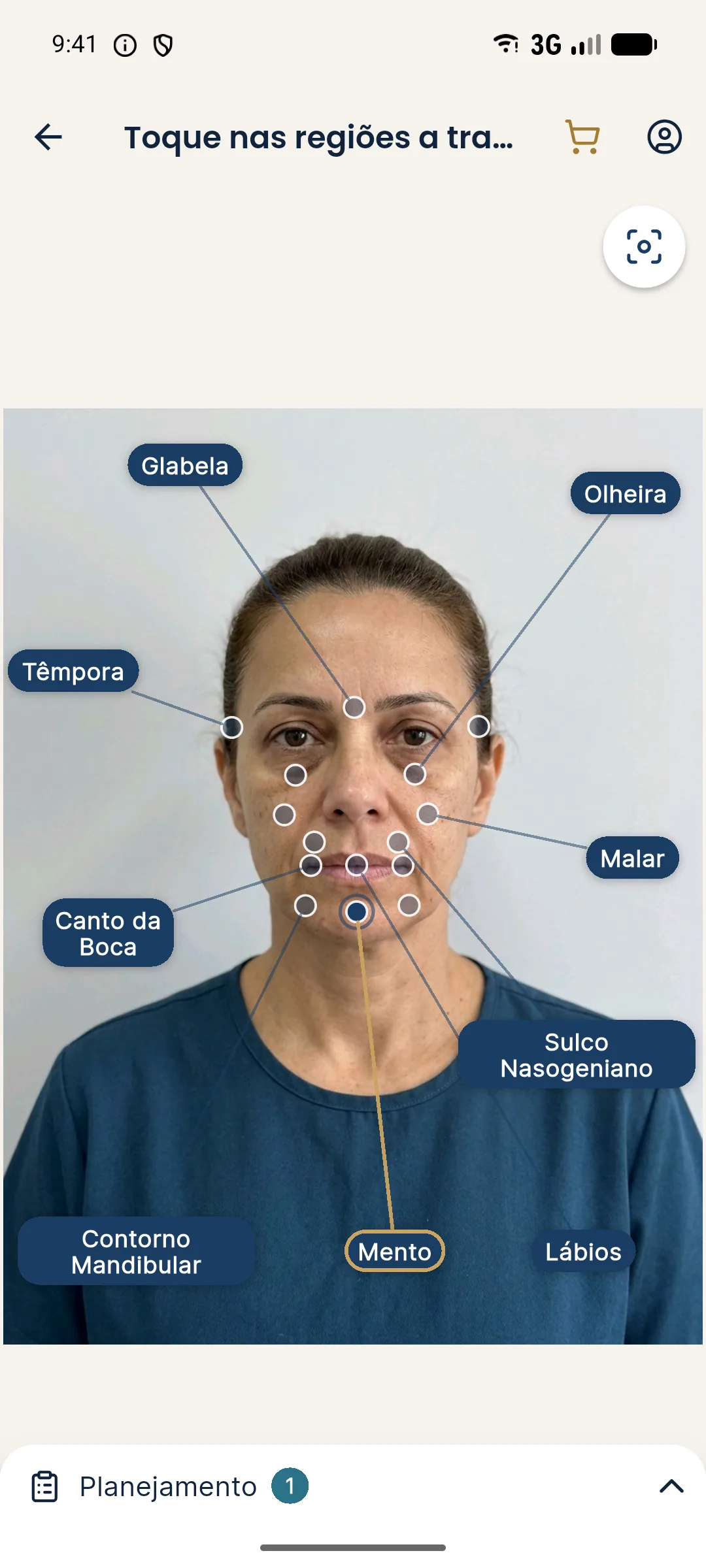
A good approach is to project the chin and show the effect to the patient, next to another projection with the cheekbone, to see the difference in perceived width. See simulation with more than one scenario and limits of 2D simulation.
What about the masseter and toxin?
When masseter hypertrophy is the main factor, toxin can be considered, with assessment of bruxism, bite and function. The effect is gradual, temporary and depends on the dose and the patient. Risks include a change in the smile, weakness when chewing and asymmetry. In patients with lateral fat or laxity, reducing the masseter can make those findings more evident. The decision is the professional's. See masseter muscle, bruxism and tense jaw and harmony.
What is the sequence of the plan?
How do you talk with the patient?
Use the language of proportion, not of flaws. "My face is wide" often carries a lot of emotional weight, and the conversation should turn it into data: where the width is, where it comes from and what can be balanced. Avoid promising slimming. If the patient expects a reduction that facial harmonization does not deliver, say so before any procedure.
What if the patient has already had buccal fat removal or lateral filler?
Two histories change the plan. Someone who has had buccal fat removal may have lost the volume that supported the middle third, and with age the face tends to look more hollow. In that case the conversation is about careful replacement, not about slimming further. See hollow face after buccal fat removal and buccal fat removal in a thin face.
Someone who has already received lateral filler (lateral cheekbone, angle, temple) may have exactly what widens the face. It is worth reassessing whether the remaining volume is the cause of the concern and, if hyaluronic acid was used, considering hyaluronidase with a clear indication. The page plan to correct previous filler excess describes the reasoning. In either case, record the history in the patient record and let the patient know that today's face is not the one from before the procedures.
Reasoning test
Summary
On a wide face, what you do not do matters as much as what you do. Identify the cause, avoid lateral volume, focus on the center and the lower third, assess the masseter with judgment and be honest about the limit of injectables.
Frequently asked questions
Does filler make a wide face worse?
It can, if placed in lateral areas without assessment. On a wide face, lateral volume in the cheekbone and jaw tends to increase the perceived width. The focus is usually on the center.
Does toxin in the masseter help a wide face?
It can help when the width comes from muscle hypertrophy, with functional assessment and care. It does not act on bone or fat, and the effect is temporary.
What gives the impression of a narrower face?
Central projection (chin, nose and the anterior middle third), a defined jawline and a reduction in lateral volume when indicated. It is a matter of proportion, not of loss.
Does the simulation show a narrower face?
No. Harmy only adds filler volume (toxin only at the glabella and chin) in the marked areas, subtly. It may suggest more central projection, but it does not reduce width.
Harmy images are illustrative simulations generated by AI from the patient's photo to support the conversation between practitioner and patient. They are not a promise of results. Indication, technique, product and volume are solely the decision of the licensed practitioner. This content is for information only and does not replace a clinical assessment.