
Wide face: what is bone, muscle or fat

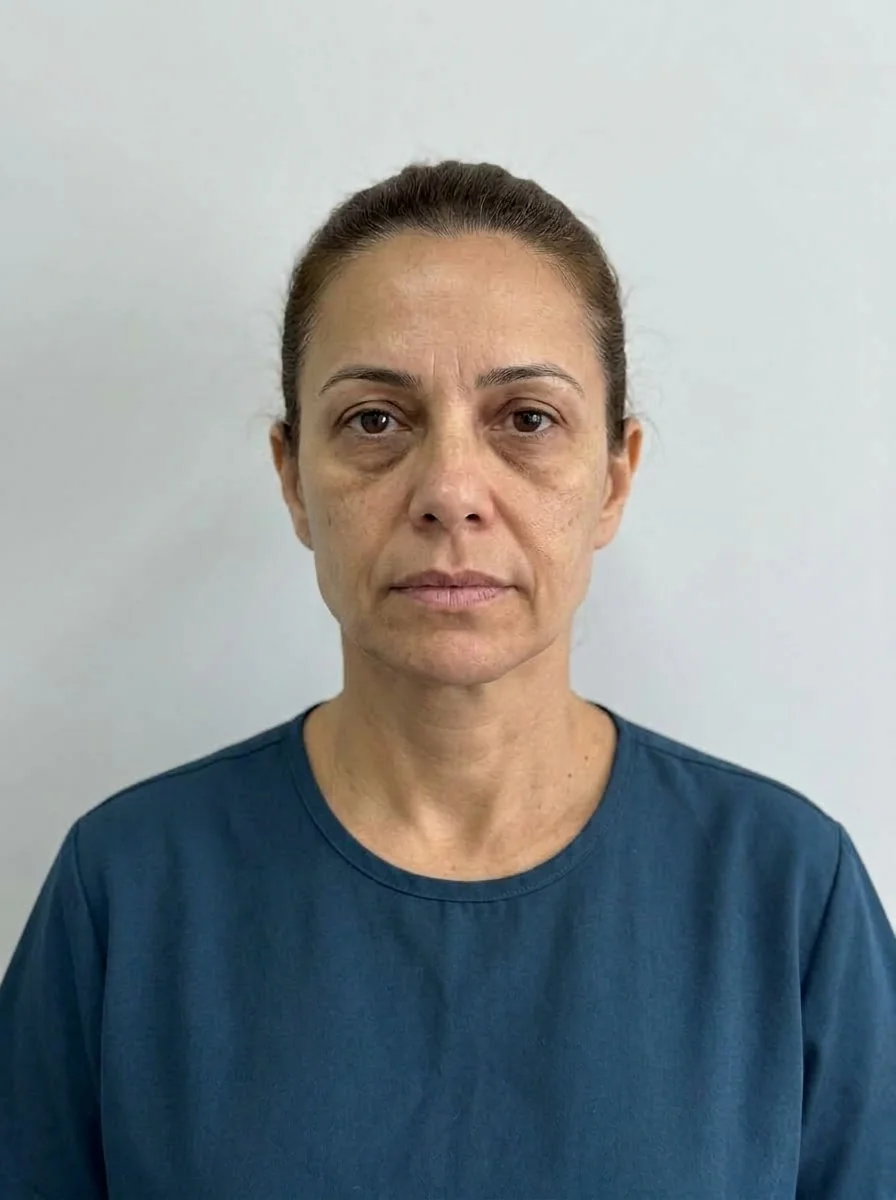 BeforeSimulation
- Muscle
- Highlighted area
Quick facts
- Concern
- A wide, square or "heavy" face at the level of the jaw and cheeks
- Key insight
- Width can come from muscle, bone or fat, and only part of it responds to facial harmonization
- Supporting measure
- Masseter palpation, frontal photo with fifths and comparison of jaw and zygoma
- Limit
- Wide bone does not change with injectables, and the realistic goal is to change how the whole reads
A wide face is a frequent concern among women who are bothered by a square look and among men who feel their face is too heavy. The complaint often comes in phrases like "my face is huge", "I have a square face" or "I wish I had a slimmer face". The technical answer starts with understanding where the width comes from.
This page helps separate the three main contributors, muscle, bone and fat, and explains what facial harmonization can and cannot do in each. For related cases, see square face: assessment, one masseter larger than the other and tense jaw and harmony.
Which structures determine facial width?
Three groups of structures account for width, and the contribution of each varies a great deal from person to person.
- Muscle: the masseter sits over the ramus of the mandible and, when enlarged, widens the lower third. Bruxism and the habit of clenching the teeth often increase its volume.
- Bone: the jaw angle and the zygomatic arch define a structural width. See mandibular angle and zygomatic arch.
- Fat: buccal fat and the superficial cheek fat add lateral volume. See buccal fat pad.
Each group behaves differently under treatment. Muscle responds to toxin and to time, fat responds to weight and to specific procedures, and bone responds only to surgery. That explains why the same concern can have such different answers between patients.
How do you tell bone, muscle and fat apart?
Combine history, palpation and photo. History includes bruxism, preferred chewing side, gum use and how long the concern has existed. Palpation shows firmness and consistency. The photo, frontal and oblique, shows how the width is distributed. In some cases, imaging such as a panoramic X-ray and CT is requested by the responsible professional or a specialist, and helps measure bone and muscle.
| Clue | Muscle | Bone | Fat |
|---|---|---|---|
| Palpation | Firm, increases when clenched | Hard, no variation | Soft, does not vary |
| Bruxism or clenching | Frequent | Variable | Rare |
| Course | Increases with the habit | Stable since adolescence | Follows weight |
| Frontal photo | Greater width at the angle | Greater width at zygoma and angle | Fullness in the lower cheek |
| Likely response | Toxin may reduce | Surgery | Specific procedures or weight |
In many cases, all three factors coexist, and the plan needs a priority. The reasoning for integrating jaw and muscle appears in jaw and masseter combined in the plan.
What does facial harmonization offer for a wide face?
The approach is more indirect than the patient imagines, and the expectation conversation is part of the treatment.
- Toxin in the masseter, when the hypertrophy is significant. It reduces volume over weeks and requires repeat sessions, with risks of smile asymmetry and changes in chewing. See botulinum toxin in the masseter and difficulty chewing after masseter treatment.
- Chin projection, which changes how the lower third reads and reduces the impression of width. See chin filler.
- Caution with the jaw: filling the jawline in an already wide face can accentuate the problem. When indicated, the design must be very conservative. See jawline filler.
- Surgical referral for cases of bony width or bulky buccal fat, when indicated.
Hyaluronic acid in the chin and jaw has its own vascular risks. Swelling, bruising, asymmetry and, rarely, vascular occlusion can occur, and hyaluronidase must be available. Toxin also has risks, such as asymmetry and changes in function.
What is the order of the plan?
When muscle is the main player, treatment starts with it, with reassessment in weeks, because the effect appears slowly. Only then do you assess whether the chin or jaw need adjustment. When bone dominates, the conversation is about limits and referral. When fat weighs in, you discuss what is possible within each professional's competence.
How do you handle the expectation of "slimming"?
The word "slimming" comes up in almost every consultation for this concern, and it is the one that frustrates most. The patient imagines a width reduction equal to that of surgery or weight loss, and the injectable procedure does not deliver that. It is worth dismantling the expectation right at the start, with a concrete example: toxin shrinks a muscle that may be responsible for part of the width, but the bone stays where it is.
Another trap is the patient who wants "more angle" in the jaw of a face that is already wide. Adding definition can worsen the square impression. In these cases, the most honest proposal is to work on chin projection, which lengthens how the lower third reads, and to accept that the result comes from a change in proportion, not a reduction in volume. Record the conversation and show the before photo when assessing the follow-up.
What can Harmy illustrate?
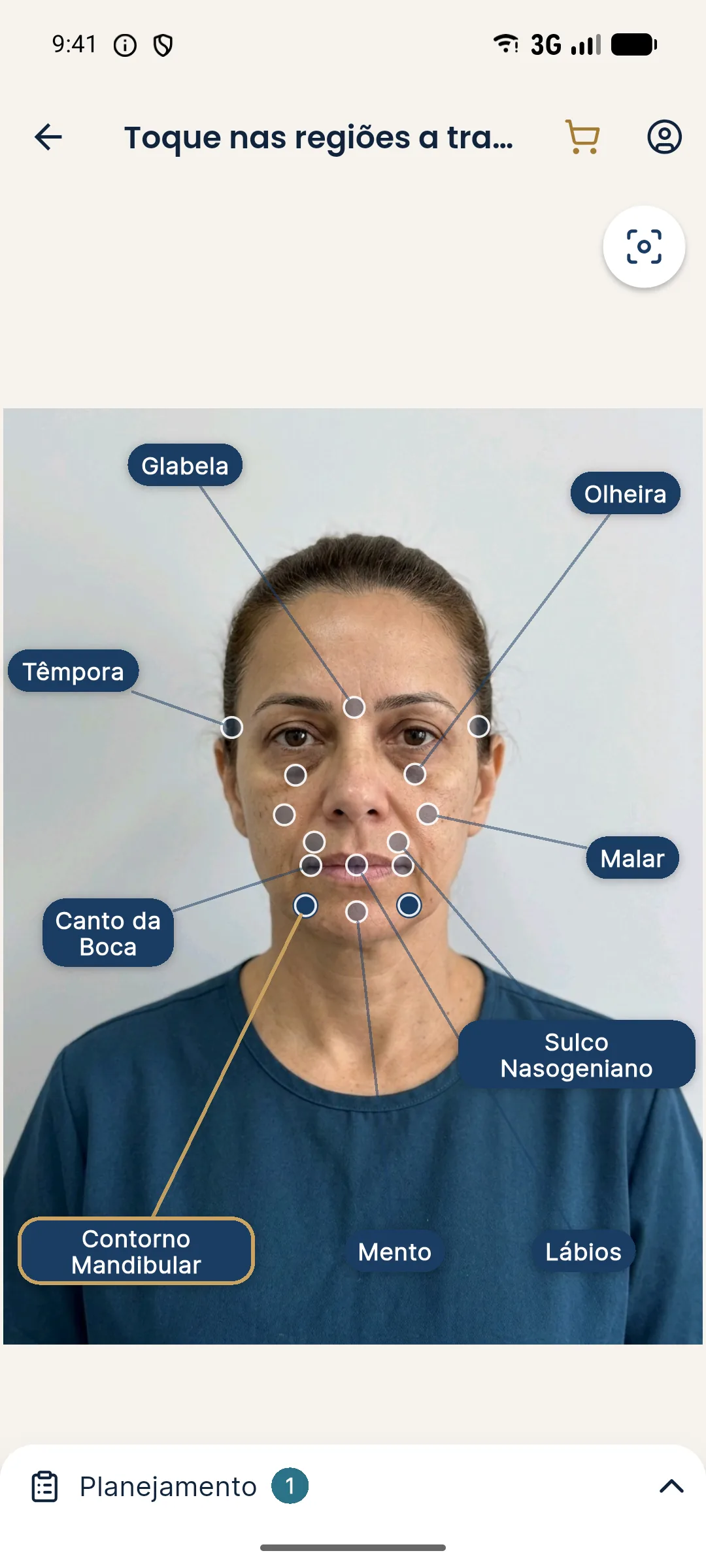
Harmy adds volume and does not reduce it. For a wide face, this means the app does not illustrate the effect of toxin in the masseter or fat reduction. It can show the effect of chin projection in frontal view, but with the caveat that the goal is to change how the face reads, not to slim it.
Frequently asked questions
What makes a face look wide?
A bulky masseter, the width of the mandibular angle, a laterally projected zygoma and buccal fat can all contribute. Usually there is more than one factor.
Does toxin slim a wide face?
When the width comes from the masseter, toxin can reduce muscle volume over weeks, at the discretion of the qualified professional. It does not act on bone or fat.
Does filler help a wide face?
It can help change how the face reads by adding chin projection and jawline definition, but it does not reduce width. The plan must avoid enlarging what is already wide.
When is surgery considered?
In marked bony width, maxillofacial surgery may be an alternative. The decision belongs to the specialist after an assessment.
Harmy images are illustrative simulations generated by AI from the patient's photo to support the conversation between practitioner and patient. They are not a promise of results. Indication, technique, product and volume are solely the decision of the licensed practitioner. This content is for information only and does not replace a clinical assessment.