
Tense jaw and its effect on facial harmony

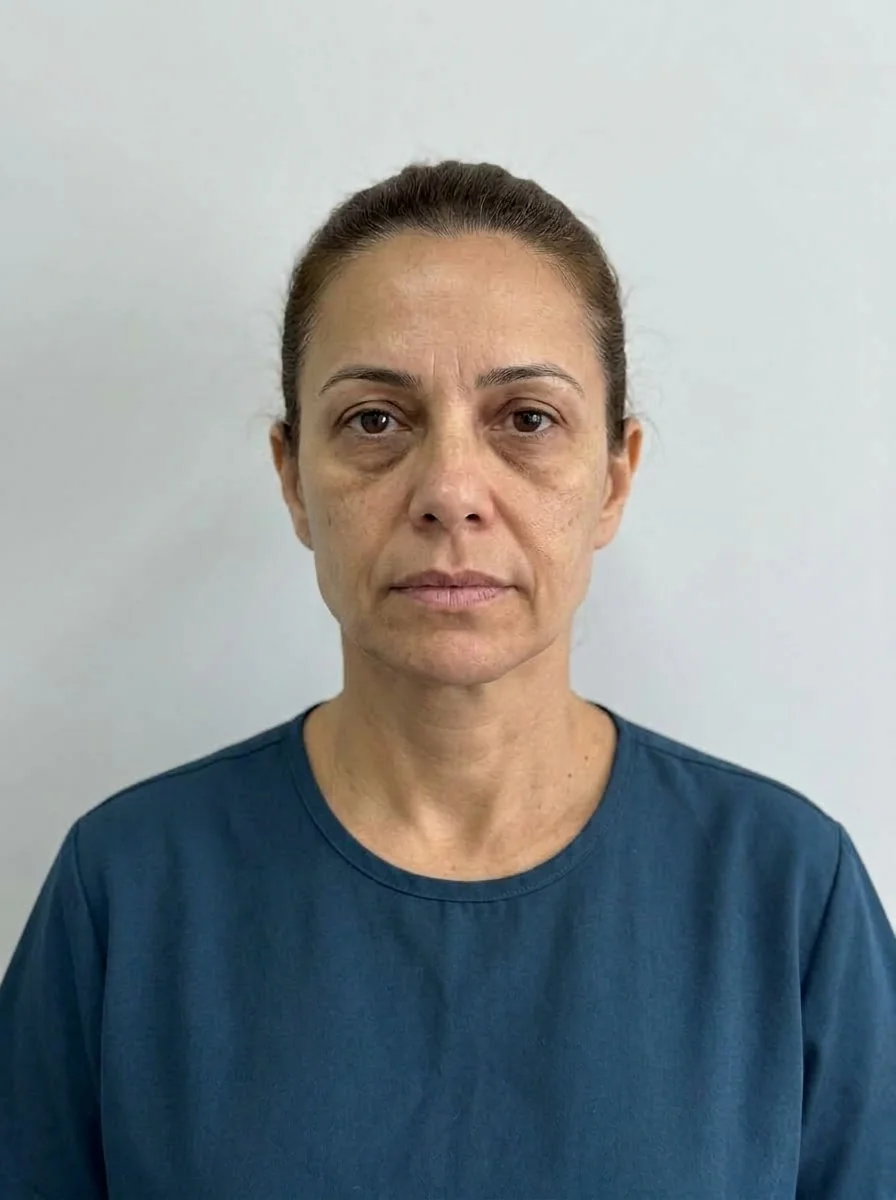 BeforeSimulation
- Muscle
- Highlighted area
Quick facts
- Concern
- Pain, fatigue and a "square" face from tension and teeth clenching
- Method
- Assess pain, tooth wear and the volume of the masseter and temporalis
- Structures
- Masseter, temporalis, pterygoids, TMJ and teeth
- Caution
- Pain and dysfunction have a cause that aesthetics cannot solve alone
People who clench their teeth during the day or grind them at night carry an aesthetic consequence that they often do not connect to the habit: the lower third of the face changes. The muscle grows, the contour becomes wider and squarer, and the tension shows in the eyes. At the same time, the same tension brings pain, headaches and tooth wear, and the conversation stops being only about aesthetics.
The page shows how jaw tension enters the harmonization assessment. It connects with larger masseter on one side, square face from bruxism and asymmetry from chewing on one side.
How does tension change the face?
The chewing muscles are strong. The masseter covers the angle of the jaw, the temporalis occupies the temple and the pterygoids work from the inside. With overuse, the masseter hypertrophies, and the way the face reads changes.
| Sign | What the patient notices | What the professional observes |
|---|---|---|
| Bulky masseter | Square face, wide jaw | Volume on clenching, firmness on palpation |
| Active temporalis | Temple pain, headache | Tenderness and temporal hypertrophy |
| Tooth wear | Short teeth, sensitivity | Wear facets |
| TMJ pain | Clicking, pain on opening the mouth | Limited or deviated opening |
| Tension in the eyes | Tired look, serious face | Associated contraction of other muscles |
The page jaw and masseter: combining in the plan details the relationship between contour and muscle.
What to assess before any plan
What harmonization can consider
At the discretion of the licensed professional and together with dental follow-up:
- Botulinum toxin in the masseter, in selected cases, to reduce strength and volume. The effect is temporary and requires specific consent, including the possibility of a change in chewing.
- Contour filler, when the goal is to balance the face in a face that already has structure and the muscle is under control.
- Chin and cheekbone, to rebalance the proportion of the lower third relative to the middle.
- Guidance: reducing the clenching habit, in partnership with the dentist and other health professionals.
Botulinum toxin is not the only path and should not be offered as a solution for pain. An honest conversation separates what is aesthetics from what is health.
Risks
Toxin in the masseter: bruising, smile asymmetry, a temporary change in chewing, fatigue when chewing hard foods and a smaller result than expected. Contour filler: swelling, bruising, nodules and, rarely, vascular complications, with hyaluronidase available. Reducing the muscle without treating the habit can lead to the volume returning when the effect wears off.
How to show it in Harmy
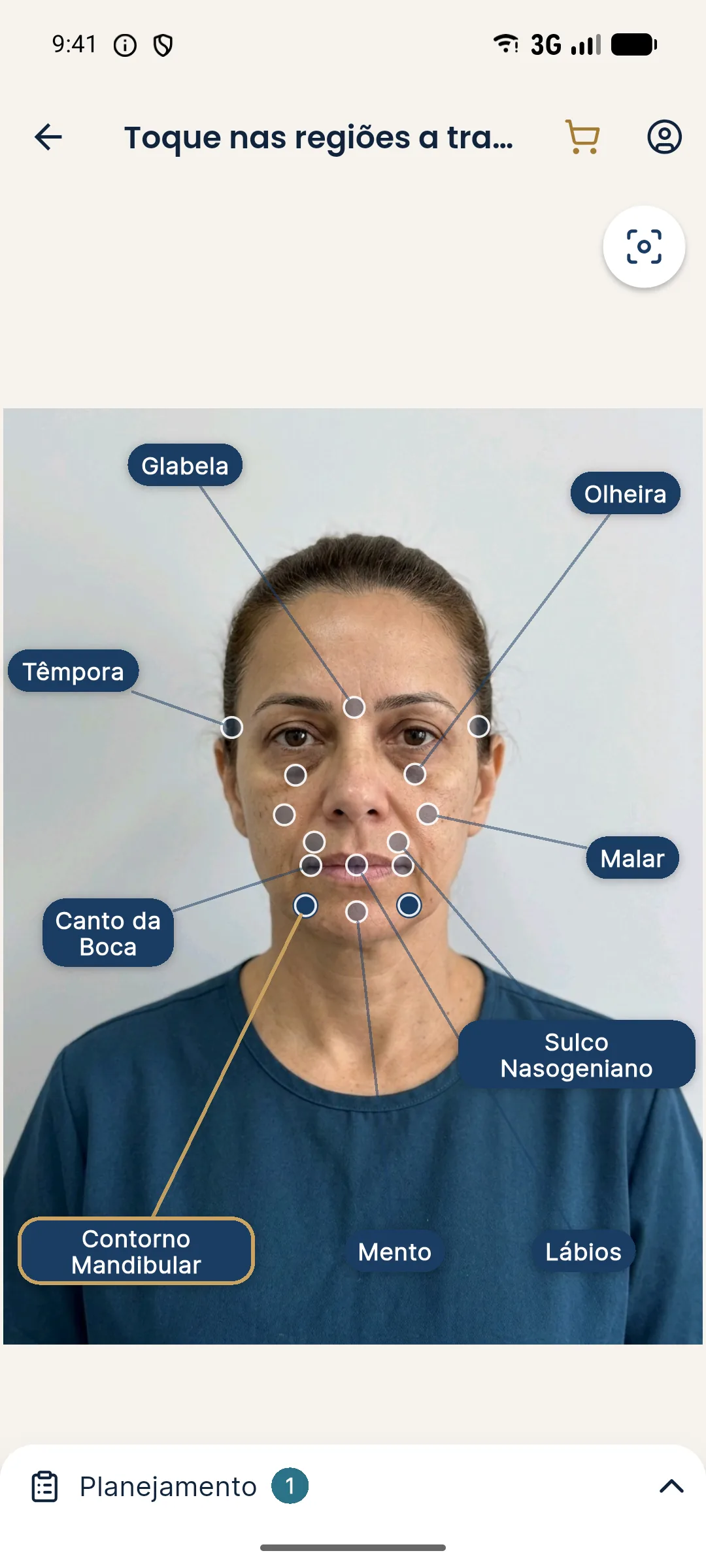
Harmy projects the marked areas and does not simulate muscle reduction. The Jawline point adds definition; it does not show a smaller masseter. For patients with a tense jaw, the app is useful for talking about proportion balance (cheekbone and chin) at Subtle intensity, making it clear that muscle reduction is discussed outside the simulation.
Common mistakes with a tense face
The main mistake is treating the aesthetics of someone in pain without investigating. Jaw pain, clicking and limited opening have their own cause, and masking them with toxin or filler can delay an important diagnosis. The second mistake is promising that toxin "cures bruxism": it reduces the strength of a muscle, and the cause of the clenching is something else.
Another mistake is forgetting consent about chewing. Someone who eats hard foods or plays wind instruments may feel a difference and should know about it. It is also a mistake to treat the masseter without assessing the smile and the midface: reducing the contour can accentuate a hollow cheek in someone who already has little fat.
Finally, beware of "V-shaped face" expectations. The final shape depends on bone, fat and skin, and the muscle is only part of the whole.
Teamwork
The best scenario is to share the case with the dentist who follows the patient. They can assess the night guard, the wear, the joint and the bite, while the harmonization professional takes care of the aesthetics. Record the guidance given, the recommended interval between procedures and the reassessment. Advise the patient to keep up the dental follow-up and to watch for habits such as nail biting or gum chewing. At follow-up, assess pain, chewing and appearance. When the habit persists, the aesthetic effect tends to last less, and it is better to say so from the start than to promise a result that depends on behavior.
Patient profiles and habits
Stress, anxiety, poor sleep and work tension are associated with teeth clenching. Patients with this profile often also have headaches, neck pain and tooth wear, and benefit from a multidisciplinary approach.
Patients who do strength sports or chew gum frequently develop bulkier masseters. In that case, guidance on habits can be as important as the procedure.
In any case, avoid promising a slimmer face as if it were a guaranteed consequence. The shape of the lower third depends on bone, fat and muscle, and the visual effect varies between patients.
Wrap-up
Record pain, habits, tooth wear, photos, the plan and dental follow-up. For related concerns, see face of heavy trainers and buccal fat removal or botox in the masseter. Volumes and techniques are at the discretion of the licensed professional, in accordance with the rules of their professional council in Brazil.
Frequently asked questions
Does bruxism change the shape of the face?
It can. Repeated use of the masseter and temporalis tends to enlarge the muscle, which widens the lower third and gives a squarer look. The degree varies between people.
Does botulinum toxin treat bruxism?
It may be considered in selected cases, at the discretion of the licensed professional, to reduce muscle strength and volume. It does not replace dental follow-up, such as a night guard and investigation of the cause.
Can I have facial harmonization with jaw pain?
The pain should be investigated first. Temporomandibular disorder has its own treatment, and the aesthetic plan comes afterward, with caution.
Does a tense jaw affect filler?
It can. A very active muscle changes the shape of the contour and the response to volume, and that goes into the plan.
Harmy images are illustrative simulations generated by AI from the patient's photo to support the conversation between practitioner and patient. They are not a promise of results. Indication, technique, product and volume are solely the decision of the licensed practitioner. This content is for information only and does not replace a clinical assessment.