
Larger masseter on one side: assessment and plan

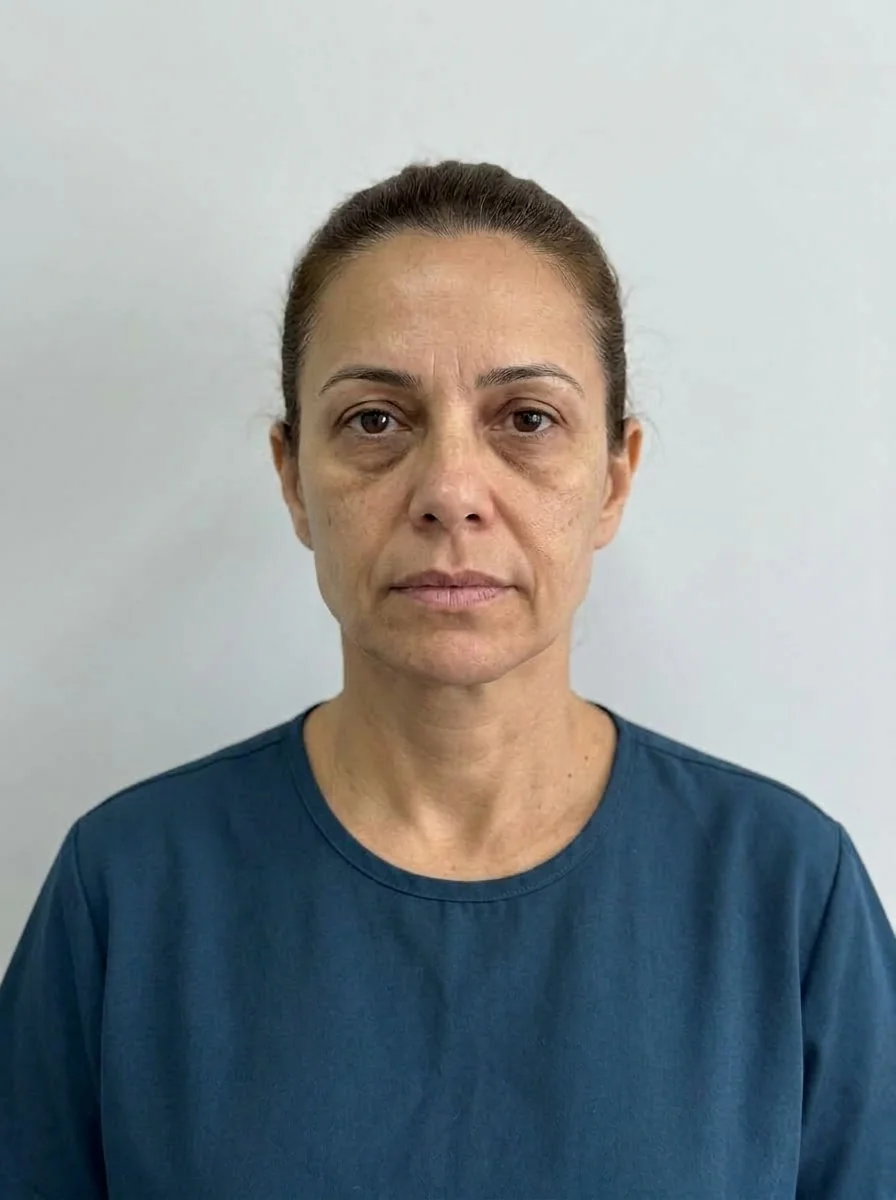 BeforeSimulation
- Muscle
- Highlighted area
Quick facts
- Concern
- One side of the face looks wider or fuller around the angle of the jaw
- Method
- Palpate the masseter at rest and clenched, and compare it with the bone
- Structures
- Masseter, mandibular angle, fat and marginal mandibular branch of the facial nerve
- Caution
- Treating both sides equally keeps the difference, and over-treating creates another
Few things draw attention in a face like a visible difference between the sides of the contour. When a patient notices that the angle of the jaw is "fuller" on one side, the first question is: is it muscle, bone, fat or a mix? The answer guides everything that follows.
This page organizes the assessment and connects with asymmetric jawline, asymmetry from chewing on one side and tense jaw and harmony.
Why does one side grow more?
The masseter is one of the strongest muscles in the body for its size, and it responds to use. When one side works more, it hypertrophies.
| Cause | How it presents | Note |
|---|---|---|
| One-sided chewing | Bulkier dominant side | Habit, tooth loss, pain on the other side |
| Stronger bruxism on one side | More marked pain and wear on that side | Dental follow-up |
| Wider bone or different position | Constant asymmetry, no change on clenching | Limited compensation |
| Bulky fat or parotid gland | Volume that does not change on clenching | Differential diagnosis |
| Deviated bite | Uneven contact between the teeth | Orthodontics, surgery |
There are neighboring structures that interfere with the reading, such as the premasseteric space and the masseteric ligament. A mass of different consistency or rapid growth deserves medical investigation, not aesthetic treatment.
How to assess at the consultation
What the plan considers
At the discretion of the licensed professional:
- Botulinum toxin in the masseter, planned with attention to the difference in strength between the sides, when the muscle is the main factor. See botulinum toxin. The toxin unit varies by product, and dose and points are not covered on this page.
- Filler on the less defined side, in cases where bone or fat is the factor. See jawline filler.
- Habit guidance: chew on both sides, treat missing teeth, evaluate a protective night guard.
- Follow-up: reassess symmetry a few weeks after the effect has set in.
Risks
Toxin in the masseter: bruising, smile asymmetry, a temporary change in chewing, fatigue and a smaller result than expected. In people who rely heavily on bite strength, the conversation needs to be more careful. Contour filler: swelling, nodules, asymmetry and, rarely, vascular complications, with hyaluronidase available. The area contains the facial artery and the marginal mandibular branch of the facial nerve.
How to show it in Harmy
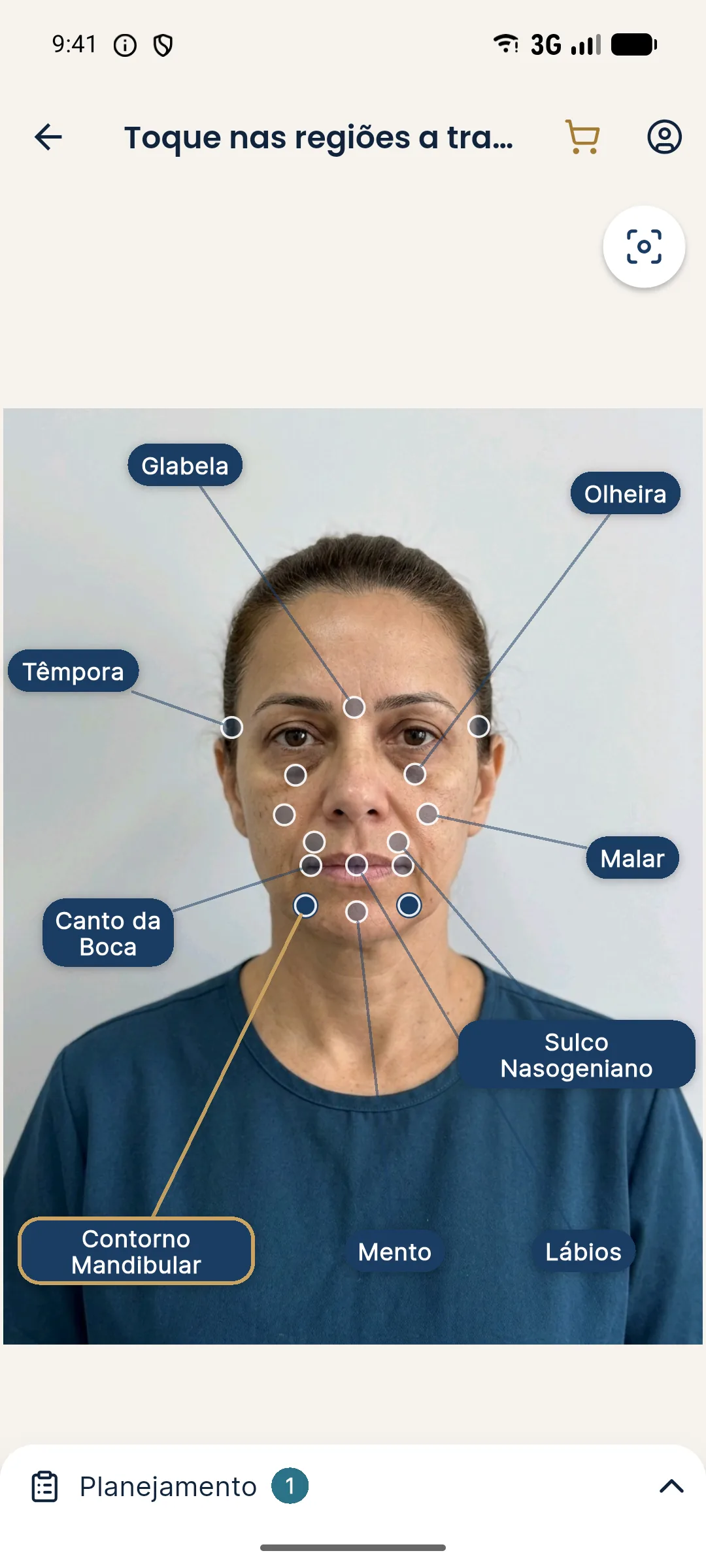
Harmy does not simulate masseter reduction or a difference between sides: in a bilateral area the ml is the total split between the two sides, and the projection changes only what was marked. For this patient, the app is useful for talking about proportion balance, with the Jawline point at Subtle intensity, and for recording the standardized front photo that will serve as a comparison.
Common mistakes with an asymmetric masseter
The first mistake is applying the same amount of toxin on both sides. If one masseter is stronger, the same amount leaves the difference. The second is not palpating: the consistency of the muscle, at rest and clenched, gives information that a photo cannot. The third is confusing hypertrophy with a bulky parotid gland or a wide bone, which leads to an inappropriate approach.
Another mistake is ignoring the chewing habit and bruxism. If the dominant side keeps working harder, the hypertrophy returns. It is also a mistake to treat without warning about the temporary changes in chewing, which vary between people and can bother those who bite with a lot of force.
Finally, never fail to investigate a recent increase that is painful or of unusual consistency. In that case, referral for medical or dental evaluation is mandatory, and any aesthetic procedure should wait.
Practical steps
Organize the visit in four steps. First, the history: how long the difference has been there, the chewing side, pain, clicking, bruxism. Second, the exam: palpation at rest and clenched, photos and, if necessary, a complementary image requested by the professional. Third, the decision: toxin, volume, both or observation, always at the discretion of the licensed professional and with consent. Fourth, the follow-up: reassess the difference a few weeks after the effect and adjust the plan if needed.
Record each step and the guidance given to the patient. Explain that the effect of the toxin is temporary and that maintenance depends on the habit. Align expectations: the goal is to reduce the difference, not to guarantee symmetry. This frankness avoids complaints and strengthens the relationship between patient and professional over time.
Patient profiles and habits
Young patients with one-sided hypertrophy from chewing usually respond well to guidance and discreet adjustments. Patients with pain, clicking or tooth wear need concurrent dental follow-up.
Those who lost teeth on one side, use a partial denture or have pain on one side tend to chew on the other, which maintains the asymmetry. Solving the dental cause may be the most effective step.
People who lift weights intensely or use supplements may have general masseter hypertrophy, and the conversation about expectations should include the possibility of recurrence. Plan the follow-up and maintenance from the start, so the patient understands that this is a process.
Safety when managing an asymmetric masseter
Before releasing the patient, confirm that they understood what was done on each side, what was left out and which signs call for immediate contact: severe pain, skin that changes color, fever, vision changes or new difficulty chewing and speaking. Give this guidance in writing, note in the patient record that it was delivered and agree on the channel for questions and the follow-up date.
Wrap-up
Record palpation, photos at rest and clenched, habits, the hypothesis and the follow-up. See also square face from bruxism and buccal fat removal or botox in the masseter. Doses and techniques are at the discretion of the licensed professional, in accordance with the rules of their professional council in Brazil.
Frequently asked questions
Why is one masseter larger than the other?
The most common reason is uneven use, such as chewing on only one side or grinding more on one side. There can also be a bony or fat component, which changes the approach.
Does toxin fix the difference?
It can reduce the volume of the hypertrophied side, at the discretion of the licensed professional, but the effect is temporary and depends on the cause. If there is bony asymmetry, toxin only compensates in part.
Can I apply a different amount on each side?
The plan can take into account the difference in muscle strength on each side, with reassessment at follow-up. Doses and points are up to the professional, who records the logic of the plan.
How can I tell whether it is muscle or bone?
Palpation at rest and with the teeth clenched helps. If the volume grows on clenching, it is muscle. If it does not change, bone or fat weighs more.
Harmy images are illustrative simulations generated by AI from the patient's photo to support the conversation between practitioner and patient. They are not a promise of results. Indication, technique, product and volume are solely the decision of the licensed practitioner. This content is for information only and does not replace a clinical assessment.