
Asymmetric jawline: what harmonization can compensate

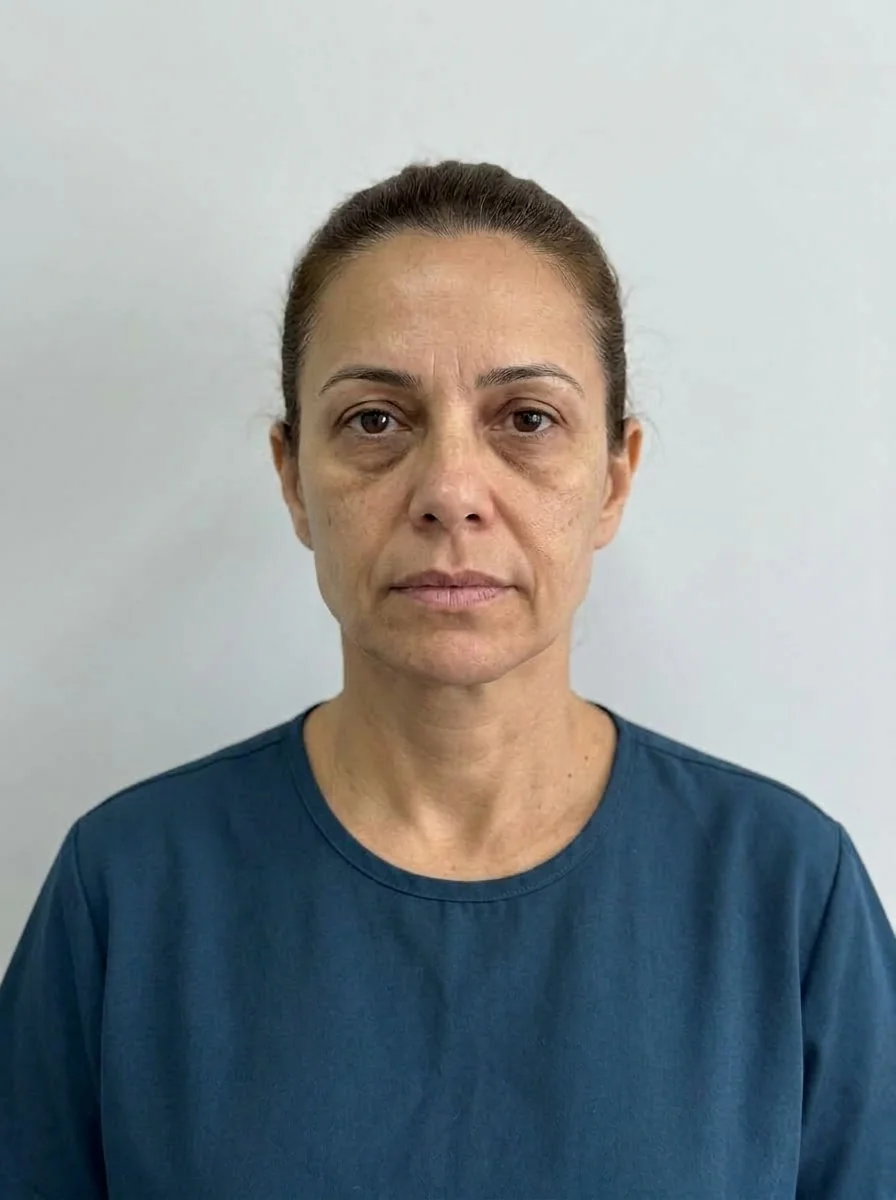 BeforeSimulation
- Nerve
- Highlighted area
Quick facts
- Concern
- One side of the jaw looks wider, lower or more defined than the other
- Method
- Compare angles, contour and masseter in front and oblique photos, and palpate the structure
- Structures
- Mandible, angle, masseter, fat and bite
- Caution
- Over-compensating creates a new asymmetry, and a different bone cannot be corrected with injectables
Almost every jaw has a slight asymmetry, and almost none requires treatment. The concern appears when the difference is noticeable in a photo, in the mirror or when smiling. The clinical question is: what is causing the difference, and which part can be compensated without creating a new problem.
This page organizes the assessment and connects with asymmetric face, asymmetry from chewing on one side and weak jawline.
What can be different?
The mandible is the bone of the lower contour, and the mandibular angle defines the transition between the body and the ramus. Over it lie the masseter, fat and skin. The difference between sides can come from any layer:
| Source of the difference | How it presents | Possibility in harmonization |
|---|---|---|
| Bone (length, angle, position) | Constant difference in photos and palpation | Limited compensation with volume |
| Masseter (hypertrophy on one side) | Wider side that grows on clenching | Toxin may be considered |
| Fat and soft tissue | Contour difference without bony change | Volume or replacement |
| Bite and tooth position | Chin deviates on closing | Orthodontics, surgery |
| Habits | One-sided chewing, posture | Guidance and follow-up |
Telling these sources apart is what separates a safe plan from a promise. A bony facial asymmetry can be compensated in part; one from the masseter, in greater part; a dental one, practically not with injectables.
How to assess at the consultation
Compensating without creating another asymmetry
At the discretion of the licensed professional, compensation usually follows three lines:
- Volume on the less projected side: reinforce the angle or the body to bring the reading closer. See jawline filler.
- Reduction of the hypertrophied side: toxin in the masseter can reduce the difference when the muscle dominates, with specific consent.
- Chin: adjustments to the chin can compensate for a midline deviation. See chin filler.
The process is gradual: apply little, reassess, adjust. Different volumes on each side increase the chance of error, and the patient should know that some natural asymmetry remains.
Risks
Swelling, bruising, new asymmetry, nodules and irregularities. The facial artery and the marginal mandibular branch of the facial nerve run along the jawline; vascular complications are rare and serious, and hyaluronidase should be available when hyaluronic acid is used. Toxin in the masseter can cause a temporary change in chewing and in the smile, as well as an uneven effect.
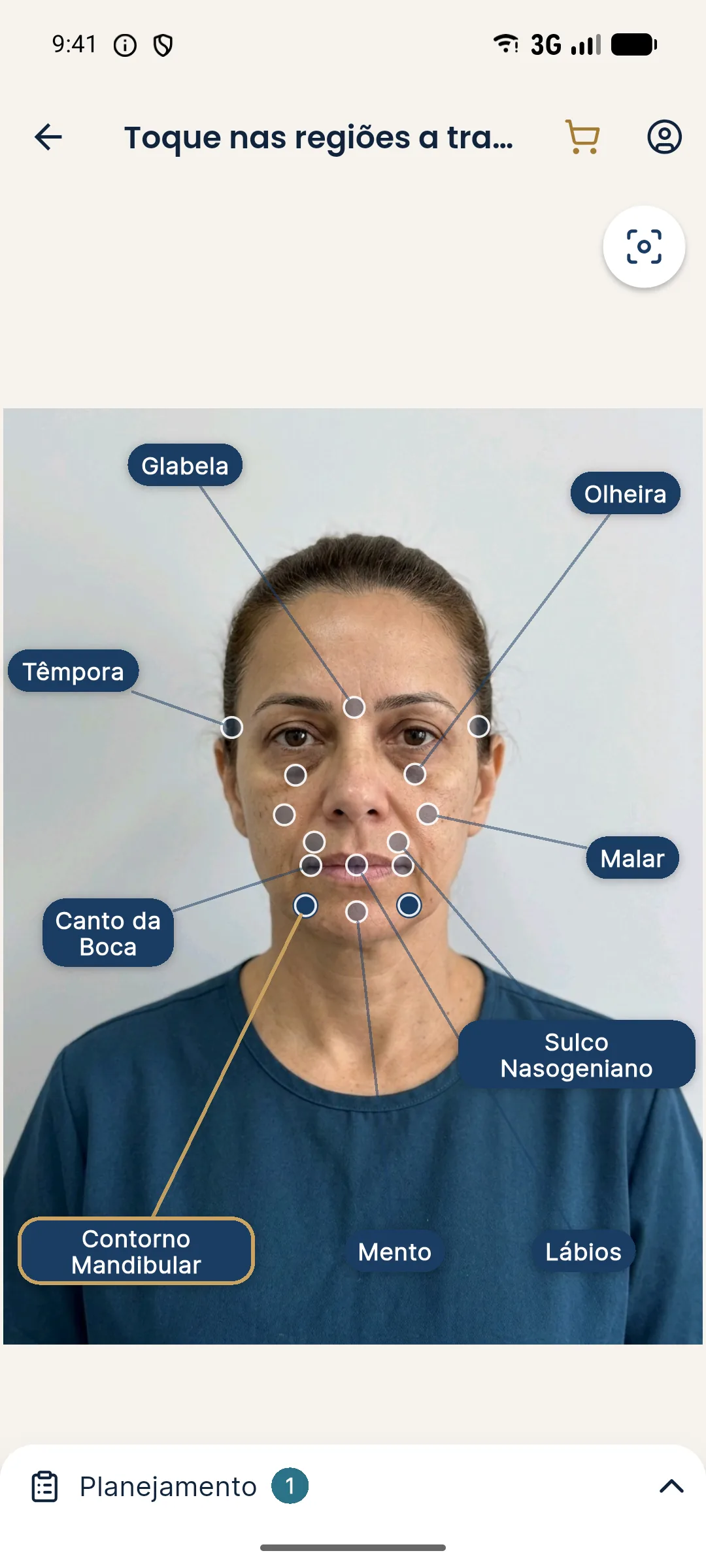
How to show it in Harmy
In Harmy, the Jawline point simulates volume along the contour, but in a bilateral area the ml is the total split between the two sides, so the app is not a tool for different volumes per side. Use it to illustrate the overall effect of the contour and discuss asymmetric compensation separately. The projection changes only what was marked.
Common mistakes in compensation
The most common mistake is trying to make both sides equal. The goal is to improve perception, and equalizing requires volumes that can leave the treated side heavy. The second is failing to tell muscle from bone: toxin in an asymmetric bone does not solve it, and volume over a hypertrophied masseter only widens that side.
Another mistake is ignoring the bite and habits. Chewing on one side keeps the hypertrophy going, and the aesthetic treatment may lose effect if the habit continues. It is also a mistake to draw conclusions from a single photo: head position and expression change how the contour reads.
Finally, do not forget consent: the patient should know that some asymmetry remains, that compensation may require adjustments and that results vary.
Work sequence and record keeping
Start with the assessment: photos in three positions, palpation and a conversation with the dentist if a bite problem is suspected. Define what will be compensated and with which approach, in stages, with a follow-up to reassess. Record the volumes used on each side, the logic of the plan and the before and after photos, always in the same light. If the bony difference is significant, present the option of a surgical evaluation and document the conversation, without pressure. A patient who understands the limit tends to be satisfied with a modest improvement, and the professional avoids the spiral of corrections that never reach perfect symmetry.
Patient profiles and management
Young patients with mild asymmetry are usually satisfied with observation and guidance; those with a significant difference and functional discomfort need specialized assessment. Patients who have had orthognathic surgery or trauma have altered anatomy and call for extra caution.
Those who habitually chew on one side benefit from guidance and, when needed, dental treatment. People with marked bruxism need follow-up, because the muscle keeps working and can reverse part of the compensation.
The practical rule is to start with the least invasive option, measure the result and only then move forward. A gradual plan protects the patient from excess and allows fine adjustments.
Safety when treating jaw asymmetry
Before ending the consultation, confirm that the patient understood what will be done, what will not be done and that the asymmetry may remain visible after the plan. Explain the signs that require immediate contact: severe pain, change in skin color, fever or any visual change. Give this guidance in writing, record in the patient record that it was delivered and agree on the channel for questions and the date of the follow-up.
Wrap-up
Record photos, palpation, bite, the probable cause and the planned compensation. See also larger masseter on one side and crossbite and asymmetry. Volumes and techniques are at the discretion of the licensed professional, in accordance with the rules of their professional council in Brazil.
Frequently asked questions
Can an asymmetric jawline be corrected with filler?
Perception can improve with volume on the less defined side, at the discretion of the licensed professional. The bone stays different, and the goal is compensation, not sameness.
Does toxin in the masseter help balance it?
When the larger side has muscle hypertrophy, toxin can reduce the difference in part. If the cause is bony, the effect is limited.
How do you separate bone, muscle and fat?
Palpation, an exam with the patient clenching their teeth and comparison in photos all help. When in doubt, a complementary image requested by the professional can clarify the cause.
Does chewing on only one side cause asymmetry?
It can contribute to hypertrophy of the masseter on the dominant side, and it is one of the factors to investigate, along with the bite and habits such as bruxism.
Harmy images are illustrative simulations generated by AI from the patient's photo to support the conversation between practitioner and patient. They are not a promise of results. Indication, technique, product and volume are solely the decision of the licensed practitioner. This content is for information only and does not replace a clinical assessment.