
Aging profile: what the frontal view hides
- Nerve
- Highlighted area
Quick facts
- Concern
- In the side photo I look older than from the front
- Key insight
- The profile shows the projection of the chin, nose, lips and neck, which the frontal view does not reveal
- Supporting measure
- Standardized profile photo, cervicomental, nasolabial and mentolabial angles
- Limit
- The app's projection uses only the frontal photo and does not illustrate profile changes
Many patients discover their own profile by chance, in a photo taken from the side at a party, in a video or in a fitting room mirror. The reaction is the same: "wow, I look older like this." The sentence has a basis. The profile concentrates signs of aging that the frontal photo hides or downplays, and many concerns are only resolved when the professional looks from the side.
This page shows what to observe in the profile, how to photograph and measure, which adjustments belong to facial harmonization and which limits need to be stated. For the profile context, see also convex profile, concave profile, straight profile and profile facial analysis.
What does the profile show that the frontal view does not?
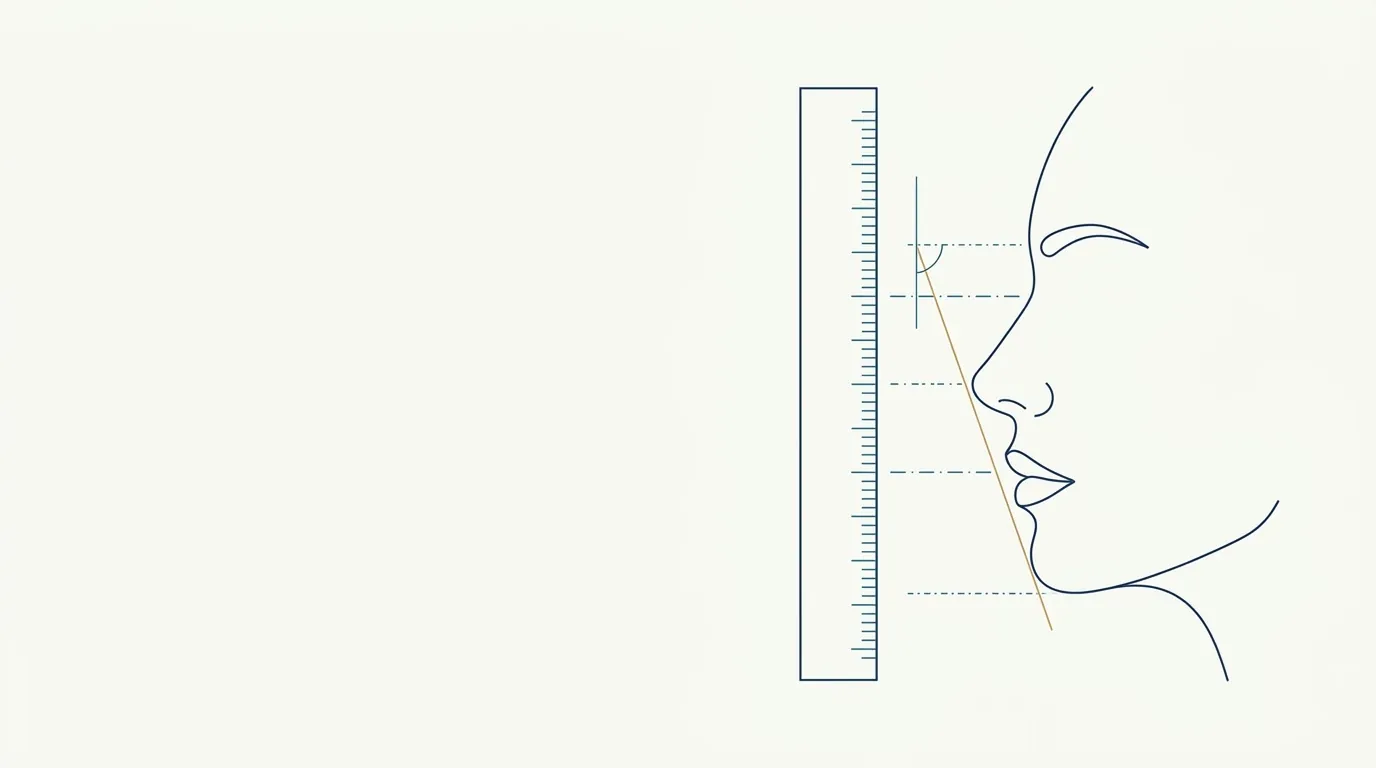
The frontal photo is good for width, symmetry and the proportion of the thirds. The profile is good for depth: how much the chin projects, how much the nose drops, how the lip sits in relation to the nose and chin, and how the neck joins the jaw. With aging, almost all of these points change.
- Chin: bone resorption and tissue loss reduce projection, and the chin looks receding.
- Nose: the tip tends to drop and projection decreases, increasing the nasolabial angle. See nasolabial angle.
- Lips: they thin and turn inward, and the distance between the nose and the upper lip increases.
- Cervicomental contour: the double chin and loss of definition close the cervicomental angle.
- Cheek and jowl: descent shows up as a lateral bulge, which the frontal view disguises.
Each of these elements can be read separately, but it is the sum that gives the aged look. That is why the profile deserves to be assessed as a whole, not as a list of flaws.
How to photograph and measure the profile?
Standardization is indispensable. The Frankfurt plane (the line between the corner of the eye and the top of the ear, parallel to the floor) serves as the reference for head position. Without it, neck tilt changes the chin angle. The camera should be at eye level and at a distance that avoids distortion. The references are in Frankfurt plane and in distance and lens in the assessment photo.
| Angle or measure | What it assesses | What a deviation suggests |
|---|---|---|
| Nasolabial | Position of the nasal tip | Drooping or elevated tip |
| Mentolabial | Groove between lower lip and chin | Deep or erased groove |
| Cervicomental | Transition between chin and neck | Double chin or receding chin |
| Facial convexity | Relationship of forehead, nose and chin | Convex or concave profile |
| Esthetic line | Position of the lips | Retracted or protruding lips |
Reference lines such as Steiner's, Ricketts' and Holdaway's are useful for thinking, not for decreeing. They were developed in specific contexts and vary with sex, age and ethnicity.
What adjustments can facial harmonization propose?
The repertoire is limited and honest. In many patients, the most impactful adjustment in the profile is chin projection, because it reorganizes the relationship with the lips and neck. The lip can gain contour and support, without needing a large volume. The jawline can gain definition, which reduces the reading of a double chin. The nose can be a subject for nonsurgical rhinoplasty in selected cases, with specific vascular risks.
See the pages chin filler, lip filler and jaw filler. For the nose, nasal anatomy for injectables describes the area.
All of these procedures carry risks: swelling, bruising, asymmetry, nodules and, rarely, vascular occlusion, and hyaluronidase must be available when the material is hyaluronic acid. The chin and lips have important arteries, and the nose is a high-risk area that demands experience and trained emergency management.
What is not solved by volume?
Some profile changes cannot be corrected by volume. A double chin that comes from excess fat or skin, a chin that recedes due to a large skeletal issue and a very droopy nose call for other approaches. The page double chin with a small chin discusses the relationship between chin and double chin, and receding chin shows the gradation of recession. When the deviation is skeletal, referral to an oral and maxillofacial surgeon is the honest path.
It is also necessary to recognize the dental influence. Missing teeth, loss of lip support and the bite all affect the profile. See tooth loss and the face and orthodontics and profile change.
How to build the plan?
The typical order starts with the chin, which organizes the profile, and moves on to the jaw, the lip and, if applicable, the nose. Each stage should be checked on a profile photo, at the same angle and in the same light. The plan combines structure with detail, and avoids treating the lip before knowing whether the chin will change the relationship.
What can and cannot Harmy do here?
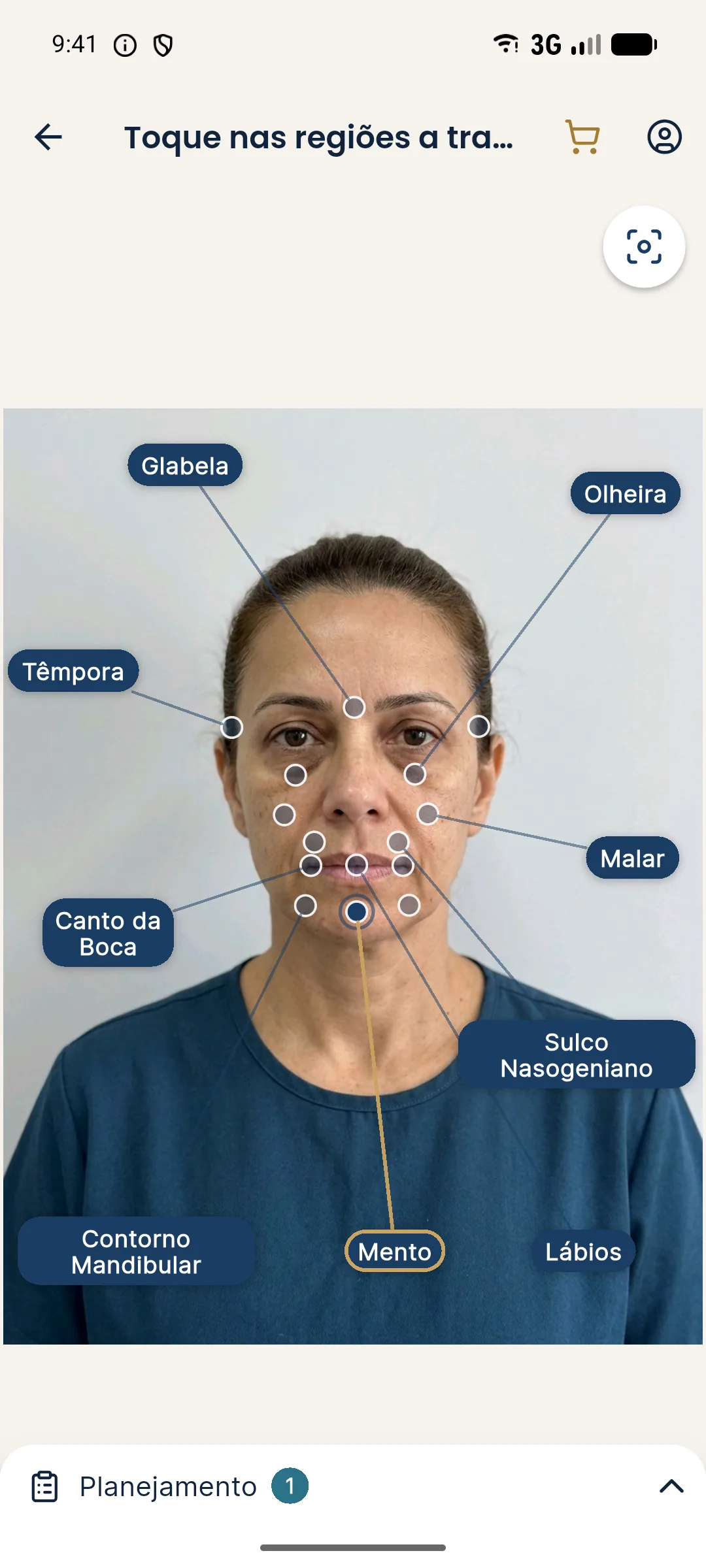
This is a case where the app has a strong limit. Harmy projects from the frontal photo and does not show profile change. It can illustrate the definition of the jawline and the volume of the chin in frontal view, but chin projection in the profile must be demonstrated by other means. Explain this before showing the image.
Frequently asked questions
Why do I look older from the side?
Because the profile shows the projection of the chin, the drop of the nasal tip, the thinning of the lips and the double chin, which stay hidden in the frontal photo.
What can be adjusted in the profile with facial harmonization?
Chin projection, lip definition and jawline contour, at the discretion of the qualified professional, after assessment. Bone or neck changes have limits.
Do I need a profile photo to plan?
Yes. Without it, the assessment of the chin, nose and lips is incomplete, and the plan may get the projection wrong.
Does Harmy show the profile?
No. The projection starts only from the frontal photo. The profile needs its own photo and clinical exam.
Harmy images are illustrative simulations generated by AI from the patient's photo to support the conversation between practitioner and patient. They are not a promise of results. Indication, technique, product and volume are solely the decision of the licensed practitioner. This content is for information only and does not replace a clinical assessment.