
Recessed Chin: Assessment and Options in Harmonization

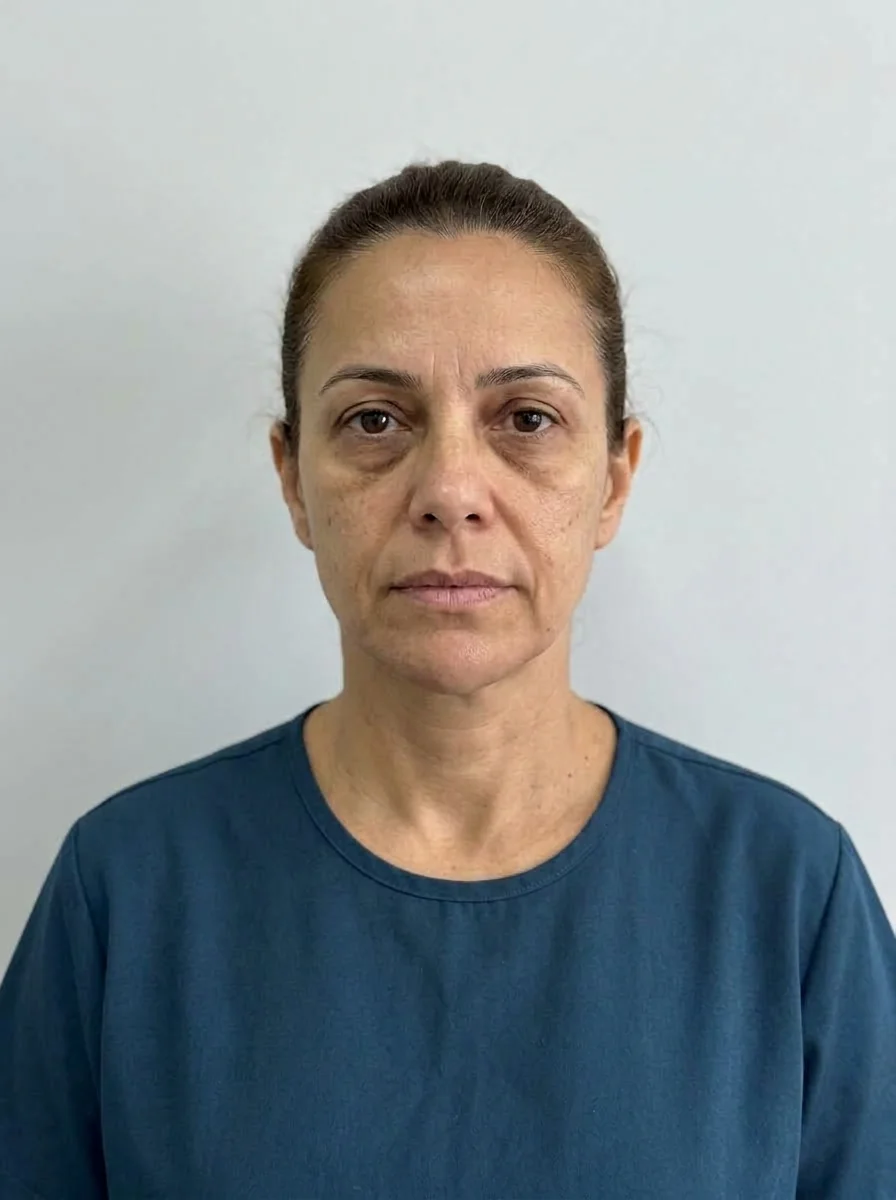 BeforeSimulation
- Nerve
- Highlighted area
Quick facts
- Concern
- Chin that "disappears" in profile, a profile that looks flat or turned inward
- Key reading
- The chin may be small, or well formed and set back because of jaw position
- Supporting measure
- Profile photo in the Frankfurt plane, vertical lip line and mentolabial angle
- Limit
- Volume simulates projection but does not correct significant skeletal recession or the bite
"My chin is set back" shows up in many forms: "my profile is crooked", "my face has no chin", "my neck looks stuck to my chin". Behind it is almost always a profile issue that the frontal photo hides. The HOF professional who wants to understand the concern has to work with the side photo.
Here you will find how to measure the recession, how to separate a small chin from a recessed jaw, what harmonization can achieve and when bone decides. For the small chin itself, see small chin, and for associated facial patterns, short face and recessed chin and long face and recessed chin.
What is a recessed chin?
The technical term is retrogenia, the set-back position of the chin relative to the facial plane. It differs from micrognathia, in which the whole jaw is small. A patient may have a well-sized chin but a recessed jaw, with the chin following the recession. Another may have a well-positioned jaw and a small chin. The approach changes in each case.
To make the reading you need a true profile photo, with the head in the horizontal plane and the lips relaxed. Any tilt of the chin up or down changes the look. The Frankfurt plane is the most commonly used reference for aligning the head.
How to measure recession in profile
There are several references, and none is absolute. A few are useful in practice:
- Vertical line of the lower lip: the pogonion usually sits close to that line or slightly behind it, depending on sex and facial pattern.
- Steiner S line: from the midpoint of the nose contour to the pogonion, used to assess lips and chin.
- Facial convexity angle: relationship between forehead, nose and chin, which shows whether the profile is straight, convex or concave.
- Mentolabial angle: between the lower lip and the chin. Very acute suggests a recessed chin, very open suggests a projected chin.
Instead of memorizing numbers, train your eye with consistency: always use the same reference, always photograph the same way and compare. Reading the measurements is covered in reference lines of the aesthetic profile and in profile facial analysis (checklist).
Small chin or recessed jaw?
This is the central question. Look at the jaw angle and the length of the jaw body in profile. If the ramus is short and the angle is obtuse, the whole jaw tends to be set back. If the jaw has good length and the chin is small and round, the retrogenia is more focal.
| Pattern | Clues | Role of HOF |
|---|---|---|
| Small chin, normal jaw | Long jaw, short chin | Chin projection is usually effective |
| Recessed jaw | Short ramus, class II bite | Partial camouflage; assess orthodontics |
| Small chin and jaw | Retruded profile and short lower third | Joint plan, conservative expectation |
| Normal chin, large nose | Chin looks recessed by contrast | Assess the whole before treating the chin |
This distinction is a hypothesis, and a dental and radiographic assessment may be needed. For the retruded profile, see retrognathic profile: assessment and deep bite and recessed chin.
What can harmonization do?
The goal is to project the chin, improving the profile line without creating an artificial chin. The options usually discussed, at the discretion of the licensed professional, are:
- Chin filler, focused on forward projection and support, in conservative volume and in stages. See chin filler.
- Complement along the jawline, if the angle and contour take part in the concern. See jawline filler.
- Biostimulation in the chin, in selected cases. See biostimulator in the chin.
- Lip adjustment, since the lips settle after the chin is projected.
The risks of the area include swelling, bruising, asymmetry, nodules and, rarely, vascular complications and injury to the mental nerve. Hyaluronidase must be available when hyaluronic acid is used, and the patient must be informed.
How to talk to the patient
Patients usually notice a recessed chin in profile photos, in videos and in the elevator mirror. Showing the photo and the reference line helps turn a feeling into a measurement. Explain what volume does and does not do, and leave room for questions.
The conversation about the chin is also the subject of I want a bigger chin and explaining the chin to the patient.
What does Harmy show?
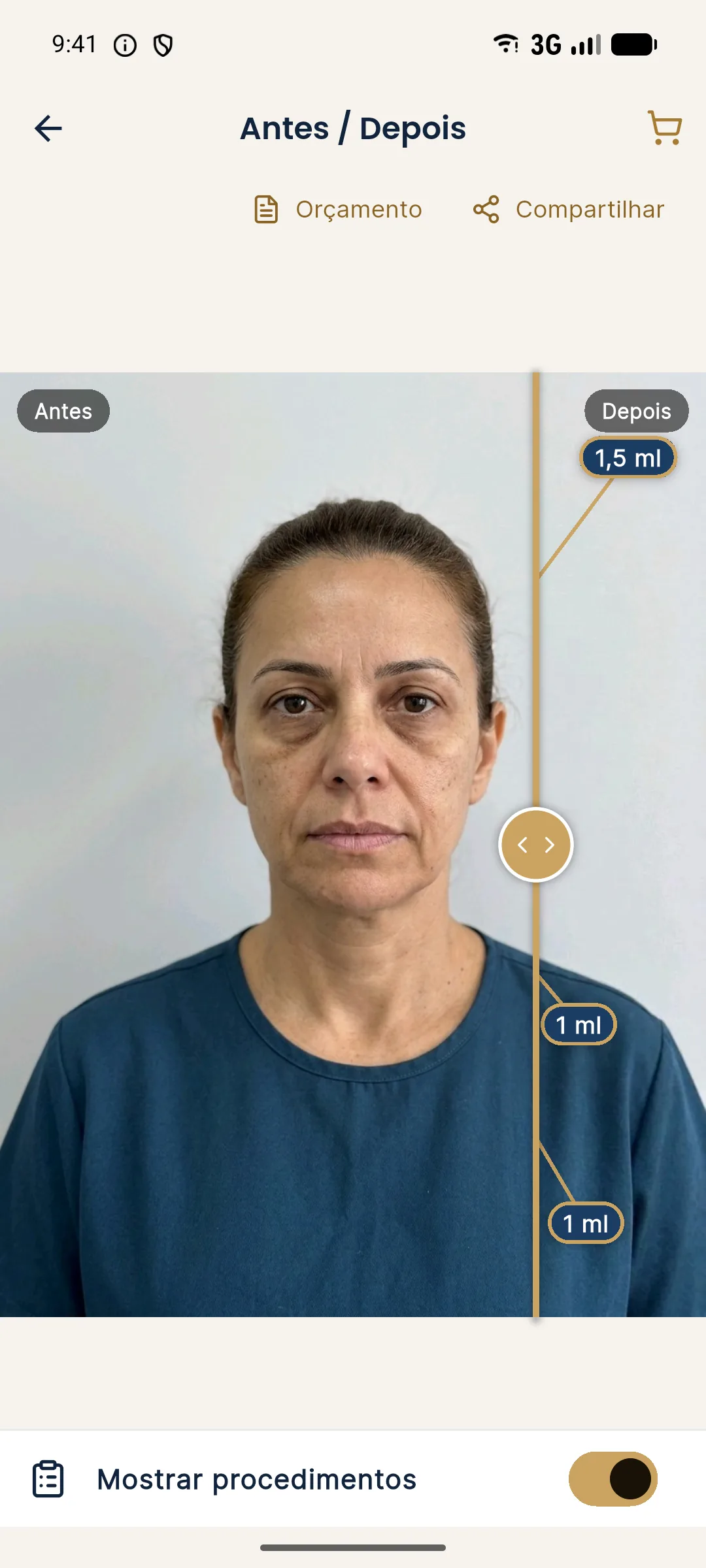
A recessed chin is a profile concern, and Harmy uses only the frontal photo. The projection helps discuss proportion and chin contour seen from the front, but it does not show projection. If the patient expects to see the profile change, the app does not deliver that, and it is better to explain beforehand.
When to refer
Refer to the orthodontist or the oral and maxillofacial surgeon when there is a significant class II bite, sleep apnea, joint pain or an obvious skeletal disproportion. HOF can be an aesthetic step at the end, but it should not be the first answer to a functional problem. See orthodontics and profile change and referring patients in HOF.
Record keeping
Save the profile photos, the references used, the probable classification, the plan as a range and the guidance given. At follow-up, repeat the same photos and compare against the chosen reference. Standardized clinical photography and the history per patient keep the method consistent.
Frequently asked questions
What is the difference between a small chin and a recessed chin?
A small chin lacks size in the chin itself. A recessed chin (retrogenia) is a set-back position relative to the facial plane, which can occur even with a normal-sized chin, for example when the jaw is set back.
Does chin filler correct a retruded profile?
It can improve the apparent projection of the chin and soften the profile. When the recession comes from bone or the bite, the effect is partial, and the professional should tell the patient the limit.
How do you measure whether the chin is recessed?
On the profile photo, with the head in the horizontal plane, you look at the pogonion position relative to a vertical line through the lower lip or the nose. There are several references, and the choice depends on the professional's school.
When do orthodontics or surgery come in?
When the relationship between the jaws and the bite explains the recession. In those cases, HOF can complement the appearance but does not replace the underlying correction.
Harmy images are illustrative simulations generated by AI from the patient's photo to support the conversation between practitioner and patient. They are not a promise of results. Indication, technique, product and volume are solely the decision of the licensed practitioner. This content is for information only and does not replace a clinical assessment.