
Short face and receding chin: assessing the brachyfacial pattern

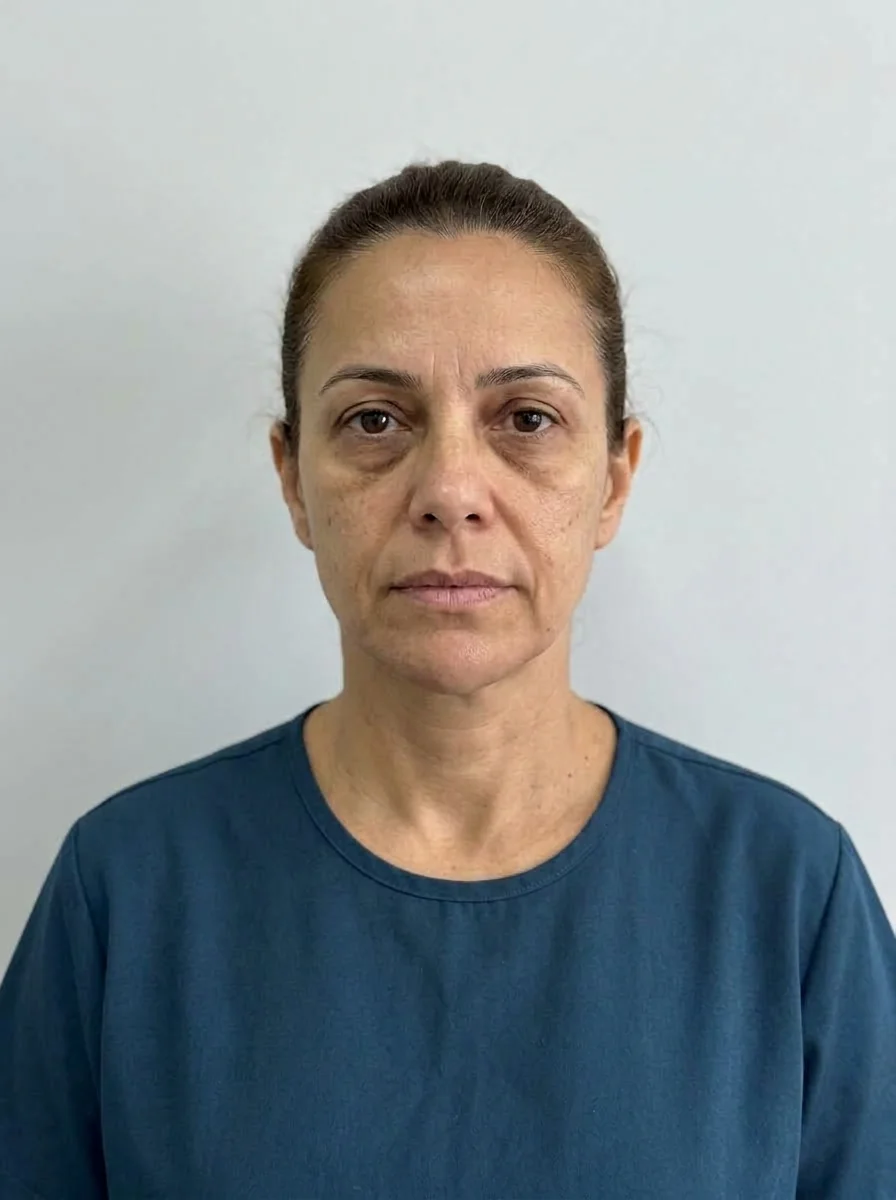 BeforeSimulation
- Nerve
- Highlighted area
Quick facts
- Concern
- Face that looks short and wide, with a barely projected chin and a reduced lower third
- Key reading
- The brachyfacial pattern usually comes with a deep bite, a strong masseter and a marked mandibular angle
- Supporting measure
- Facial thirds, convexity angle and pogonion position in profile
- Limit
- Volume simulates projection, but does not correct the skeletal base or the bite
The patient arrives saying the chin "disappears" in profile and that the face looks wide and short. In the office, this pattern has a name (brachyfacial, or short face) and its own assessment logic: looking at the chin is not enough, you have to look at the relationship between height, width, bite and musculature.
This page helps you read the pattern and decide what fits in facial harmonization. The opposite pattern is in long face and receding chin, and the more general concern about chin projection in receding chin.
How do you recognize the short face pattern?
The brachyfacial face has proportions that, together, form a recognizable set. Not every sign shows up in every patient, and the presence of one of them does not settle the diagnosis:
- Reduced lower third height relative to the middle third, with a short chin and a deep labiomental fold.
- Marked facial width, with a more horizontal, "square" mandibular angle.
- Deep bite, in which the upper teeth cover much of the lower ones.
- Well-developed masseters, sometimes with associated bruxism.
- Everted lower lip and an accentuated labiomental fold, because the chin does not keep up with the lip.
- Profile with a chin that is barely projected relative to the line of the nose and lip.
Keep in mind that this is a clinical descriptive vocabulary, and orthodontic or skeletal diagnosis belongs to whoever assesses the skull and the bite. In facial harmonization, what matters is the aesthetic effect of the findings and what you can (or cannot) change.
What do the thirds and the profile show?
Reading by thirds gives the first clue. When the lower third is proportionally short, the chin often looks recessed even when its position on the bony plane is reasonable. Comparing heights helps separate "receding chin" from "short lower third".
In profile, the facial convexity angle and the position of the pogonion show how much the chin keeps up with the rest. In patients with retrogenia, the mentolabial angle tends to be acute and the fold deep. For a fuller list of measurements, see the retrognathic profile and the profile facial analysis checklist.
| Finding | Likely reading | Implication for the plan |
|---|---|---|
| Short lower third, barely projected chin | Brachyfacial pattern | Height and projection can go together |
| Normal lower third, receding chin | Isolated retrogenia | Chin projection is the focus |
| Very marked mandibular angle | Developed masseter and bone | Avoid adding width to the jaw |
| Everted lower lip | Compensation for the short chin | Reassess the lip after the chin |
What can harmonization do in this pattern?
The focus is usually the chin, and the logic is to create projection and height without adding to the wide-face look. In general, the conversation revolves around:
- Chin projection: can soften the look of a receding chin in profile. See chin filler.
- Lower third height: depending on the design, how the volume is distributed helps lengthen the face visually.
- Jawline: careful here. In an already wide face, adding volume at the angles can worsen the "boxy" feel. When it is included, it is included with judgment. See jawline filler and the reading of the jawline.
- Masseter: if bruxism and hypertrophy are part of the width, the approach changes. See toxin in the masseter and square face from bruxism.
How do you project without overdoing it?
The most common risk is pushing the chin too far forward and ending up with a disproportionate lower third or the so-called witch's chin. A few practical decisions help:
- Set the goal in profile, not in the front photo.
- Advance in stages. Start with a modest projection and reassess from the side and from the front.
- Consider the patient's sex and identity. The ideal chin projection differs (see chin projection by sex).
- Watch the lower lip. It often settles after the chin gains support.
- Document the planned and the observed projection.
For the conversation with the patient about what the chin does for the face, there is support in explaining the chin to the patient.
How do you show the projection?
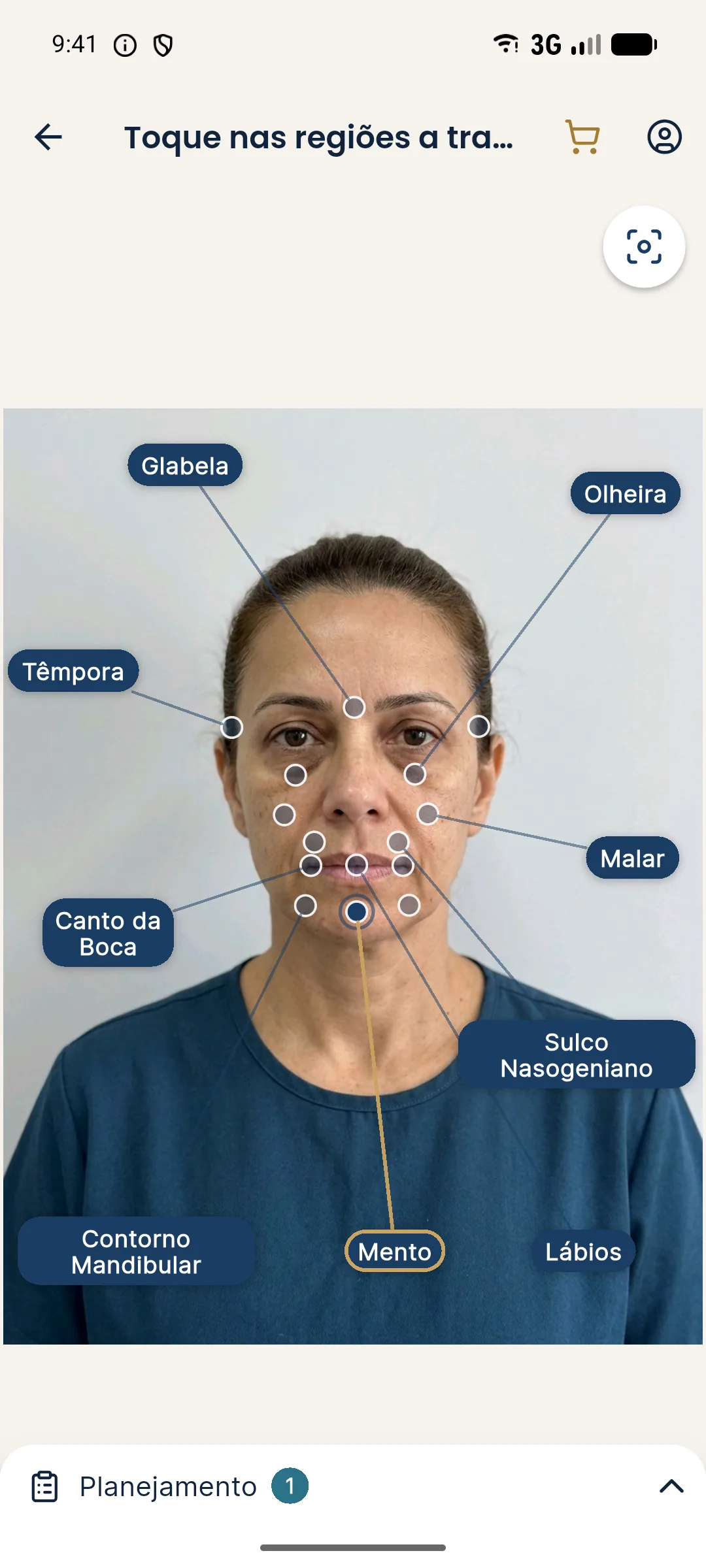
The simulation in Harmy uses only the front photo, and that matters here: a receding chin is, above all, a profile concern, which the app does not simulate. What the slider shows is the change in volume and contour seen from the front, which helps discuss proportion and width, but not the projection itself. Make this clear, because patients tend to imagine the image shows the profile.
When should you refer?
Some situations call for another opinion before or alongside facial harmonization:
- Deep bite or evident malocclusion, with a functional complaint (joint pain, tooth wear).
- Intense bruxism, which keeps the masseter hypertrophied and can compromise the result.
- Significant skeletal disproportion, where volume would only be a disguise.
- Expectation of changing the shape of the entire face, which an injectable plan does not deliver.
Record keeping
Photograph front and profile with standardization, note the findings on thirds and profile, the agreed approach (as a range) and what was said about limits. At follow-up, always compare in profile, because the concern originates there. The history per patient keeps sessions organized, and standardized clinical photography makes sure the comparison is honest.
Frequently asked questions
What is a short face (brachyfacial)?
It is a growth pattern in which the lower facial height is smaller relative to the width of the face. It usually comes with a deep bite, strong chewing muscles and a jaw angle closer to horizontal.
Is a receding chin the same as a small chin?
Not necessarily. The chin may be of normal size and still sit back from the facial plane, or it may be small and well positioned. A profile assessment tells the two situations apart.
Does chin filler help in a short face?
It may improve chin projection in profile and balance the lower third, but it is a volume simulation and does not change the bone base. The decision belongs to the licensed professional, after assessment and consideration of alternatives.
When do orthodontics or orthognathic surgery come in?
When the relationship between the jaws and the bite explains the concern. Facial harmonization can complement, but does not replace correcting the skeletal base when that is the cause.
Harmy images are illustrative simulations generated by AI from the patient's photo to support the conversation between practitioner and patient. They are not a promise of results. Indication, technique, product and volume are solely the decision of the licensed practitioner. This content is for information only and does not replace a clinical assessment.