
Long face and receding chin: assessing the dolichofacial pattern

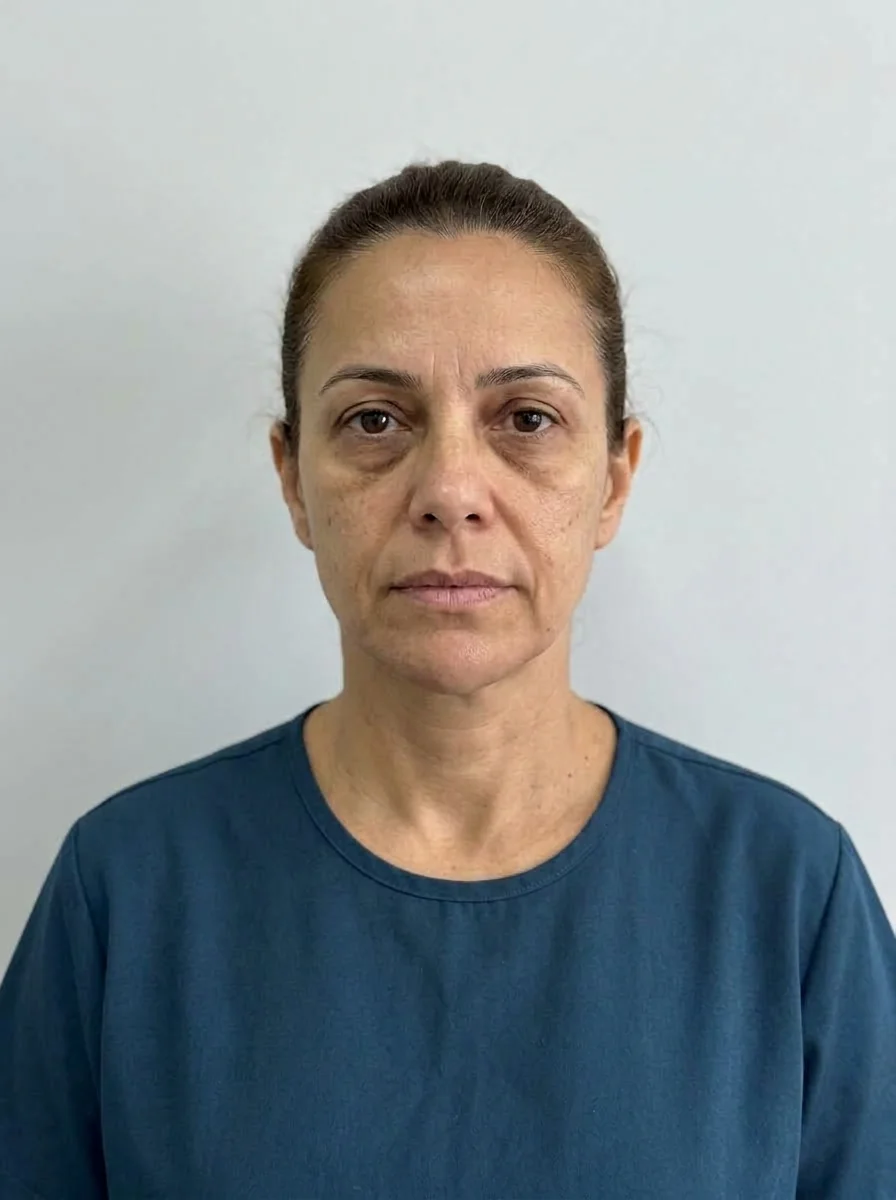 BeforeSimulation
- Nerve
- Highlighted area
Quick facts
- Concern
- Face that looks long and narrow, with a barely projected chin and a lengthened lower third
- Key reading
- The dolichofacial pattern usually comes with an open or shallow bite and weaker musculature
- Supporting measure
- Facial thirds, pogonion position in profile and the relation between height and width
- Limit
- Volume in the chin can worsen the lengthening; the skeletal base calls for an orthodontic opinion
A long face with a receding chin is, in many ways, the mirror image of the short face, but the logic of the approach is very different. In the short face, the challenge is to project and add height. In the long face, the risk is exactly the opposite: any poorly planned addition to the chin or lower third can lengthen what is already perceived as long.
This page organizes the assessment of the dolichofacial pattern and shows where facial harmonization can help without making the concern worse. The opposite pattern is in short face and receding chin, and the general concern about face shape in elongated face.
How do you recognize the dolichofacial pattern?
The set of findings usually includes:
- Long, narrow face, in which height predominates over width.
- Lengthened lower third, with a barely projected chin and sometimes a feeling of the chin "running away" backward.
- Open or shallow bite, with mouth breathing in some cases.
- Less developed chewing musculature, a more open mandibular angle and a soft jawline.
- Middle third with little projection and under-eye hollows or sunken cheeks in some patients.
- Greater gum or incisor exposure when smiling, in some of the cases.
As with the short pattern, skeletal and bite diagnosis belongs to whoever assesses the skull and the bite. In facial harmonization, what matters is the aesthetic effect and what you can change safely.
What do the thirds and profile reading add?
Reading by thirds shows whether the face is long because of the lower third, the middle third or both. When the lower third predominates, any idea of "lengthening the chin" must be dropped from the start. What is most useful is usually projection, not height.
In profile, facial convexity and the position of the pogonion tell how much the chin keeps up with the whole. It is common for a patient with a long face to also have little projection in the middle third, and then the perceived cause of the "receding chin" is, in part, a lack of support above. See profile without middle third projection and retrognathic profile.
| Finding | Likely reading | Implication for the plan |
|---|---|---|
| Long lower third and receding chin | Dolichofacial pattern | Projection yes, height no |
| Middle third with little projection | Lack of support for the profile | Consider cheekbone projection before the chin |
| Open bite | Skeletal or functional factor | Refer for orthodontic assessment |
| Shallow labiomental fold | Less chin to treat | Careful not to create a disproportionate chin |
What can and can't harmonization do?
It can, with judgment:
- Project the chin, moderately, to improve the profile without adding height. See chin filler.
- Give lateral support to the middle third, which balances the proportion between height and width. See cheekbone filler.
- Soften shadows in the under-eye area and the nasolabial fold, when they make the face look even longer.
It can't:
- Shorten the bone height of the face.
- Correct an open bite or the relationship between the jaws.
- Guarantee that the chin "comes back" to an ideal position. The possible projection is relative and gradual.
What mistakes should you avoid?
Some error patterns repeat in this concern:
- Adding volume to the chin and jaw together without checking proportion. The face becomes heavier and longer at the same time.
- Treating only the front. The concern is about profile, and the plan has to be designed on it.
- Ignoring the middle third. The chin often looks recessed because the maxilla has little projection.
- Promising to shorten. Nothing you inject shortens the face.
- Overlooking the functional component. Mouth breathing and open bite deserve a specific assessment.
For the logic of projection by sex and for avoiding disproportionate chins, see ideal chin projection by sex and planning an elongated face. The opposite, excess, appears in witch's chin.
How do you show the plan?
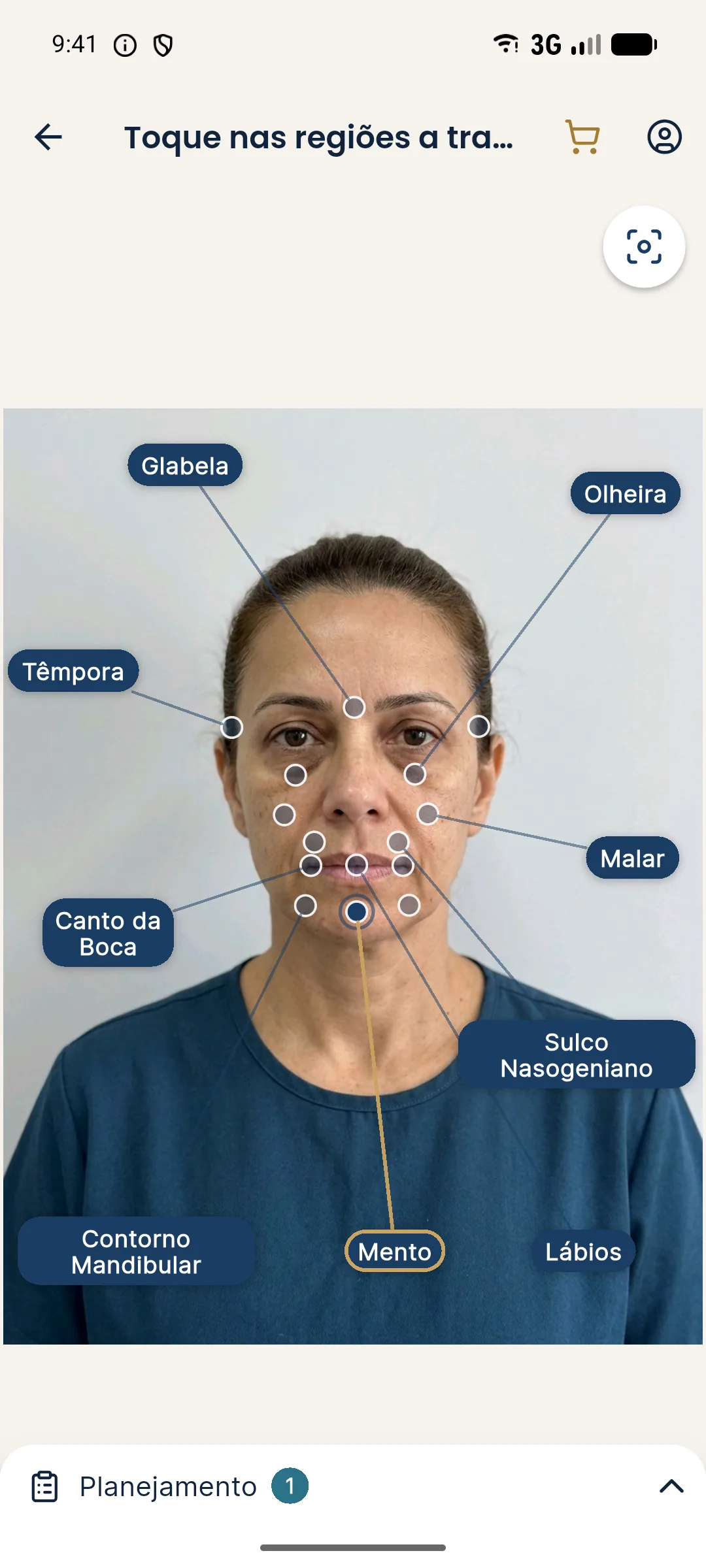
The simulation in Harmy is done only on the front photo. In a long face, this has an advantage and a limit. The advantage: front projection lets you discuss how lateral volume in the cheekbone or the chin contour changes the width and height proportion. The limit: the profile projection, which is the center of the concern, is not simulated.
When should you refer?
Consider an orthodontic or oral and maxillofacial surgery assessment when:
- There is an open bite, tooth wear or a functional complaint.
- The jaw disproportion is evident and the patient expects a structural correction.
- Mouth breathing is significant and has never been investigated.
In these situations, the facial harmonization plan complements but does not replace, and the most honest thing is to say so at the start. The next step, when there is one, tends to be defined together with whoever treats the bone base.
Record keeping
Photograph front and profile with standardization, record the pattern identified, the measurements of the thirds and the planned projection as a range. At follow-up, compare in profile. The history per patient in Harmy stores the sessions, and the comparison between projection and actual result makes clear what changed and what stayed as it was.
Frequently asked questions
What is a long face (dolichofacial)?
It is a pattern in which facial height is greater relative to width. It often comes with a long lower third, a receding chin, a more open jaw angle and an open or shallow bite.
Can a long face get chin filler?
It can, in selected cases, but the risk is lengthening the face even more. Projection helps more than height, and the decision belongs to the licensed professional, after assessing profile and proportions.
Can you shorten the face with facial harmonization?
Not in any real sense. You can balance the perception with volume in the lateral areas of the middle third, for example, but bone height does not change with injectables.
When is orthognathic surgery considered?
When the skeletal imbalance and the bite explain the concern to a significant degree. That assessment belongs to whoever treats the bone base and the bite, and facial harmonization can act as a complement.
Harmy images are illustrative simulations generated by AI from the patient's photo to support the conversation between practitioner and patient. They are not a promise of results. Indication, technique, product and volume are solely the decision of the licensed practitioner. This content is for information only and does not replace a clinical assessment.