
Square Face From Bruxism: What to Assess
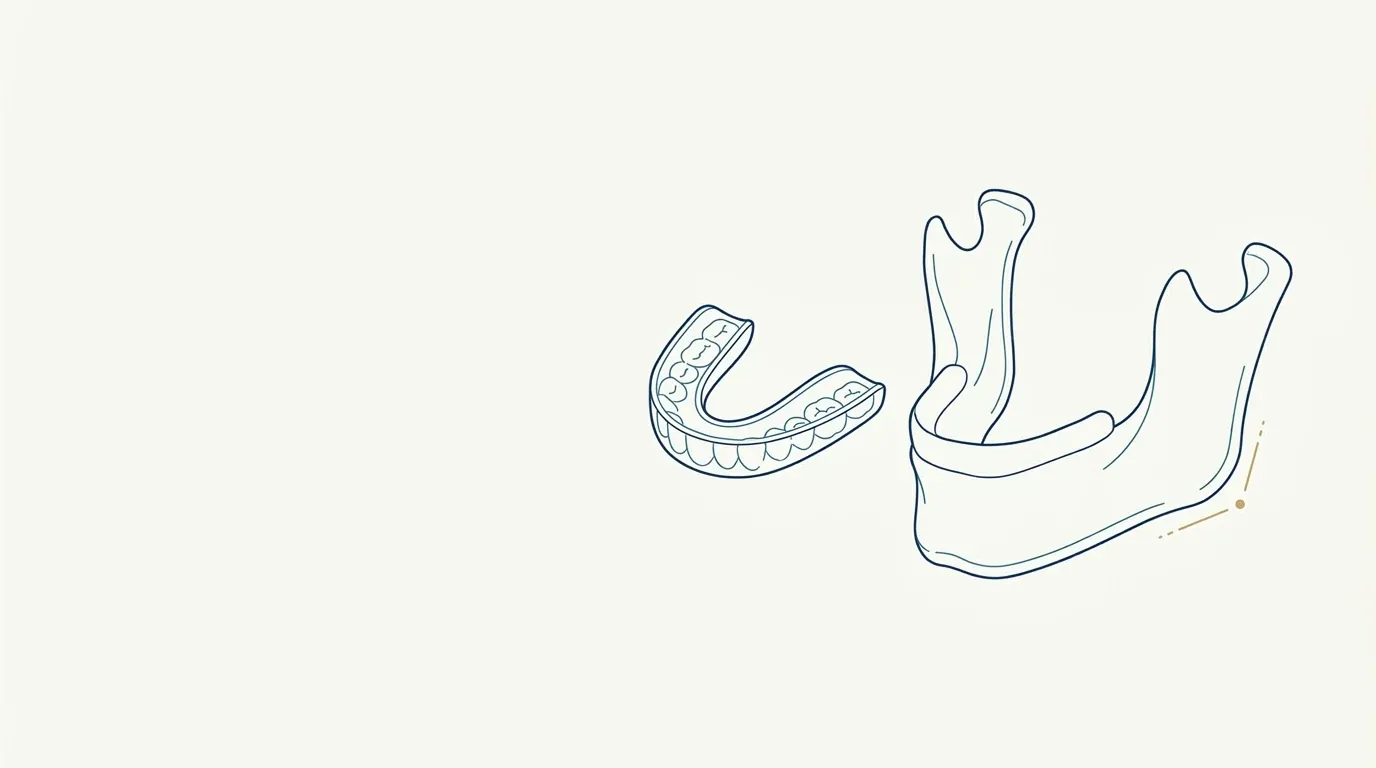
- Muscle
- Highlighted area
Quick facts
- Concern
- The lower face has become wide and square, sometimes with pain when chewing
- Mechanism
- Masseter hypertrophy from clenching and grinding the teeth
- Assess first
- Pain, TMJ, tooth wear and the difference between muscle and bone
- Approach
- Toxin in the masseter in indicated cases, alongside dental care
A 32-year-old patient arrives saying her face "has been getting squarer over the last few years," she wakes up with headaches and her jaw feels tired by the end of the day. When you palpate the lateral cheek while she clenches her teeth, the muscle mass pops up under your fingers. It is a classic picture: bruxism trained the masseter as if it were at the gym, and the muscle grew.
This page links face shape, muscle and pain, and shows how to organize the assessment so that toxin is a well-founded decision, not a reflex.
What bruxism does to face shape
The masseter is the main chewing muscle. It originates on the zygomatic arch and inserts at the angle of the jaw, forming the "curve" of the lower lateral face. When there is clenching or grinding of the teeth, by day or by night, the muscle works beyond what is needed and enlarges, like any muscle under repeated load.
The visual effect is a widening of the lower third, with a marked jaw angle and a straight line from ear to chin. The face tends to resemble an inverted trapezoid. In some patients, the temporalis muscle also grows and contributes to headaches. See bruxism and square face: assessment.
More than aesthetics: pain and function
The patient usually comes for aesthetics, but bruxism is a functional condition. Watch for associated complaints:
- Pain or stiffness in the lateral cheek on waking.
- Frequent temporal headaches.
- Clicking or locking in the temporomandibular joint.
- Tooth wear, fracture or sensitivity.
- Marks on the tongue and the inner cheek.
These signs call for a dental evaluation, with a muscle-relaxing splint when indicated. Toxin comes in as a complementary option in selected cases, not as a substitute for dental care. The decision and the referral are at the discretion of the qualified professional, in line with the rules of their professional council in Brazil. See also botox for bruxism and botulinum toxin for bruxism.
Muscle, bone or both: how to tell
Not every square face is bruxism. The lower width can come from bone, fat or muscle, and each origin responds differently.
| Origin | How to recognize it | Does it respond to toxin? |
|---|---|---|
| Muscle (masseter) | Hardens and pops up when the teeth are clenched, volume varies | May respond |
| Bone (jaw angle) | Constant width, no change on clenching | Does not respond |
| Fat | Soft on palpation, no relevant contraction | Does not respond |
| Mixed | A mix of findings | Partial response |
The most practical exam is bilateral palpation with the patient at rest and clenching the teeth. Compare the thickness on both sides and the firmness of the muscle. When in doubt, imaging can help distinguish the cause. See masseter hypertrophy: differential diagnosis and masseter larger on one side.
What facial harmonization proposes
The approach has three axes: muscle, contour and proportion. The order matters.
Muscle: toxin in the masseter
Botulinum toxin reduces masseter activity, and over time the muscle volume tends to shrink, gradually slimming the lower face. It can also reduce overload and, in some patients, pain. Possible adverse effects include difficulty chewing, an uneven smile and a feeling of weakness. See botulinum toxin in the masseter and difficulty chewing after masseter treatment. Doses and injection points are at the discretion of the qualified professional.
Contour: caution when filling
Filling the jawline of a wide face is usually counterproductive. Before considering jawline filler, reassess the face after the muscle reduction. The complaint changes when the masseter shrinks. See jawline and masseter: combining in the plan and tense jaw and harmony.
Proportion: the face as a whole
Sometimes the feeling of a "square face" improves with cheekbone or chin projection, which redistributes how the whole is read. The logic is in cheekbone and jawline: combining in the plan. This comes after the muscle phase.
Timeline of an approach
The response to toxin in the masseter is gradual. The patient should be told that the slimming is not immediate and that maintenance is periodic.
Risks and communication
Risks of toxin in the masseter include asymmetry, an altered smile, difficulty chewing, a feeling of weakness, headache and lack of response. There is also the risk of altered chewing with consequences for the joint. If filler is used later, hyaluronidase must be available. For the overview, see complications with botulinum toxin.
How to use Harmy
Harmy simulates volume in the marked area and does not simulate toxin in the masseter or muscle reduction. So it does not show slimming from the masseter. The use here is different: to assess, with the projection, whether the patient wants to reinforce the cheekbone or the chin after the muscle reduction, and to show that the face tends to become more proportional without touching the contour.
If the professional wants to show the jawline design, remember that the Jawline point in the app adds volume. On a face that is already wide, the projection should only be used with transparency about what it shows.
Record keeping
Note the palpation findings, functional complaints, the dental referral and the specific consent for toxin in the masseter. Record photos under standardized conditions, as in standardized clinical photography. Volumes and techniques are at the discretion of the qualified professional, after assessment and in line with the rules of their professional council in Brazil.
Frequently asked questions
Can bruxism make the face look square?
It can. The masseter works in excess and grows in volume, which widens the lower face. The width can also come from bone, and the exam tells the two cases apart.
Does botox in the masseter treat bruxism?
Toxin reduces the muscle's strength and may relieve overload and pain in selected cases, but it does not treat the cause of bruxism. Dental follow-up is still needed.
How can I tell whether the width is muscle or bone?
By examination: palpation with the patient clenching the teeth, side-to-side comparison and, when needed, imaging. Muscle hardens and grows when clenched, bone does not change.
Can someone with a square face from bruxism have the jawline filled?
Filling a face that is already wide can make the complaint worse. The plan usually starts with the muscular cause and only then assesses the contour design.
Harmy images are illustrative simulations generated by AI from the patient's photo to support the conversation between practitioner and patient. They are not a promise of results. Indication, technique, product and volume are solely the decision of the licensed practitioner. This content is for information only and does not replace a clinical assessment.