
Baby-faced look: adding structure without aging the face

 BeforeSimulation
- Nerve
- Highlighted area
Quick facts
- Concern
- A face with soft, rounded features that look younger than the patient wants
- Key insight
- Lack of chin and jaw definition gives a childlike read, and structure changes that read
- Supporting measure
- Profile, jaw angle, chin projection and proportion of the thirds
- Limit
- Too much structure ages and hardens the face, and less is usually better
Some adults report being treated as younger than they are. They get carded at the bar in their thirties, hear that they "look like a teenager" or feel they are not taken seriously at work. A face with soft, rounded features is the reason, and the concern, though common, is delicate. It mixes aesthetic desire, self-image and questions of professional identity.
This page helps read that face, decide what facial harmonization can offer and avoid the main mistake: adding too much structure and turning a youthful face into an aged or hard one. For related references, see delicate face in men, small chin and weak jawline.
What gives a face a childlike read?
The age we read from a face comes from a few signals. In children and teenagers, the face has a less projected chin, a shorter and more rounded jaw, full cheeks and features without deep shadows. Adults who keep this combination give an impression of youth, even without wrinkles. What makes the difference is the absence of definition, not the presence of smooth skin.
The most common signs are: a short, poorly projected chin, an obtuse and poorly marked jaw angle, rounded cheeks and eyes that are large relative to the rest. Some features are constitutional and have charm. Not every feature needs treatment, and the decision depends on how much it bothers the patient and on feasibility.
How do you assess the chin and jaw?
The profile reading is decisive. Measure the chin projection relative to the lower lip and the nose, and observe the jaw angle. The relationship between chin and lip is described in mentolabial angle and the chin position in pogonion. The jaw angle is covered in mandibular angle, and the variation by sex in ideal jaw angle by sex.
| Finding | What it indicates | Caution |
|---|---|---|
| Short chin in profile | Small projection | Do not lengthen too much |
| Obtuse mandibular angle | Poorly marked jaw | Avoid a line that is too straight and wide |
| Full, rounded cheek | Buccal fat or constitution | Do not add lateral volume |
| Full lips in a soft face | Reinforces the youthful read | Avoid more lip volume |
| Smooth skin, no shadows | Absence of relief | Structure, not diffuse filler |
See the whole picture in facial profile analysis and in chin and jaw combined in the plan.
How do you add structure without aging the face?
The keyword is proportion. The goal is not to create a new face, but to add the minimum definition that changes the age read. In general, the chin is the first point, because it organizes the profile and the relationship with the lip. The jaw comes next, with attention to the line. The cheekbone, in this profile, is usually left alone, because more cheek volume reinforces the youthful, rounded look.
Design matters too. The chin can gain projection without gaining excessive length, and the jaw can gain definition without becoming square. These details depend on the individual assessment and the professional's experience. The pages chin filler and jawline filler cover the areas.
All injections carry risks. The chin and jaw involve the facial artery and the mental nerve, and possible complications include swelling, bruising, asymmetry, nodules and, rarely, vascular occlusion. Hyaluronidase must be available.
And natural aging?
There is an irony: a youthful face tends to be desired for decades and, with time, the patient comes to value it. An intervention made at thirty to "look older" may be regretted at fifty. This horizon should enter the conversation. The structure that seems necessary today may become excessive once natural aging adds its own definition.
That is why the safest recommendation is modest plans, with reassessment and, if possible, reversibility. Hyaluronic acid allows correction with hyaluronidase, while other materials behave differently. The page aging of facial harmonization results covers this dimension.
What is the recommended sequence?
The plan follows the order of structure before detail, and starts with the area that changes the read the most. Reassessments are essential, because the patient's perception changes on seeing the result.
How does Harmy show this?
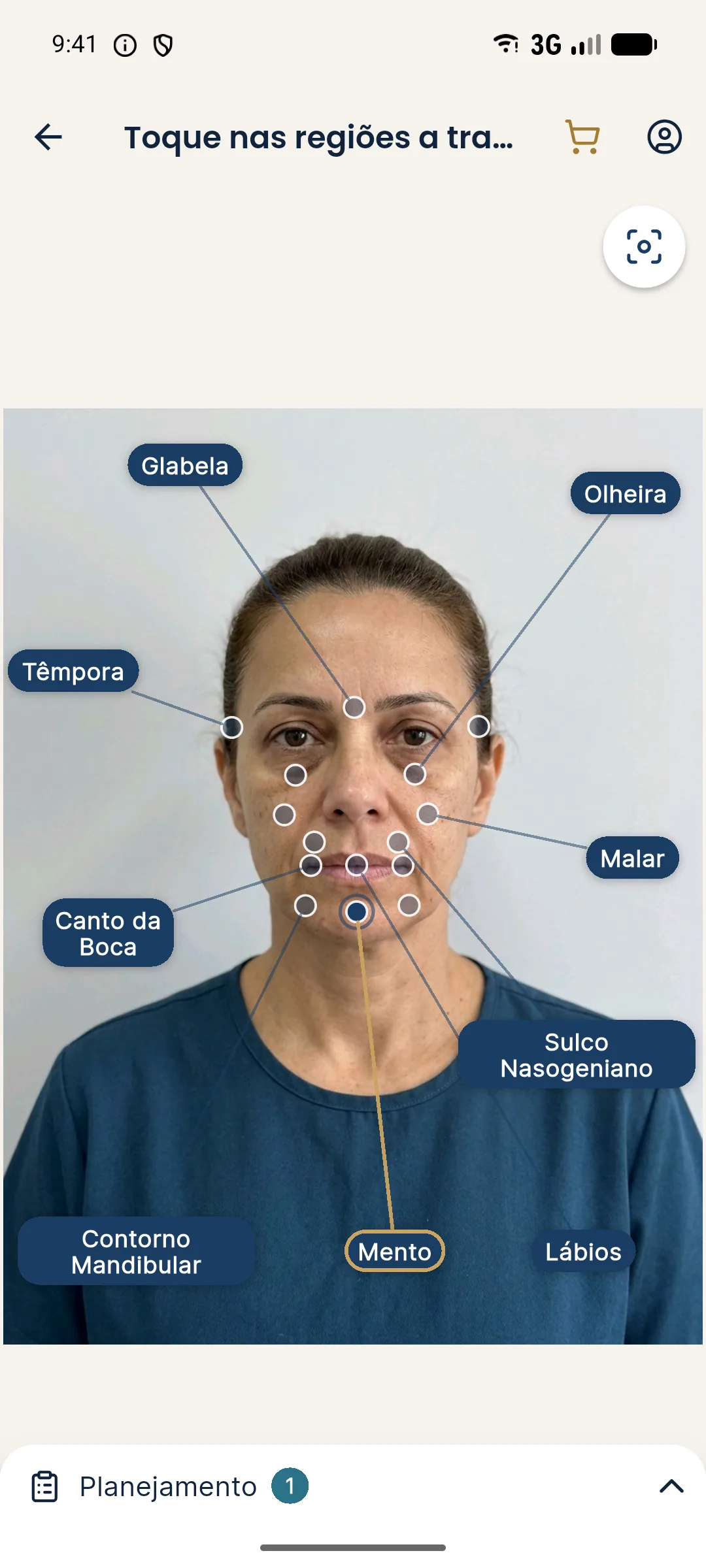
Harmy's Chin point and Jawline point illustrate the gain in definition in frontal view. The projection is modest and honest, and lets the patient see the effect of modest structure. Since the chin is a profile area and the projection starts only from the frontal photo, the image does not show the profile, and that should be said.
Frequently asked questions
What gives a face a childlike look?
A poorly projected chin, a rounded jaw, full cheeks and soft features. Together they recall the proportions of a developing face.
Can filler make the face look more mature?
It can add chin and jaw definition, which changes the read. The effect is modest and depends on the design, at the discretion of the qualified professional.
Is there a risk of aging the face too much?
Yes. Exaggerated structure leaves the face angular and heavy, and can age or masculinize beyond what is wanted. That is why the plan is conservative and staged.
Who usually has this concern?
Young adults, professionals who want to project more authority and people with soft features who feel they are not taken seriously. The concern is about perception and should be listened to carefully.
Harmy images are illustrative simulations generated by AI from the patient's photo to support the conversation between practitioner and patient. They are not a promise of results. Indication, technique, product and volume are solely the decision of the licensed practitioner. This content is for information only and does not replace a clinical assessment.