
Delicate face in men: structure and definition

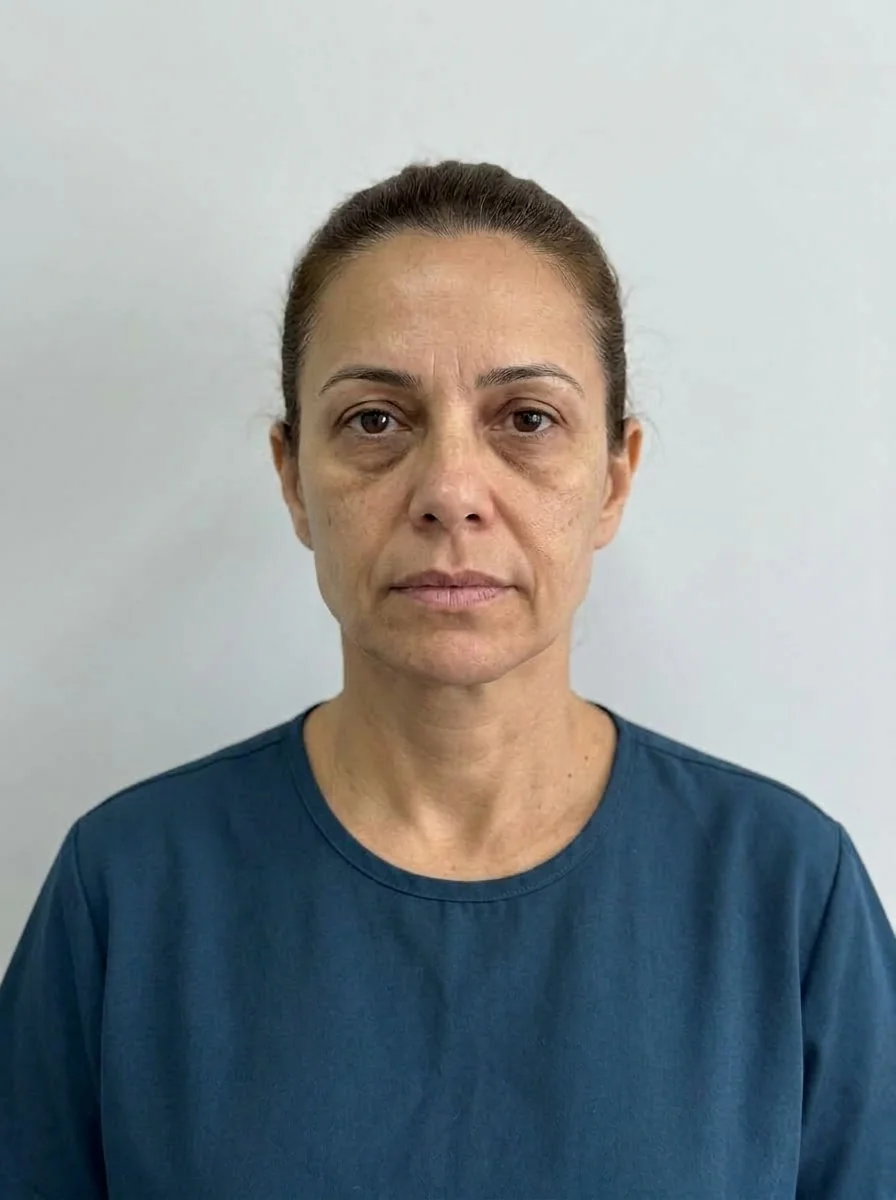 BeforeSimulation
- Nerve
- Highlighted area
Quick facts
- Concern
- A face with soft features, a poorly defined jaw and a discreet chin in a man
- Key insight
- Masculine definition comes from the chin, jaw and cheekbone in their own proportion, not from overall volume
- Supporting measure
- Frontal and profile photos, jaw angle and the relationship between chin and lip
- Limit
- Feminizing the face through too many curves is the main risk, and less is usually more
Some men seek facial harmonization because of a face they consider "delicate": a poorly defined jaw, a discreet chin and rounded features that, in their view, do not match the image they want to project. The concern is usually put this way: "I wanted a stronger face" or "my face is too soft." There is a real challenge here, which is adding structure without producing exaggeration.
This page describes how to assess this profile, which areas gain the most from a discreet plan and what precautions avoid the risk of a design that does not look masculine. For comparison, see differences between the female and male face, man with an undefined jaw and male orofacial harmonization.
What gives a male face a delicate look?
There is no single factor. The eye identifies the gender and strength of a face from a set of cues: jaw width, chin angle, projection of the forehead and brow, cheekbone shape and lip size. When several of these cues are soft, the face looks delicate. Over a lifetime, loss of volume can accentuate this reading, or the opposite, depending on the patient.
Some characteristics appear more often in this pattern: a small or receding chin, an obtuse jaw angle, a full, rounded cheek, thin skin and proportionally generous lips. Not all are present, and the whole is more informative than any single item. For reading the angle, see mandibular angle and ideal jaw angle by sex.
Where does a discreet plan deliver the most?
In delicate male faces, the priority is usually the lower third. The chin defines the profile and the jawline gives the contour in frontal view. Then comes the cheekbone, generally aiming for anterior projection rather than width. Lips and folds come last, with care.
| Area | Typical goal in men | Main caution |
|---|---|---|
| Chin | Projection and height | Do not elongate too much or make it pointed |
| Jaw | Definition of the angle and line | Avoid an excessively straight, wide line |
| Cheekbone | Discreet anterior projection | Avoid rounding and widening |
| Lips | Almost always keep | Avoid volume that feminizes |
| Folds and tear trough | According to age | Minimal volume |
The areas have their own pages: chin filler, jaw filler and cheekbone filler. The typical sequence is in chin and jaw combined in the plan.
How to assess the profile and the beard?
The profile photo is essential. Measure the relationship between the chin and the lower lip, look at the angle between the chin and the neck and the projection of the chin relative to the nose. A receding chin changes how the whole face reads, and correcting only the jaw may be insufficient. The references are in pogonion, facial profile and profile facial analysis.
The beard comes into the conversation because it changes how the contour reads. Some patients use it to hide the chin, and when they shave they discover the real face. Assess with and without a beard, when possible, and discuss what the patient wants to show. The page beard and facial harmonization covers the most frequent questions.
What safety and communication precautions apply?
The jaw and chin require knowledge of the facial artery and the mental nerve. The risks include swelling, bruising, asymmetry, nodules and, rarely, vascular complication. Hyaluronidase must be available. In men, the skin tends to be thicker and more vascular, which changes bruising and swelling, and patients tend to underestimate the rest needed. Give the guidance in writing.
In communication, avoid the vocabulary of feminine beauty. Words like "structure," "definition" and "contour" work better. Ask also about expectations of results, because many men expect a quick, visible effect, and the discreet plan can frustrate them if it is not agreed in advance. See aligning expectations of naturalness.
What does the staged plan look like?
Short stages work best. Start with the chin, which affects the profile and the line, and assess the result before touching the jaw. The cheekbone can come later, only if the midface is truly flat. Results in men are often tolerated with more volume than the patient's taste accepts, which is why the review needs his opinion at every step.
And Harmy?
The app lets you mark Chin and Jawline and show a discreet projection of definition. The simulation uses only the frontal photo, so it does not illustrate profile projection. This matters in this case, because the chin is a profile area. Tell the patient so, and use the profile photo and the clinical exam as the basis for the decision.
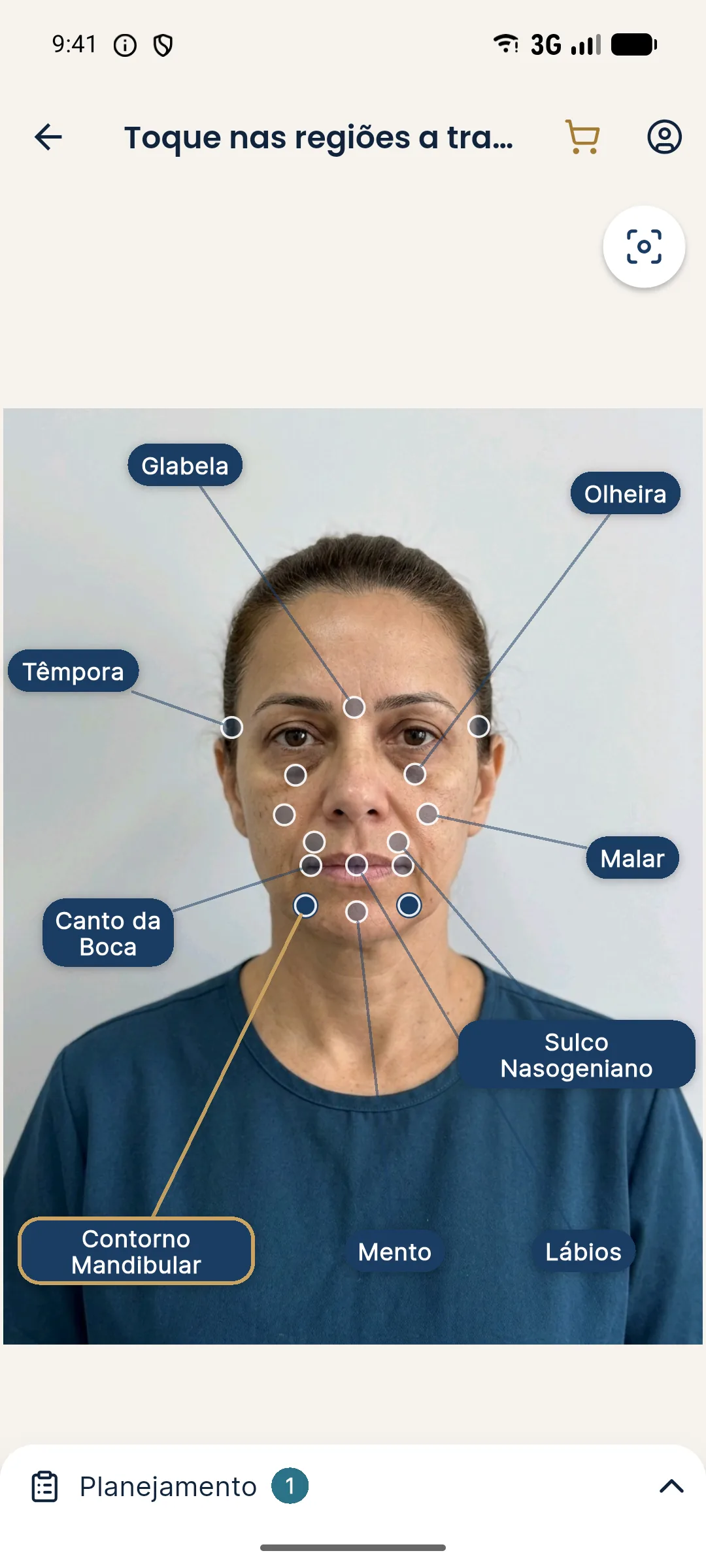
To present the projection, use the full-screen slider in presentation mode and turn the phone toward the patient. The magnifier enlarges only the treated area, which helps show the jawline. For more on this feature, see presenting the treated area with the magnifier.
Frequently asked questions
How do you define a man's face without feminizing it?
By prioritizing angular structure in the chin and jaw, with conservative volumes and attention to projection, and avoiding rounding the cheek and lips more than necessary.
Which area usually has the most impact on a masculine face?
The chin and jawline, which define the lower third. The cheekbone comes next, with care not to leave it rounded.
Does a beard help?
It can hide or reinforce how the contour reads, and it is a factor to consider in the conversation. The professional should assess with and without a beard, when possible.
Does the male plan use less volume?
Not always. The difference lies more in the shape and design than in the amount, and the professional adjusts it to the case, at the discretion of the qualified professional.
Harmy images are illustrative simulations generated by AI from the patient's photo to support the conversation between practitioner and patient. They are not a promise of results. Indication, technique, product and volume are solely the decision of the licensed practitioner. This content is for information only and does not replace a clinical assessment.