
Weak or undefined jawline: causes and assessment

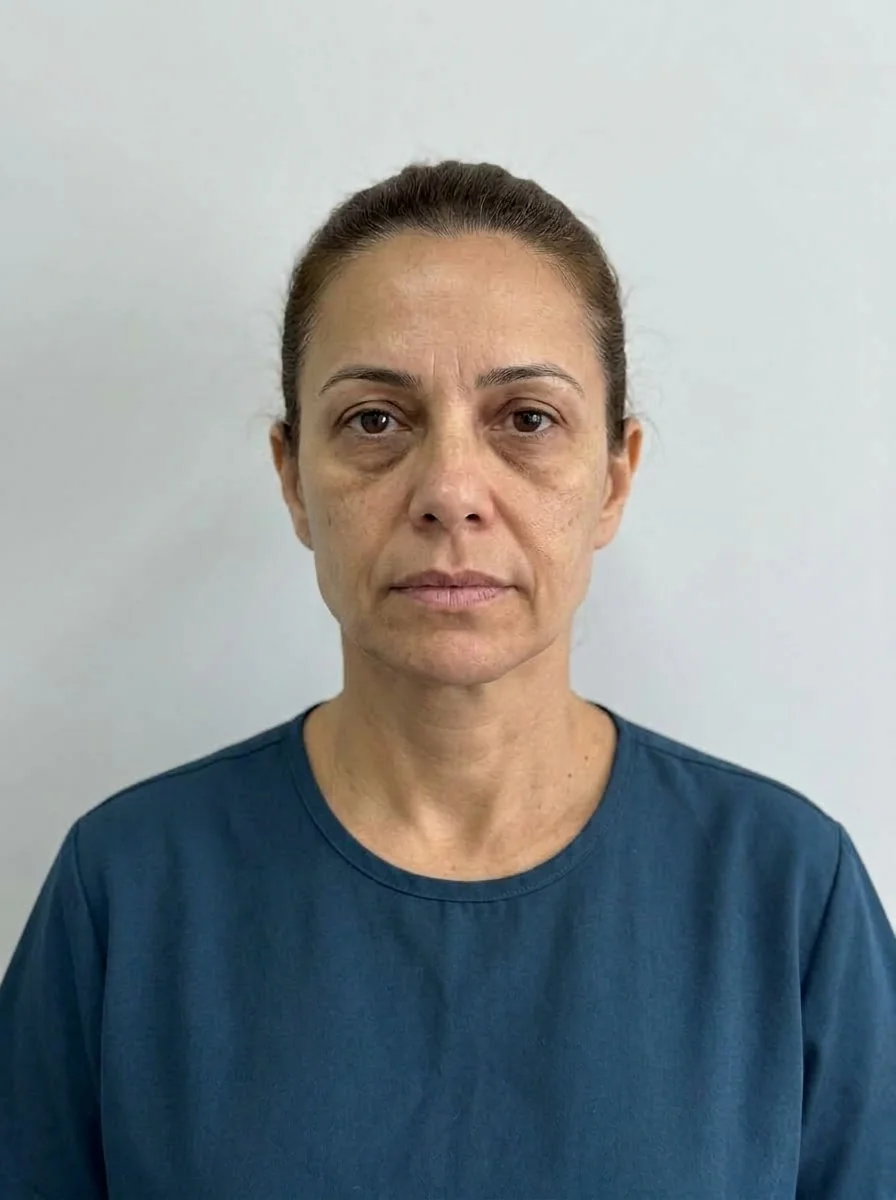 BeforeSimulation
- Nerve
- Highlighted area
Quick facts
- Concern
- The contour of the face is rounded, without a defined jawline
- Method
- Separate a poorly projected bone from fat and laxity over the contour
- Structures
- Angle and body of the mandible, chin, submental fat and skin
- Caution
- Volume in a face with excess fat adds weight to the lower third
A common concern, in women and in men, is the absence of a clear line along the jaw. The contour is rounded, the chin blends into the neck and the face looks "undefined." Before filling, one anatomical question has to be answered: what is hiding or missing from the line?
The page organizes this diagnosis and connects with face without definition, sagging jawline and poorly defined jaw angle.
What defines the jawline?
The lower contour of the face is formed by the mandibular angle, by the body of the mandible and by the chin, covered by fat and skin. Definition depends on the projection of the bone and on the thin layer of soft tissue over it.
| Cause | How it presents | Note |
|---|---|---|
| Poorly projected bone | Rounded angle, even in a thin face | Candidate for support with volume |
| Fat over the contour | Full contour, double chin or jowl | Volume can make it worse |
| Laxity and tissue descent | "Melted" contour | Plan with other approaches |
| Retruded chin | The chin disappears, short line | Projecting the chin helps |
| Short neck or no neck angle | Blurred face-to-neck transition | Limit of harmonization |
The jawline also depends on the neck: a sharp cervicomental angle enhances the contour, and a short neck or submental fat hides it. The assessment must include the submental region.
How to assess the contour
What the plan can consider
At the discretion of the licensed professional, after assessment, the approaches involve one or more layers:
- Chin projection, which is often the first step. See chin filler.
- Support of the angle and body, in a restrained amount. See jawline filler.
- Skin quality and support, in selected cases, with collagen biostimulator.
- Reduction of submental fat by other approaches, when appropriate.
- Orthodontic or surgical referral when the problem is skeletal.
Order matters: projecting the chin often improves how the contour reads before anything is placed in the jaw itself. The reasoning is in chin and jawline: combining in the plan.
Risks
Swelling, bruising, asymmetry, nodules and irregularities. The jawline has the facial artery and the marginal mandibular branch of the facial nerve; vascular complications are rare and serious, and hyaluronidase should be available when hyaluronic acid is used. Excess volume shows up as a contour that is "too square" or heavy, especially in women who do not want that effect.
How to show it in Harmy
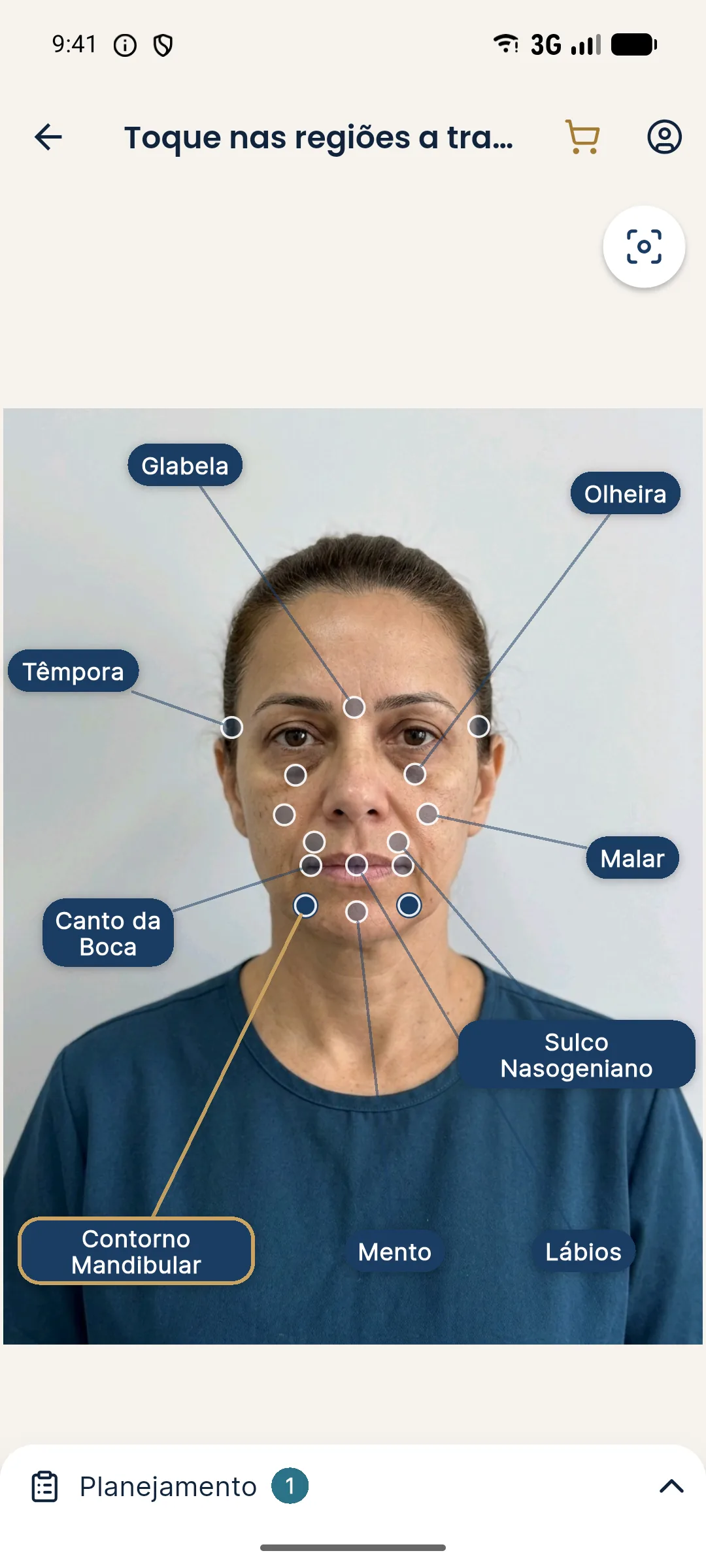
The Jawline point in Harmy simulates volume along the contour, and the Chin point shows the effect on the chin. The "Full harmonization" shortcut suggests jawline 2 ml and chin 1.5 ml at Moderate intensity, as a conversation starter and never as a dose. Show only the chin first, then the combination, so the patient sees the contribution of each area.
Common mistakes with an undefined contour
The first mistake is filling without separating the layers. In a face with excess fat and skin, volume in the jaw widens the lower third and defines nothing. The second is starting with the jaw when the chin is the central point, because projecting the chin can change the contour with much less product.
Another mistake is projecting a gender ideal. Women, men and trans people have different wishes for the contour, and asking what the patient wants to see avoids reproducing a standard that is not theirs. It is also a mistake to overlook the neck: the angle between the chin and the neck weighs as much on definition as the bone.
Finally, avoid using a photo from only one angle. The jaw has different planes, and the three-quarter view reveals what the front does not show.
Plan, follow-up and records
Plan in two or three stages, starting with the point that most changes how the face reads, and reassess with the same photos before moving forward. Record the patient's wish in their own words, the layers assessed and what was left out of scope, such as submental fat or laxity. At follow-up, use side light and compare. If the patient wants a pronounced contour in a face with little structure, talk about limits and complementary approaches. Good documentation helps defend the plan and shows the patient that each decision had a reason.
Patient profiles and plan adjustments
Young women often seek a more defined contour without losing softness; men generally look for a more pronounced angle; trans and non-binary people bring specific goals that should guide the plan. In every case, the patient's wish is the starting point.
Patients with little facial fat can reach definition with smaller volumes, while patients with more fat need combined approaches, including weight management and other technologies. Age also matters, because bone resorption changes the support.
A good strategy is to start with the chin, reassess and only then decide about the angle. This path usually results in more economical and natural plans.
Wrap-up
Record photos, palpation, probable cause and the staged plan, starting with the point that most changes how the face reads. See also asymmetric jawline and small chin. Volumes and techniques are at the discretion of the licensed professional, in accordance with the rules of their professional council in Brazil.
Frequently asked questions
Why doesn't my jawline show?
It can be a poorly projected bone, fat over the contour, skin laxity or a combination. The assessment defines which layer weighs most before any plan.
Does jawline filler fix it?
It can improve definition when the problem is a lack of projection, at the discretion of the licensed professional. If there is excess fat or skin, the result of filler alone is limited.
Does the chin influence the definition of the jawline?
Yes. A retruded chin erases the line of the contour, and projecting it can improve how the jawline reads without placing anything in the jaw itself.
Is there a difference between male and female faces in this assessment?
The ideal contour often varies with the patient's sex and identity. The plan should come from their wishes, not from a fixed standard.
Harmy images are illustrative simulations generated by AI from the patient's photo to support the conversation between practitioner and patient. They are not a promise of results. Indication, technique, product and volume are solely the decision of the licensed practitioner. This content is for information only and does not replace a clinical assessment.