
Disproportionate Lower Third: Assessment

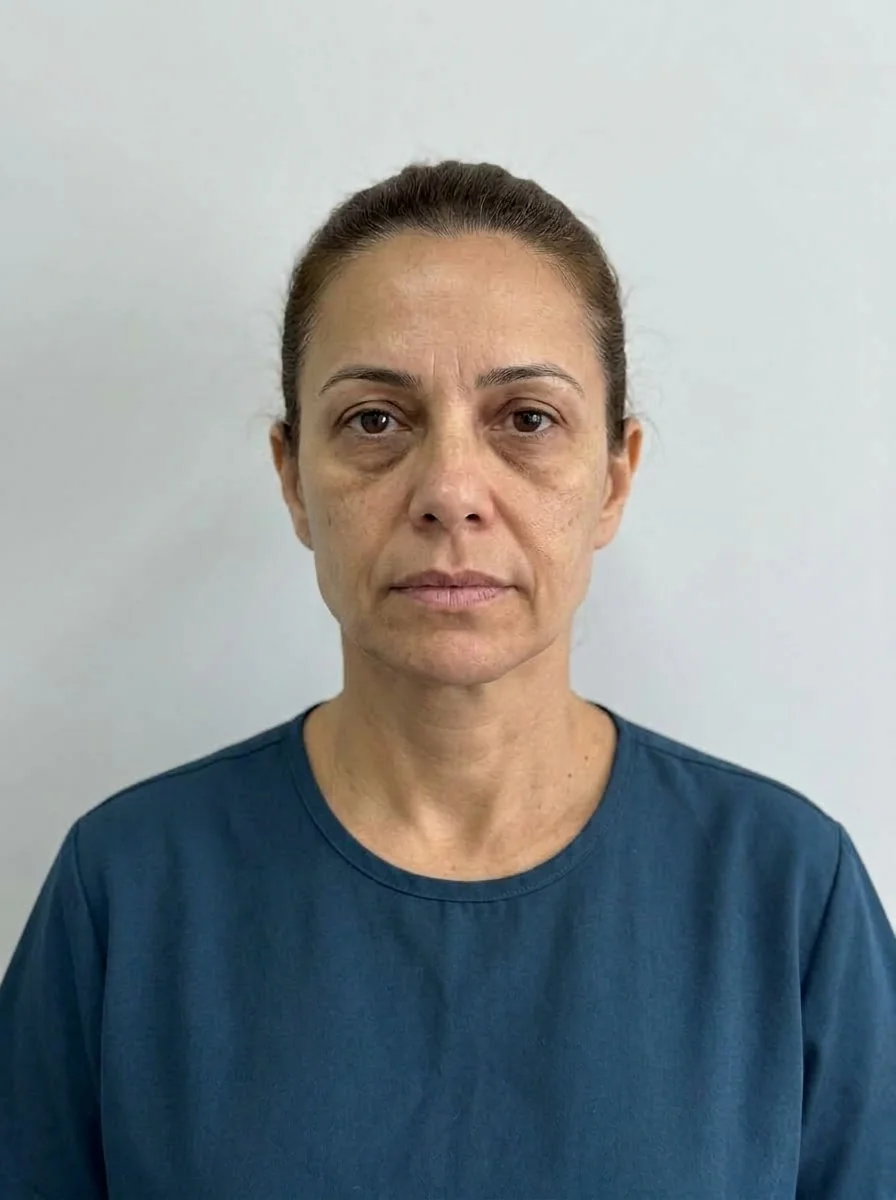 BeforeSimulation
- Nerve
- Highlighted area
Quick facts
- Concern
- Lower face that looks bigger, heavier or wider than the rest
- Key question
- Does the weight come from height, width or projection, and from which structure: lip, chin, jaw or muscle mass?
- Assessment stance
- Measure before offering an opinion, because the impression of disproportion also depends on the middle and upper thirds
- Plan risk
- Adding volume to the lower third and increasing the heaviness the patient wanted to reduce
When a patient says "the bottom part of my face is heavy", they may mean very different things. For one, the chin is long. For another, the jaw is wide. For a third, the feeling comes from a large lower lip or a bulky masseter. A professional who answers "then let's reduce it" without separating these hypotheses will treat at least half the cases poorly.
This page proposes a method for the concern of a disproportionate lower third: measure, separate the structures and only then decide. The neighboring pages cover the short lower third and the long lower third. For planning reasoning, see lower third larger than the middle.
What "disproportionate" means
Disproportionate is a comparative word: the lower third is large compared with what? In an assessment by facial thirds, the comparison is with the middle third and the upper one. In an assessment by fifths, the comparison is about width. The same concern can be vertical, horizontal or about volume.
The first step is to ask the patient to point to exactly where the disproportion is. Many point to a specific area (the tip of the chin, the angle of the jaw, the lower cheek). That gesture is worth more than a verbal description.
Four components that get confused
| Component | How it presents | Note |
|---|---|---|
| Height | Large distance from subnasale to menton compared with the other thirds | Measured on a standardized frontal photo |
| Width | Wide jaw and mandibular angles relative to the cheekbone | Measured in frontal and three-quarter views |
| Projection | Chin or lip too far forward or too far back from the reference line | Measured in profile |
| Soft tissue volume | Bulky masseter, submental fat or jowl | Palpation and dynamic exam |
The lower third is a set of structures that influence one another. A long chin looks even bigger when the lower lip is heavy. A wide jaw looks wider when the cheekbone is flat. That is why the plan is never an isolated decision.
When the problem is not the lower third
An important share of "large lower third" cases is actually a deficient middle third. When the cheekbone is flat and the middle third has little volume, the lower one looks bigger by contrast. In these cases, reinforcing the middle third is the intervention that helps most, and working on the lower part may be unnecessary. See disproportionate middle third and complete middle third in the plan.
Another point is the forehead and the hairline. A small forehead makes the lower third look proportionally larger. The reading is completed with disproportionate upper third.
The jaw and the masseter
When the feeling is one of width, the masseter and the mandibular angle enter the conversation. A bulky masseter, often linked to the habit of grinding or clenching the teeth, increases the width of the lower third. Botulinum toxin is discussed in selected profiles, at the professional's discretion, with the proper information about risks and duration of effect. To read up on the topic, see botox for bruxism.
The jawline, on the other hand, can be worked with volume to define the contour, but that is the opposite of reducing. If the concern is heaviness, volume in the jaw tends to make it worse. The professional needs to be clear about this.
The lower lip and the chin
A full lower lip and a poorly projected chin make a frequent picture: the lip "eats" the chin, and the third looks heavy. The solution is not always to work on the lip. In some patients, a slight projection of the chin balances the whole. The topic is covered in drooping lower lip and small chin.
How to organize the plan
- Ask the patient to point to where the disproportion is.
- Measure the three thirds and the width on standardized photos.
- Separate height, width, projection and soft tissue volume.
- Check whether the problem is the lower third or whether the middle and upper thirds are less prominent.
- Choose the smallest intervention that addresses the concern, in steps.
- Reassess with comparison photos.
Safety
Each area of the lower third has its own risks. The lips and chin involve the labial and submental arteries. The jaw has the marginal branch of the facial nerve and the facial artery. The masseter relates to the parotid gland and the facial nerve. Possible complications include swelling, bruising, asymmetry, nodules, temporary paralysis and, rarely, vascular occlusion. Keep hyaluronidase available, know the risk anatomy and record specific consent.
How to use Harmy in this conversation
Harmy's projection uses only the frontal photo and changes the marked points. For this concern, the app is useful to show the effect of volume in the Chin, Lips and Jawline, but it does not simulate masseter reduction or the change in proportion between thirds. This should be explained to the patient so the simulation is not read as a promise.
Questions to test your reasoning
What to record in the patient record
Record the measurements, the photos and the description of the concern in the patient's words, the component you judged dominant and what was explained about the limits. Note referrals, the specific consent for the areas treated and the stepwise plan. For photos and data, see consent and LGPD for photos (LGPD is Brazil's data protection law).
Common mistakes
The first mistake is accepting the patient's description without measuring. The second is proposing volume in an area the patient wants to reduce. The third is treating one structure without considering the whole: working on the chin without looking at the lip, or on the jaw without looking at the cheekbone.
Summary for the decision
A disproportionate lower third is a concern about the whole. Measure the thirds and the width, separate height, width, projection and soft tissue volume, check whether the middle or upper third explains the feeling and choose the smallest intervention that addresses the concern. Explain the limits of HOF, document, and act at the discretion of the qualified professional, in line with the rules of their professional board, without promising results.
Frequently asked questions
How can you tell whether the lower third is really bigger than the others?
With standardized photography from the front and in profile, measuring each third and comparing with the face as a whole. Visual impression is misleading, because hair, brows and lighting change perception.
Can a large lower third be treated with harmonization?
HOF works on soft tissue and can adjust the perception of proportion, but it does not reduce bone. In some cases, the best plan is to reinforce the middle third rather than touch the lower one.
Does a large masseter count as lower third disproportion?
It can contribute to the feeling of a wide lower face. The assessment separates muscle, bone and fat, and the decision rests with the qualified professional after the exam and a conversation with the patient.
Does a full lower lip affect the proportion of the lower third?
It does. The lip, chin and mentolabial sulcus form a set, and changing one alters how the others read. That is why the lower third plan is made as a whole.
Harmy images are illustrative simulations generated by AI from the patient's photo to support the conversation between practitioner and patient. They are not a promise of results. Indication, technique, product and volume are solely the decision of the licensed practitioner. This content is for information only and does not replace a clinical assessment.