
Upper Third Out of Proportion With the Rest of the Face

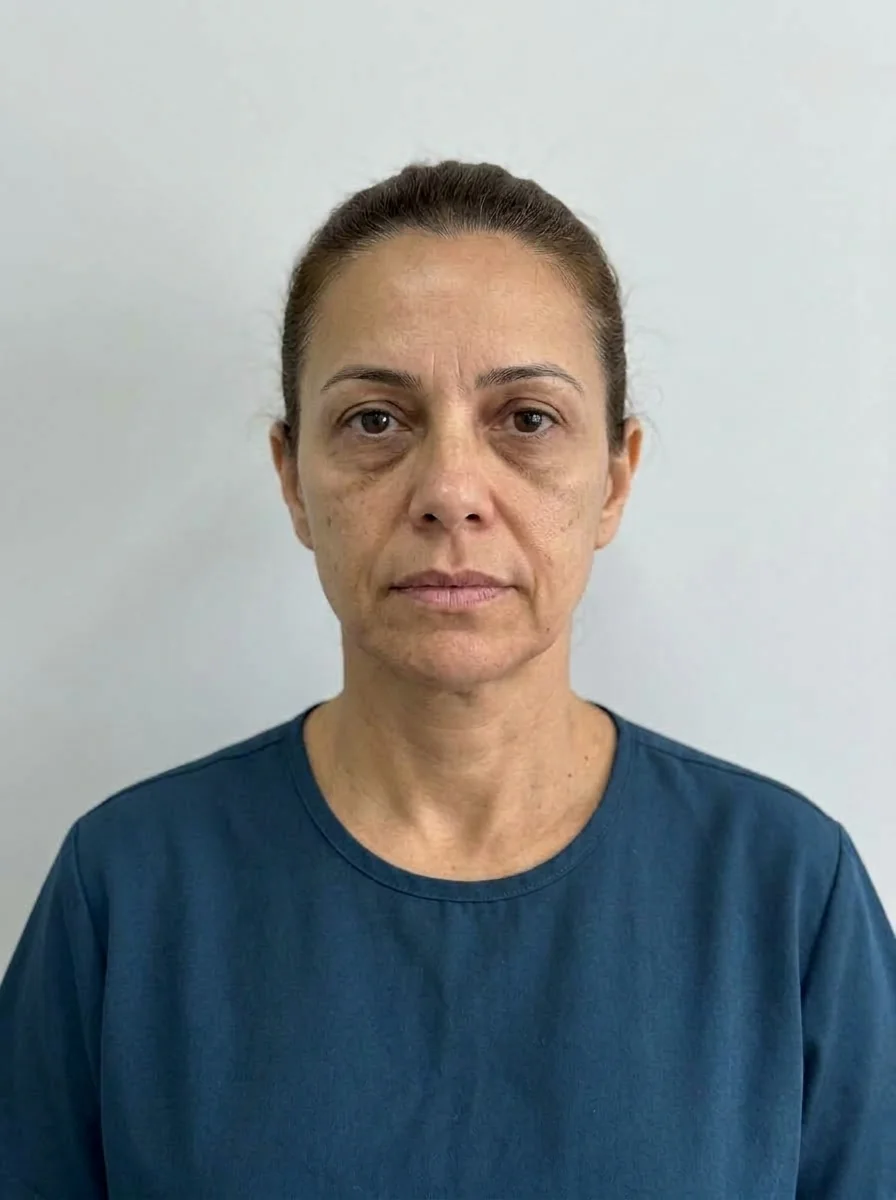 BeforeSimulation
- Nerve
- Highlighted area
Quick facts
- Concern
- Upper third that looks big, small, heavy or out of scale with the middle and lower thirds
- Key question
- Does the difference come from forehead height, the hairline, brow position or temple volume?
- Limit of HOF
- HOF works on soft tissue and the brow, but does not change bone or the hairline
- Plan risk
- Treating the forehead with too much toxin and lowering the brow, or injecting volume where the cause is hair
The patient looks at the photo and says: "my forehead is huge", or "my face seems to end at the forehead", or the opposite, "my forehead is too small". These phrases are variations of the same concern: the upper third does not sit well with the rest of the face. The question that organizes the consultation is: what, exactly, is out of scale?
This page treats the upper third as a whole and helps decide what belongs to HOF and what does not. For more specific concerns, see large forehead, low or short forehead and prominent forehead. The planning reasoning is in short or long upper third.
What defines the upper third
The upper third runs from the hairline, at the point called the trichion, to the glabella and brow area. It contains the forehead (with the frontal bone and the superciliary arch), the temples and the position of the brow. It is the third that depends most on factors that are not part of HOF: hair, baldness, hairstyle and the shape of the skull.
This matters because many upper third concerns are actually hair concerns. A high hairline, frontal recession or male pattern baldness give the impression of a big forehead without the third changing size. The opposite also happens: bangs or a hair transplant reduce the visible forehead. See hair transplant and facial harmonization.
Four common origins
| Origin | How it presents | Who takes part in the decision |
|---|---|---|
| Hairline | High forehead due to hair design or recession | Dermatologist, trichologist, hair surgeon |
| Frontal bone | Prominent or flat forehead, or a large superciliary arch | Surgeon, in structural cases |
| Brow position | A low or high brow changes the space between it and the hair | HOF professional, assessing muscle and skin |
| Temples | Temporal concavity that narrows the third and makes the forehead stand out | HOF professional |
From this table, a practical rule: when the dominant cause is hair or bone, HOF is not the main tool. When the cause is the brow or temple, it comes in with a real possibility of adjusting perception.
The role of the brow
The position of the brow changes the apparent size of the forehead. A higher brow leaves more skin between it and the hair and increases the impression of a big forehead. A lower brow does the opposite and can give a heavy gaze. Botulinum toxin, by acting on the frontalis muscle and the depressors, changes this position, and the effect needs to be taken into account.
In a high forehead, using toxin in the frontal area calls for caution: excessive relaxation can lower the brow, weigh down the gaze and worsen proportion. Dose, distribution and indication are decisions for the qualified professional, after assessing the patient's dynamics. For a view of aging in this area, see aging of the forehead and brow.
The temples as part of the equation
Temporal concavity narrows the upper third and makes the forehead stand out. In some patients, the perception of a big forehead decreases when the temples gain volume and the transition between forehead and face is smoothed. That is why the upper third is assessed together with the temple, and the conversation may involve volume replacement in the area, at the professional's discretion. See hollow temples and temples and brow in the plan.
What HOF can and cannot do
HOF can work on wrinkles, brow position, temple volume and, in selected cases, small depressions of the forehead. It cannot change the hairline, the thickness of the frontal bone or the shape of the skull. A frank conversation about what is out of scope is part of good care, and referral to other professionals (dermatology, trichology, surgery) is a legitimate answer.
For planning, the reasoning in forehead and hairline analysis in the plan and hairline and upper third proportion details the approach.
How to organize the plan
- Measure the upper third with the hair pulled away and compare it with the other thirds.
- Ask what the patient wants to change and whether the concern involves hair.
- Assess the brow, the frontalis muscle and the wrinkles.
- Assess the temples with light from above.
- Decide what belongs to HOF, what is referred and what is accepted as a characteristic.
- If treating, use conservative amounts and reassess.
Safety
The areas of the upper third carry important vascular and nerve risks. The glabella and forehead involve the supratrochlear and supraorbital arteries, with a risk of occlusion that can reach the circulation of the eye. The temples have branches of the temporal artery and the temporal branch of the facial nerve. With toxin, eyelid ptosis and brow ptosis are known risks. Keep hyaluronidase available and review vascular occlusion in the forehead and ptosis after toxin.
How to use Harmy in this conversation
Harmy simulates the Temple point and the Glabella on a frontal photo. It does not show changes to the hairline, bone or brow position. So, for upper third concerns, the app is useful to show the effect of volume in the temples and to make clear what is not changed.
Questions to test your reasoning
What to record in the patient record
Record the measurements, the photos with the hair pulled away, the dominant cause, what was explained about limits and the specific consent for the areas treated. Note referrals and the patient's response. For photos, see standardized clinical photography and complete upper third in the plan.
Common mistakes
The first mistake is measuring the upper third without pulling the hair away. The second is treating a hair concern as a forehead concern. The third is using toxin in a high forehead without considering the effect on the brow.
Summary for the decision
A disproportionate upper third can come from hair, bone, the brow or the temple. HOF works on the last two and not on the first two. Measure with the hair pulled away, separate the causes, talk about limits and use conservative amounts. Keep hyaluronidase available, document, and act at the discretion of the qualified professional, in line with the rules of their professional board, without promising results.
Frequently asked questions
Can a large upper third be corrected with harmonization?
HOF does not reduce bone or change the hairline. It can adjust brow position, the transition to the temples and the perception of the whole; other options, such as hair or surgery, fall outside its scope.
How is the upper third measured?
From the hairline (trichion) to the glabella, on a standardized frontal photo, comparing with the middle and lower thirds. The hairline varies with hairstyle, recession and baldness, and this must be taken into account.
Can toxin in the forehead make the upper third more harmonious?
Toxin treats dynamic wrinkles and changes brow position. In a high forehead, too much toxin can weigh down the gaze and worsen proportion. Dose and indication are the professional's decisions.
Do hollow temples make the upper third look bigger?
They do. Temporal concavity narrows the upper third and makes the forehead stand out. Assessing the temple together with the forehead is part of the reasoning.
Harmy images are illustrative simulations generated by AI from the patient's photo to support the conversation between practitioner and patient. They are not a promise of results. Indication, technique, product and volume are solely the decision of the licensed practitioner. This content is for information only and does not replace a clinical assessment.