
Complete upper face: which areas go together in the plan

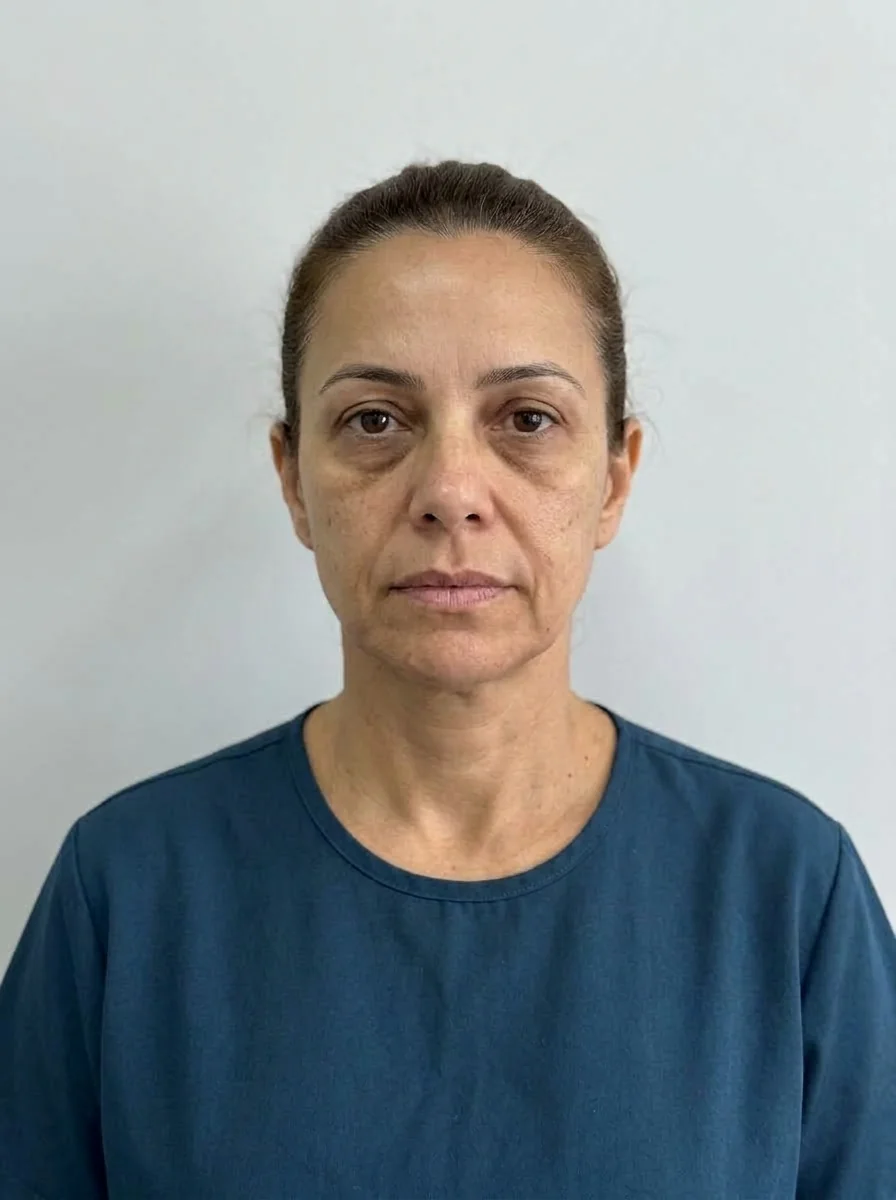 BeforeSimulation
Quick facts
- Areas in the set
- Glabella, forehead, temples and brow
- Logic
- Understand the muscle first, then decide the volume
- Central risk
- Glabella and temples are vascular attention areas; toxin calls for careful indication
- Simulation in Harmy
- Glabella and Temple points (forehead and brow are not app points)
- Who decides
- Qualified professional, after assessment
The upper face is the territory of dynamic lines and expression: the forehead that creases, the glabella that furrows, the brow that rises and falls, the temples that frame the gaze. That is why it concentrates the main use of botulinum toxin in facial harmonization, and also why a dosing or indication error changes the look of the eyes. Planning the complete upper face means deciding, calmly, which pieces go in and with which tool. This page organizes the reasoning, with no dose protocol or injection point.
What makes up the upper face?
From the hairline down to the brows and the root of the nose, the upper face includes the forehead (with the frontal lines), the glabella (with the vertical frown lines), the temples and the position of the brow. The definition is in upper third. Muscle action is a play of forces: the frontalis lifts the brow, while the glabellar and eye muscles pull it down and inward.
This interplay explains why the pieces cannot be treated independently. Reducing frontalis action a lot without considering the glabella can drop the brow; reducing the glabella without considering the forehead can cause asymmetry of expression. The analysis of the forehead and hairline is in forehead and hairline analysis in the plan, and the relationship between the two areas in glabella and forehead: combining in the plan.
Toxin, filler or both?
In the upper face, the tools have different roles. Botulinum toxin acts on dynamic lines and muscle balance. Filler goes, in general, into volume, as in the hollow temple. Deep static lines may call for another approach, such as biostimulation or skin treatment, at the professional's discretion.
| Concern | Reasoning | Tool that usually enters the conversation |
|---|---|---|
| Frown lines (glabella) | Muscle action | Toxin, at the professional's discretion |
| Horizontal forehead lines | Frontalis action | Toxin, with caution so the eyes do not look heavy |
| Hollow temple | Loss of lateral volume | Conservative filler; see temples and brow |
| Deep static lines | Already fixed mark | Assess approaches beyond relaxation |
| Low brow | Position and weight | Assess causes; not everything is an indication for an injectable |
The decision of which comes first is in toxin or filler first: which order to follow in the plan. Toxin maintenance and how the three tools relate appear in maintenance: toxin, filler and biostimulator.
Which risks call for attention in the upper face?
The glabella and temples are vascular risk areas. In the glabella, the proximity of vessels that communicate with the circulation of the eye region means that vascular occlusion, though rare, can have serious consequences, including visual ones. In the temples, vessels of relevant caliber also call for attention. When hyaluronic acid is used, hyaluronidase must be available and the team needs to recognize warning signs. The review is in vascular danger zones of the face and temporal anatomy for injectables.
With toxin, undesired effects include asymmetry, brow or eyelid drop, headache and swelling. All must be stated in the consent, with the explanation that the effect is temporary.
How do you simulate it in Harmy?
In Harmy, the upper face points are Glabella and Temple. You mark on the frontal photo, set the ml (from 0.5 to 5, in steps of 0.5) and the intensity (Subtle, Moderate or Pronounced) and create the projection. For the glabella, the unit the app uses is symbolic, and the projection smooths the look of the area.
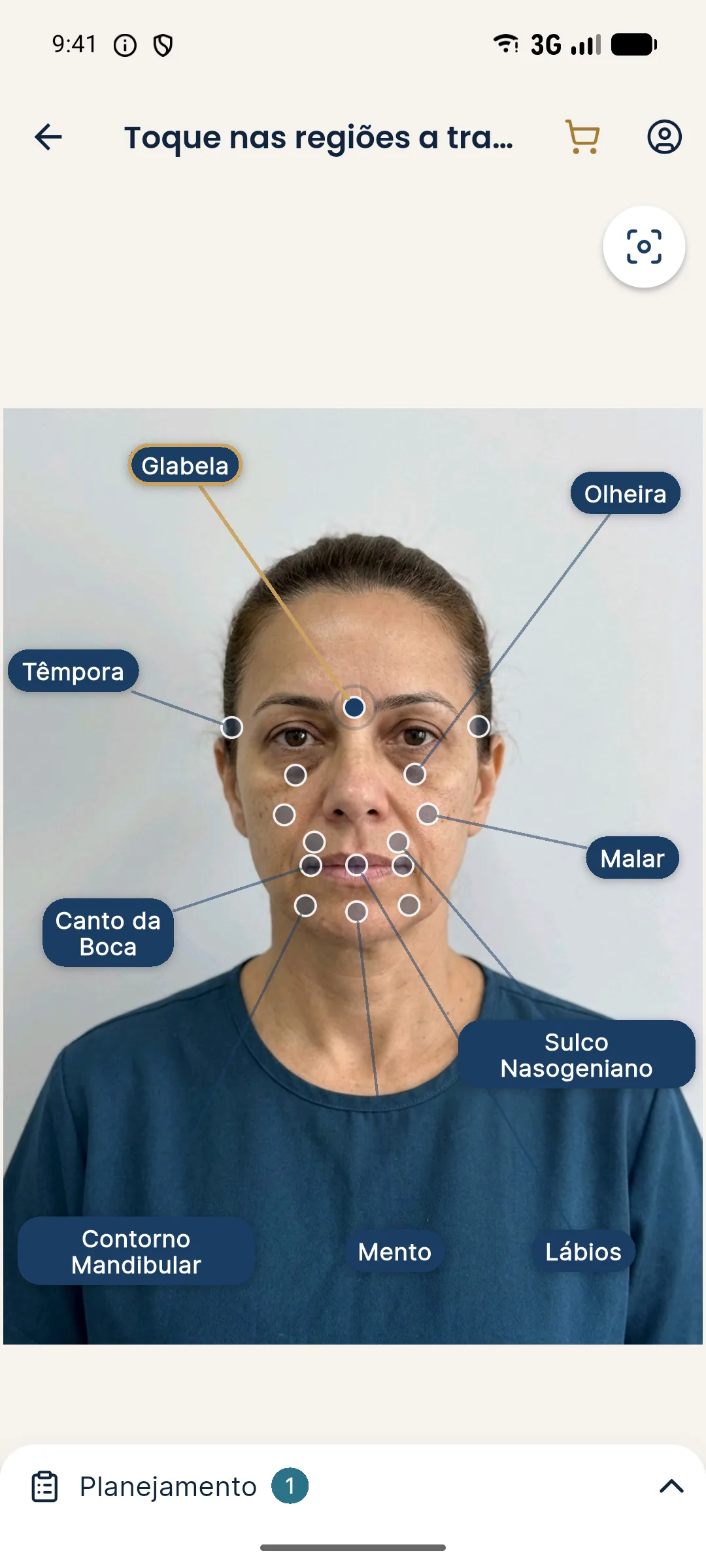
The AI respects the volume and changes only what was marked, with no makeup, skin retouching, change of expression or hair. This means the glabella projection shows the area smoother, but it does not simulate muscle action in motion. Forehead and brow are not marking points in the app, so do not use the image to promise a change in brow position or frontal lines.
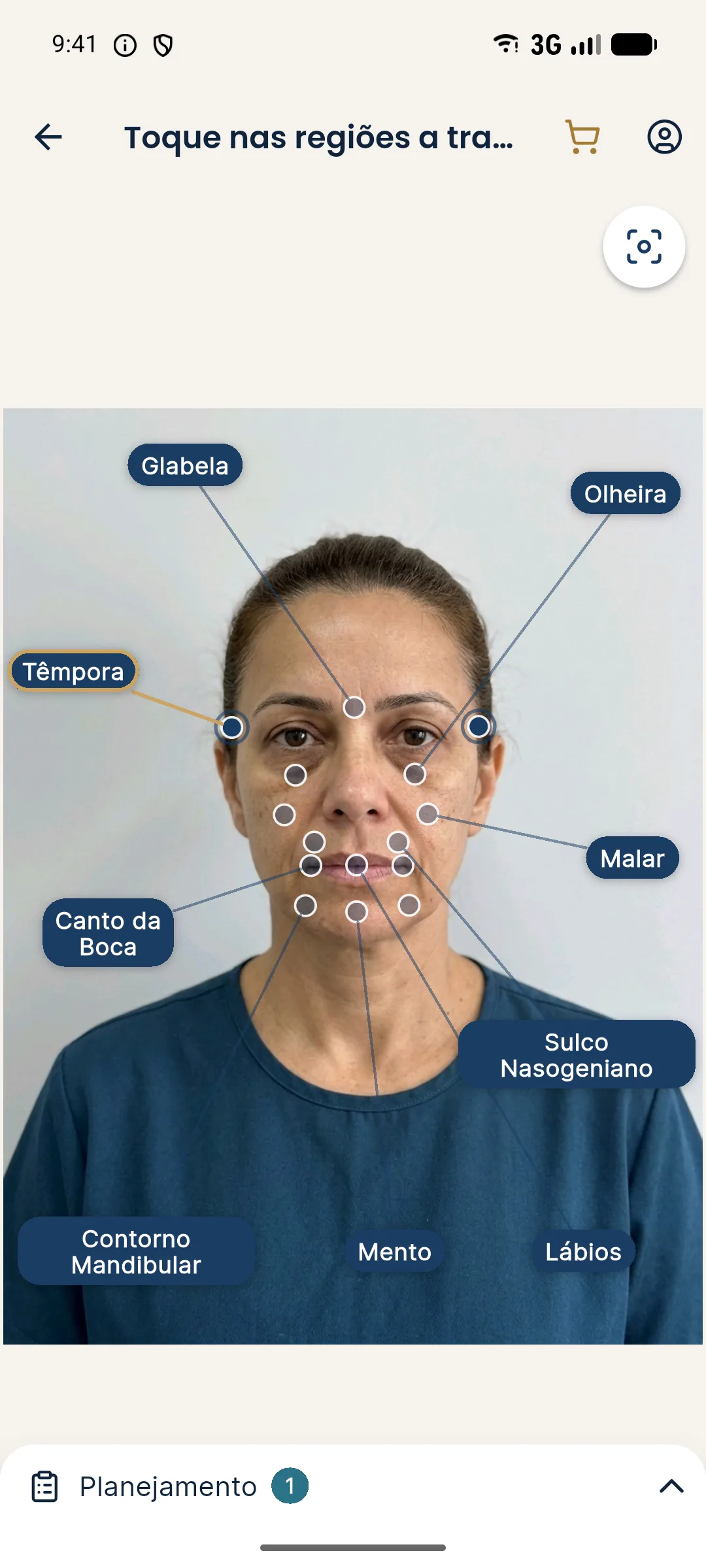
More in limits of 2D simulation and explaining that a simulation is not a guarantee.
How do you organize the stages?
The logic of doing little and reassessing is in conservative volume in the first session and minimum viable plan in harmonization.
What to tell the patient?
The line corrects the expectation of a "smooth, motionless face", which tends to lead to an aggressive plan. If the patient asks for a level of relaxation you consider excessive, explain the risks and the artificial look, and record the conversation. See when to say no to the aesthetic plan.
Check before closing the upper face plan
Quick review
Summary
The complete upper face brings together the glabella, forehead, temples and brow, and depends on muscle balance. Assess at rest and in expression, choose the tool by the cause, respect the vascular risk and conservative doses, split into stages and use Harmy's simulation as a conversation aid, remembering that it covers Glabella and Temple and does not simulate movement.
Frequently asked questions
What is included in the complete upper face?
Glabella, forehead (frontal lines), temples and brow position. Not every patient needs every piece, and the decision is made case by case.
Do toxin and filler go together in the upper face?
They can, but with different roles: toxin acts on the muscle action behind dynamic lines, and filler on lateral volume, such as the temple. The professional decides the order.
Can treating the forehead make the eyes look heavy?
It can, when frontalis action is suppressed too much and the brow loses support. That is why the indication and dose in the forehead call for care and assessment of the patient.
Does Harmy simulate the forehead and the brow?
No. The marking points for the upper face are Glabella and Temple. The app does not simulate muscle action or brow position.
Harmy images are illustrative simulations generated by AI from the patient's photo to support the conversation between practitioner and patient. They are not a promise of results. Indication, technique, product and volume are solely the decision of the licensed practitioner. This content is for information only and does not replace a clinical assessment.