
Hyaluronic acid in the forehead: indication and risk anatomy
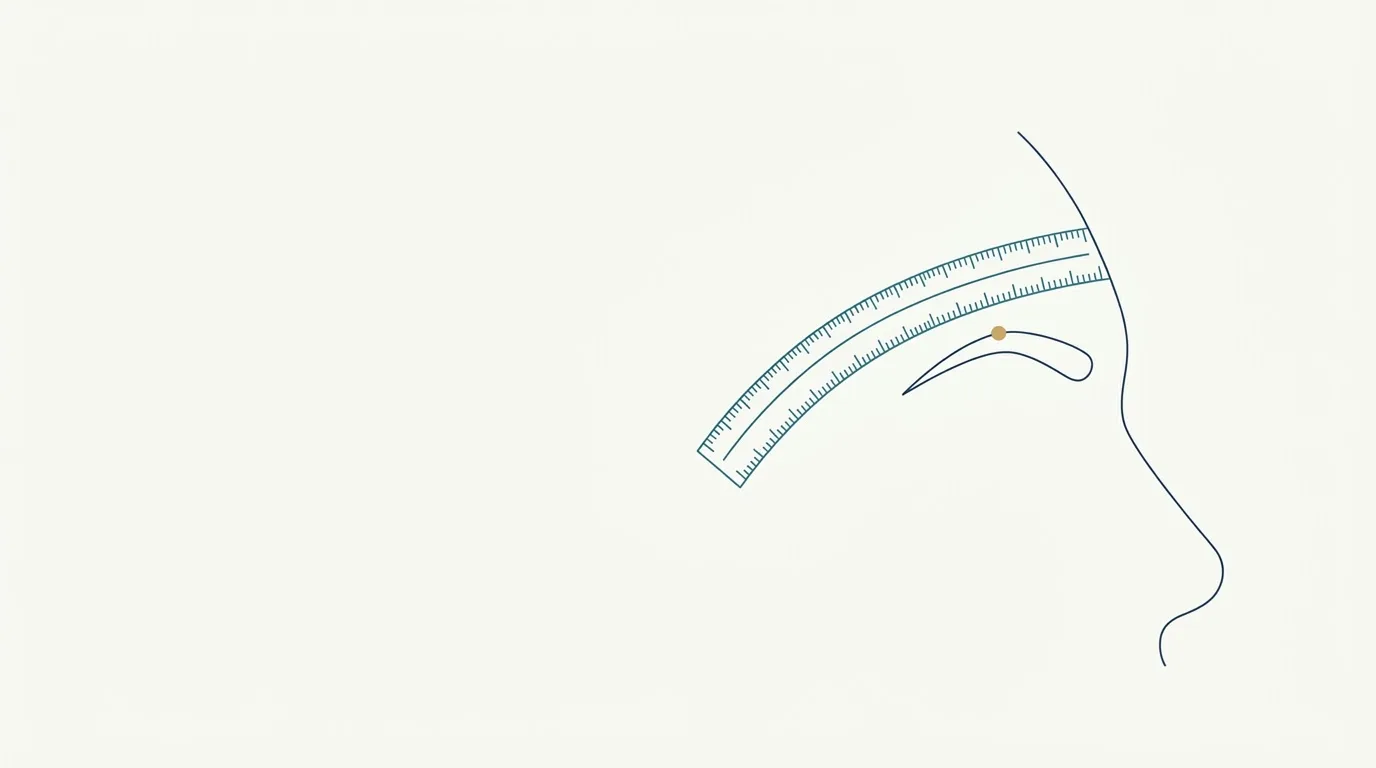
- Highlighted area
Quick facts
- Area
- The forehead, between the hairline and the eyebrows, over the frontal bone.
- Risk classification
- High vascular risk, with terminal branches of arteries linked to the orbital circulation.
- Most discussed use
- Forehead contour (projection) and deep static wrinkles, in selected cases.
- Usual first approach to wrinkles
- Muscle balance with botulinum toxin, when the cause is dynamic.
The forehead looks like a wide, flat, safe surface, and that is why the area is deceptive. From a vascular point of view, it is a high-risk territory: terminal branches of arteries that arise from the circulation of the orbit climb over the frontal bone, superficial, thin and connected to each other. Injecting hyaluronic acid there calls for more than technique: it calls for a justified indication, up-to-date anatomy and preparation for a complication.
This page is not an injection protocol. It lays out the reasons for the risk, the restricted indications, the alternatives and the precautions. Products, volumes and approaches depend on the licensed professional, according to the rules of their professional council in Brazil.
Why is the forehead a high-risk area?
At least three arterial systems converge on the forehead:
- the supraorbital artery, which emerges from the supraorbital foramen or notch;
- the supratrochlear artery, which rises beside the glabella;
- branches of the superficial temporal artery, which arrive from the side.
The first two are branches of the ophthalmic artery, and the connection between the systems (the anastomoses) allows an embolus injected into one branch to reach another. This explains why an occlusion in the forehead can show up in the skin of the area, in the nose or in the retina.
There is also a question of thickness. Forehead skin is relatively thin, the subcutaneous plane is narrow and bone lies just beneath. Any volume error becomes visible irregularity, and the injection pressure on superficial vessels is higher than in thicker areas.
What usually prompts the request?
The most common request is not "fill the forehead" but "remove the forehead lines" or "shape the forehead". These are different demands:
| Request | What it is | Usual approach |
|---|---|---|
| Dynamic horizontal lines | Appear when raising the eyebrow | Treat the frontalis muscle with botulinum toxin |
| Deep static lines | Present at rest | Careful discussion: toxin, skin quality, sometimes gel in selected cases |
| Forehead contour (projection or flattening) | Profile of a flat forehead or one with depressions | Assessment of the frontal bone; gel in selected cases |
| Lateral depressions of the forehead and temples | Lateral volume loss | Assess the temple and temporal fossa together |
The page for the forehead lines area details the muscular side, and botulinum toxin in the frontalis muscle covers the dynamic approach.
In which situations does gel enter the conversation?
Some professionals use gel in the forehead in specific cases, with experience and preparation. The most discussed scenarios:
- forehead contour, when the professional assesses a depression or flattening of the frontal bone, in global planning of the upper third;
- deep static lines, after the muscular component has been controlled, and with caution;
- depressions in the transition to the temple, treated together with the temporal region.
In these cases the reasoning is not "can I do it?" but "do I need to do it, and does the patient accept the risk I described?". The practical literature and anatomy courses stress that the forehead is not an area for beginners.
Alternatives and combinations
For most forehead concerns, there are paths with less vascular exposure:
- Botulinum toxin in the frontalis and the antagonists, for dynamic lines, weighing the risk of eyebrow ptosis (see botulinum toxin in the frontalis muscle).
- Biostimulators, discussed in biostimulator in the forehead, with their own risks.
- Skinbooster in a superficial plane, for skin quality and fine lines (skinbooster in the forehead).
- Skin treatments and sun protection, which act on photoaging.
- An approach to the eyebrow and glabella as a set, since frowning and lifting compensate for each other.
Each alternative has indications and limits. None guarantees a result, and none removes the need for consent.
How to prepare for a complication
Preparation is part of the procedure. If the decision is to treat the forehead with gel, these steps make a difference:
The safety time-out before injecting reinforces these steps at the moment of injection.
How to recognize and act
The described signs include disproportionate pain, blanching of the skin, a purplish tone, a mottled pattern (such as livedo reticularis), rapid swelling and, when the eye is involved, vision loss, eye pain, diplopia or a drooping eyelid.
More in visual complication after filler, hyaluronidase in the clinic and skin necrosis: progression and care.
Risks beyond the vascular
Besides occlusion, the forehead can show:
- Tyndall effect, with a bluish tone in thin skin and superficial product (see Tyndall effect in the forehead and temples);
- Irregularity and nodule, more visible because of the bone just beneath;
- Persistent swelling, sometimes late;
- Bruising and ecchymosis, which can descend toward the eyelids;
- Paresthesia, from contact with supraorbital sensory branches.
Timeline after the procedure
See also post-procedure instructions and clinical follow-up visit.
What the app shows here
Harmy has no "forehead" point in its marking. For frown lines there is the Glabella point, and for lateral depressions, the Temple point. The projection serves as a conversation aid about subtle changes in these areas, using only the frontal photo.

Myth or fact
Takeaway
The forehead combines thin vessels, anastomoses with the orbit and little margin for error. In general, it is worth treating the muscle before thinking about volume, offering alternatives, stating the risk explicitly in the consent and keeping hyaluronidase and urgent referral routes ready. For the overview, see hyaluronic acid by area, vascular danger zones of the face, safety and complications and aging of the forehead and eyebrow.
Frequently asked questions
Is the forehead a safe area to fill?
It is not considered a low-risk area. Vessels such as the supraorbital and supratrochlear arteries connect with the circulation of the orbit, and occlusion can cause skin necrosis or visual compromise. The risk requires training and management.
Can forehead wrinkles be treated with hyaluronic acid?
Filler may be considered for deep static wrinkles, in selected cases, but dynamic wrinkles are usually treated first in the muscle. The decision rests with the licensed professional.
What is the alternative to filler in the forehead?
Botulinum toxin for the muscular component, biostimulators in a superficial plane and skin care can be discussed, depending on the cause. None is free of risk.
What are the signs of vascular occlusion in the forehead?
Intense pain, pallor or a purplish tone of the skin, a mottled pattern, rapid swelling and, if there is a visual symptom, ophthalmology emergency. Hyaluronidase should be available on site.
Harmy images are illustrative simulations generated by AI from the patient's photo to support the conversation between practitioner and patient. They are not a promise of results. Indication, technique, product and volume are solely the decision of the licensed practitioner. This content is for information only and does not replace a clinical assessment.