
Asymmetric eyebrows: how to assess and communicate
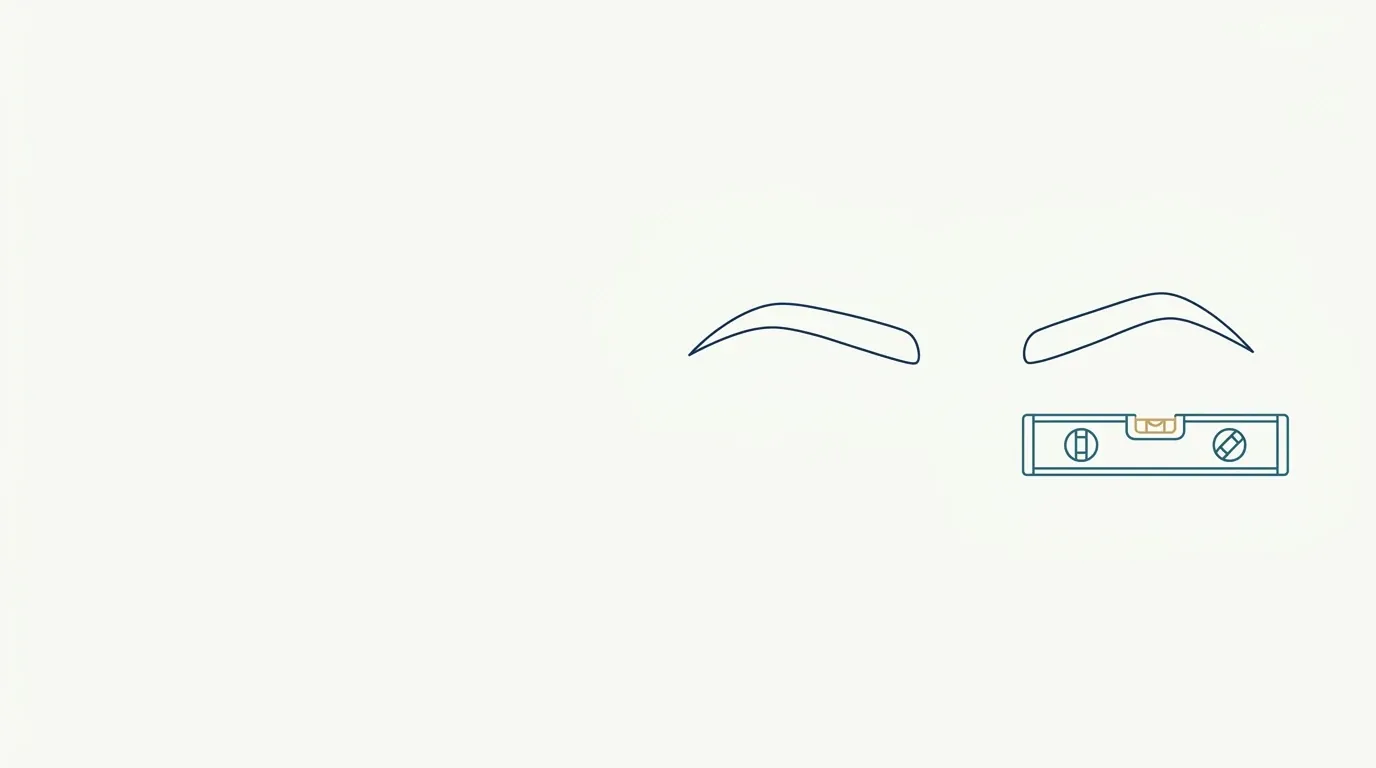
- Muscle
- Highlighted area
Quick facts
- Concern
- One eyebrow higher, straighter or more arched than the other
- Three origins
- Bone (brow ridge), muscle (frontalis, corrugator) and expression habit or eyelid
- Basic test
- Compare at rest, with voluntary lift, and with eyes closed and relaxed
- Limit
- Bony asymmetry does not change with injectables, and some difference is normal
The eyebrow is the "frame" of the gaze, and any difference between the two draws attention. One side higher, the other lower; one tail arched, the other straight; one brow closer to the eyelid, the other farther away. The patient notices it when applying makeup, in photos and, above all, in the mirror in the morning.
Between the concern and the approach there is a question that changes everything: where does the difference come from? This page organizes the reasoning into three origins, teaches the test that best separates one from another, and shows how to communicate the limit honestly.
Why eyebrows are rarely equal
The human face is asymmetric by nature. The skull, the brow ridge, the muscle insertions and even the shape of the orbits vary between sides. Eyebrow position results from the sum of several forces: the pull of the frontalis muscle, which lifts it, and that of the corrugator, procerus and orbicularis, which lower it. Add the weight of the eyelid skin and of the brow tissue itself.
Any difference in those forces shifts one side. That is why a small asymmetry is the rule, and what matters is the one that becomes visible enough to bother the patient. See ideal brow position in planning and natural facial asymmetry.
Three origins and how to tell them apart
| Origin | What happens | Signs |
|---|---|---|
| Bony | Difference in the brow ridge or the frontal bone | Asymmetry persists even with the forehead relaxed, palpable on the bone |
| Muscular | Uneven tone of the frontalis or depressors | Changes between rest, lift and relaxation; different forehead lines |
| Habit and eyelid | Compensation for a heavy eyelid or expressive habit | Changes position when truly relaxed; worse when talking |
In practice, the three mix. A patient may have a higher ridge on one side and still compensate with the frontalis on the other. The approach is at the discretion of the qualified professional, but the starting point is identifying which of the three dominates.
How to assess
Pay attention to the history: facial trauma or surgery, a previous palsy or a recent ptosis change the approach and may require referral. When the asymmetry is new and progressive, it is worth investigating before treating. See eyelid ptosis vs. brow ptosis and botulinum toxin for facial asymmetry.
What HOF can adjust
Asymmetric toxin. When muscle is the cause, botulinum toxin can be dosed differently between sides to balance the position. It is a delicate approach, because the response is individual and the opposite effect, ptosis, is possible. See toxin in the eyebrow and corrugator muscle.
Glabella and depressors. A stronger corrugator on one side pulls the brow down and inward. Toxin in the glabella can compensate for that pull. See botulinum toxin in the glabellar complex.
Temple and tail. Temple volume and lateral support influence how the brow tail reads. Temple filler can be considered in selected cases, in an area of vascular risk. See temples and eyebrow: combining in the plan.
Support. For a low brow on one side, repositioning approaches, such as PDO threads, can be considered in selected cases. See PDO threads in the brow.
What does not change. Bony asymmetry, differences in hair implantation and orbit shape do not change with injectables. A patient told this at the start is far less likely to be frustrated at the end. See also concerns HOF does not solve.
Timeline of an adjustment
Recording the dose used on each side is what lets you get it right in the next cycle. Without that data, every session starts from zero.
Risks
The main complication is brow or eyelid ptosis, which makes the gaze heavy and can worsen the asymmetry. Other possibilities: excessive lifting of the tail, headache, new asymmetry and stiff expression. With temple and forehead filler, vascular risks are added, including visual ones, although rare. Hyaluronidase must be available when using hyaluronic acid. See complications with botulinum toxin and safety and complications: overview.
Communicating the asymmetry to the patient
The phrase "your face is asymmetric" sounds like a negative diagnosis. It helps to reframe it: "every face has differences between the sides, and that is part of your identity". Then present the data: where the difference is, how much it weighs, and what can or cannot be adjusted. Show the photo, point and explain. See simulation in a patient with asymmetry.
What Harmy shows here
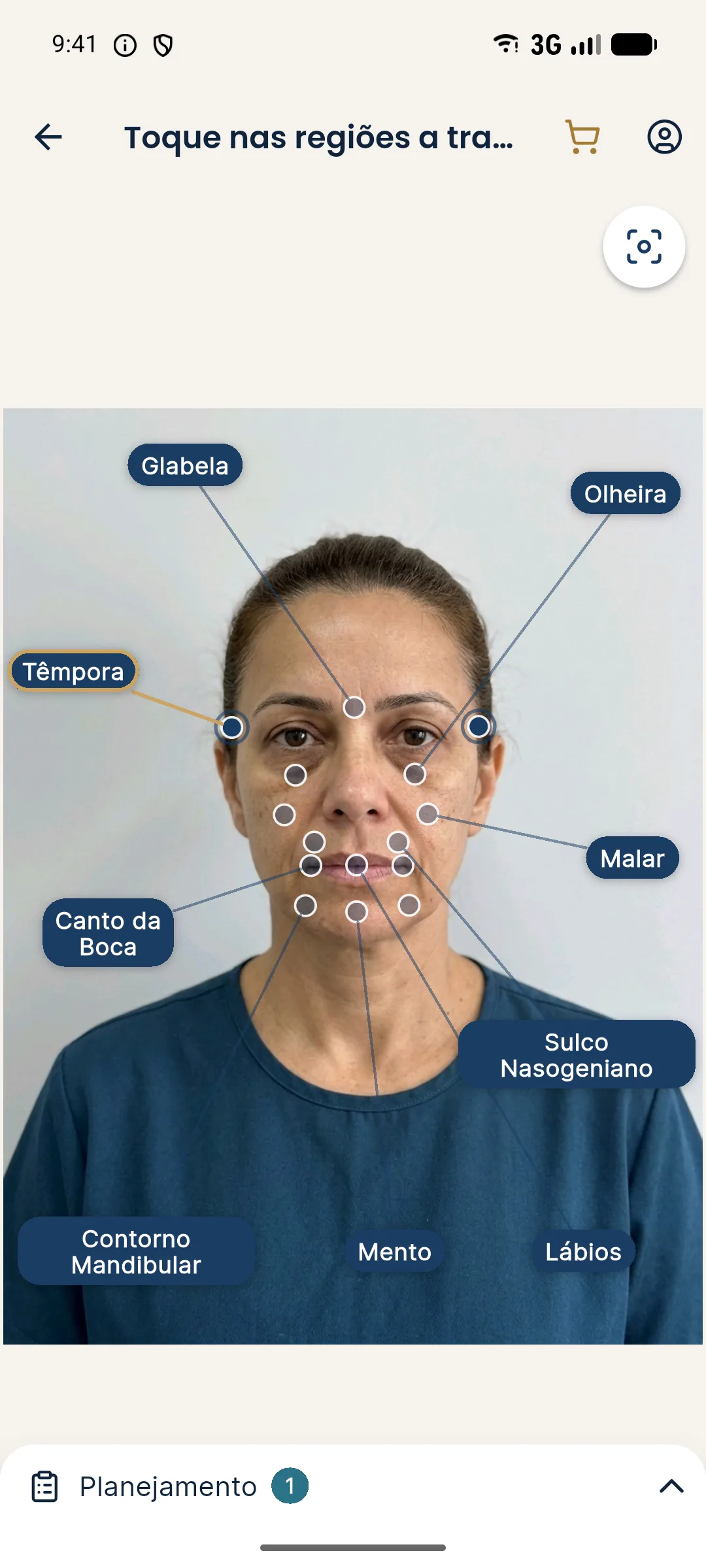
Harmy projects volume in the marked areas and does not simulate toxin in the forehead or the change in brow position. The Temple point and the Glabella point exist in the app, but the projection does not show the brow rising or dropping.
Record
Record the photos in the three conditions, the origin classification, the dose per side (at the professional's discretion) and the conversation about limits. All in line with the rules of your professional council in Brazil and the LGPD (Brazil's data protection law) for images.
Frequently asked questions
Does everyone have asymmetric eyebrows?
Some difference between the sides is very common and part of normal anatomy. What is assessed is whether the difference is noticeable, bothers the patient and has a treatable cause.
Does toxin correct asymmetric eyebrows?
In cases of muscular origin, asymmetric doses can balance the position, at the discretion of the qualified professional. If the cause is bony, the gain is limited.
Can uneven eyebrows come from habit?
Yes. People who always raise one brow when talking, or who compensate for a heavier eyelid on one side, develop differences in position and in forehead lines.
Can the asymmetry get worse after toxin?
It can, if the dose is unbalanced or if the toxin removes a compensation. That is why the assessment should be done with the eyes closed and relaxed, in addition to at rest.
Harmy images are illustrative simulations generated by AI from the patient's photo to support the conversation between practitioner and patient. They are not a promise of results. Indication, technique, product and volume are solely the decision of the licensed practitioner. This content is for information only and does not replace a clinical assessment.