
Ideal eyebrow position and the facial harmonization plan

- Muscle
- Highlighted area
Quick facts
- Topic
- Eyebrow height, shape and arch as part of upper third planning
- Difference by sex
- Tendency toward a lower, straighter arch in the male face and a more elevated tail in the female; wide individual variation
- Effect on the look
- Position changes the perception of tiredness, sadness, surprise or severity
- Caution
- Changing the position without assessing the eyelid and forehead can make the look worse
The eyebrow is the frame of the look. It sits at the boundary between the upper third and the middle third, and small changes in height or arch alter how the expression reads: a look that seems tired, angry, surprised or open. That is why anyone planning upper third harmonization needs a criterion for looking at the eyebrow before deciding anything else.
Here you will find the position references by sex, the logic of reading the look and the eyebrow's place in the plan. There is no injection protocol: the text covers assessment and planning, at a review level.
Where should the eyebrow be, according to the classic references?
The references described in the facial aesthetics literature are useful as a starting point, never as a target. In general:
- Start (head): vertically aligned with the nasal ala.
- Highest point of the arch: around a line that runs from the nasal ala through the lateral limit of the iris, looking straight ahead.
- End (tail): on the oblique line that runs from the nasal ala to the outer corner of the eye.
- Head and tail: usually at a similar height, with the tail slightly above or at the same level.
These lines are approximations, and faces of different ancestries vary. The question of proportions across populations is in facial proportions vary between populations. If you measure with a ruler, the marking should be done on the standardized photo, with the reference lines on the frontal photo.
What differences by sex usually exist?
The female pattern, described in textbooks, shows an eyebrow with a more evident arch and a more elevated tail. The male pattern shows a more horizontal eyebrow, closer to the orbital rim, with a discreet arch. These are statistical textbook tendencies, not rules, and many people do not fit them.
| Feature | Described female tendency | Described male tendency |
|---|---|---|
| Height relative to the rim | May sit above the orbital rim | Usually sits at the rim |
| Shape | More marked arch, elevated tail | Straighter, soft arch |
| Visual thickness | Thinner | Thicker |
| Distance to the lashes | Greater | Smaller |
In trans or non-binary patients, the reference is the patient's identity and wishes, not the textbook tendency. See facial harmonization plan for trans women, facial harmonization plan for trans men and plan to masculinize the face.
How does eyebrow position change the look?
Height and slope work as emotional cues. A low, straight eyebrow tends to be read as serious or tired. A very elevated eyebrow can give an air of surprise or of a "pulled" face. A drooping tail tends to be read as sadness or tiredness. The slope of the look as a whole is discussed in slope of the eye and lateral canthus.
The goal of a plan for a rested look is not to raise the eyebrow as much as possible, but to reduce tiredness cues without creating surprise cues. It is a fine balance, and the face in motion is part of the assessment.
What needs to be assessed before thinking about changing position?
Four structures interact. If one is ignored, the plan comes out crooked.
- Elevator and depressor muscles: the frontalis muscle elevates; the corrugator, the procerus and the depressor supercilii lower. The balance between them defines the position at rest and in motion.
- Upper eyelid: excess eyelid skin can be mistaken for a low eyebrow. The assessment distinguishes brow ptosis from dermatochalasis and from eyelid ptosis.
- Forehead: a flat, short or long forehead changes the effect of any change. The topic is in forehead and hairline analysis in the plan.
- Bone: the superciliary arch and the bony glabella define the relief on which the eyebrow rests.
Where does the eyebrow meet the glabella and the temple?
The glabella and the space between the eyebrows control the "head" of the eyebrow and the frown. Any intervention there alters the balance between elevators and depressors. The region carries high vascular risk, and the assessment always belongs to the licensed professional, with hyaluronidase available when the product is hyaluronic acid. The text on the area is at glabella and the one on the procedure at toxin in the glabella.
The temple and the lateral region of the eyebrow are linked by the support of the lateral third. Loss of temporal volume can accentuate the descent of the tail and is now discussed in the plan as part of the whole. See temples and eyebrow: combining in the plan and the area temples. There is also the eyebrow region as its own page.
What are the most common mistakes when assessing the eyebrow?
- Measuring with the forehead contracted: the patient lifts the eyebrow without noticing, and the reference comes out wrong.
- Mistaking excess skin for a low eyebrow: the plan tries to treat one thing that is really another, and the look gets worse.
- Ignoring prior asymmetry: correcting one side until it matches the other, without noticing that the asymmetry was natural and that the patient recognized themselves in it.
- Using a single mold for everyone: copying the magazine or filter-face pattern. The topic appears in filter face: how to handle unrealistic references.
- Forgetting movement: the eyebrow at rest and in speech behave differently, as in dynamic facial analysis in expression.
How do you record the analysis for the plan?
Photograph from the front at rest, with a neutral expression and, if possible, no makeup on the eyebrows. Mark the reference lines and note the relative height of the two sides. Photo guidance is in neutral expression in the planning photo and in makeup and beard in the planning photo.
And how does this connect to the rest of the plan?
Changing the eyebrow is an upper third decision, organized in complete upper third in the plan and in glabella and forehead: combining in the plan. The order between interventions in different tissues is the subject of toxin or filler first. In all cases, the risks and approaches follow the assessment of the licensed professional and the rules of the council.
Frequently asked questions
Is there an ideal eyebrow position for everyone?
No. There are shape and height references that help with assessment, but the position that works depends on the bone, eyelid, forehead, sex and identity of the patient.
Does eyebrow position change with age?
It tends to. Over time, the eyebrow can descend, especially on the lateral side, and the assessment should distinguish brow descent from excess skin on the eyelid.
Can toxin or filler change eyebrow position?
A change in position, when it occurs, results from the balance between elevator and depressor muscles and the support of the region. The approach is up to the licensed professional, after assessment, according to the rules of their council.
Does Harmy simulate the eyebrow?
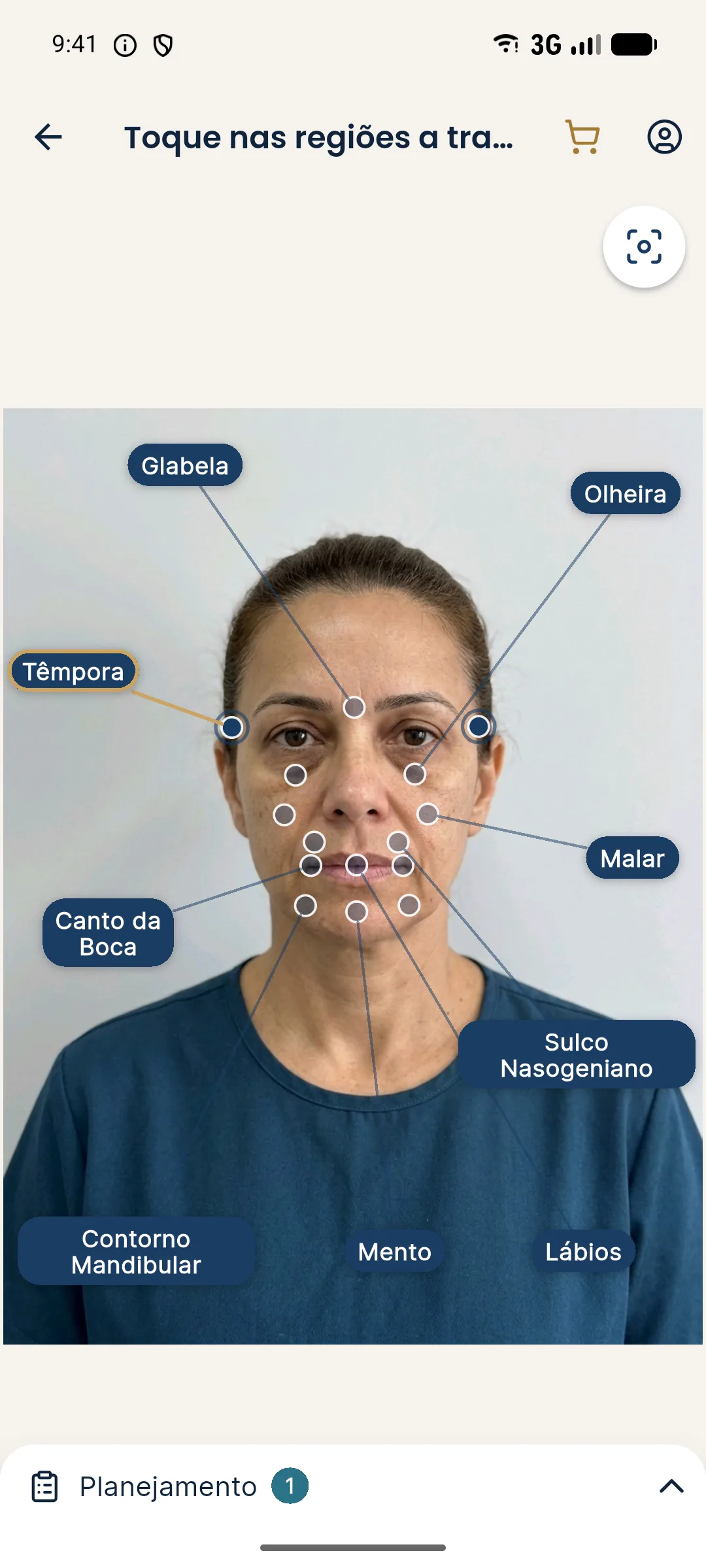
There is no specific marking point for the eyebrow. Position analysis is clinical; the app simulates the marking points, such as Glabella and Temple.
Harmy images are illustrative simulations generated by AI from the patient's photo to support the conversation between practitioner and patient. They are not a promise of results. Indication, technique, product and volume are solely the decision of the licensed practitioner. This content is for information only and does not replace a clinical assessment.