
Plan to masculinize the face: areas and proportions

 BeforeSimulation
- Nerve
- Highlighted area
Quick facts
- Topic
- Plan to masculinize the face
- Principle
- Straighter lines, a defined chin and jaw, a firm upper third
- Central care
- Do not overdo volume and preserve identity
- Audience
- Men, trans men and people who ask for more masculine features
- Limit
- Injectables do not replace bone structure
The request to "make the face more masculine" comes from different groups: men who want more definition, trans men in transition, people who feel more comfortable with straighter features. In every case the work is the same: turning a subjective goal into proportions, areas and limits. This page gathers the reasoning, what facial harmonization can deliver and what it cannot.
What usually characterizes a face perceived as masculine?
Without setting norms, some features show up often: straighter, less rounded contours, a more defined chin and jaw, a marked jaw angle, a less projected cheekbone, a lower, straighter brow, a flatter forehead and thicker skin. These features vary widely between people and populations, and they are not requirements. The goal of the plan is what the patient perceives as their own, not a formula. See differences between female and male faces, facial masculinization with injectables and male orofacial harmonization.
Which areas are usually discussed?
| Area | Logic of the conversation | Caution |
|---|---|---|
| Chin | Width and projection for a squarer lower third | Avoid lengthening the lower third too much |
| Jaw angle and jawline | Contour definition | Tell bone, masseter and soft tissue apart |
| Temples | Avoid a hollowing that narrows the upper third | Vascular area; conservative volume |
| Cheekbone | Avoid excess projection, which suggests a rounder face | In general, less volume than in feminine plans |
| Upper third | Position of the brow, forehead and glabella | Toxin with judgment, so as not to "soften" too much |
For each area: chin filler, jawline filler, temple filler and complete upper third in the plan. Reading the angle is covered in ideal jaw angle by sex and ideal chin projection by sex.
How does hormone therapy fit in, if there is any?
In trans men on testosterone therapy, the skin thickens, fat is redistributed and muscle increases over months and years. This changes the face on its own, and the harmonization plan should take the stage into account. Planning too early can lead to excess or to spending that the therapy itself would deliver. On this topic, see harmonization plan for trans men, hormone therapy and facial planning and facial harmonization consultation with a trans patient.
In cis men who want more definition, the conversation includes weight, age, skin and habits. See man with an undefined jaw and delicate face in a man.
Where does harmonization stop and surgery begin?
Many masculine features come from bone structure (brow ridge, jaw, chin), which injectables only partly mimic. For goals involving bigger change, an assessment by a surgeon can be an honest part of the conversation. The professional should say what filler delivers (definition and lines) and what it does not (bone width, hair and other features). Record the guidance in the patient record. See when bone is the problem, not volume.
What is the order of reasoning?
The logic of structure before detail is covered in structure before detail in the harmonization plan and chin and jaw: combining in the plan.
How do you simulate it in Harmy?
In Harmy, the projection of the chin and jaw reads well, because they are areas where volume changes definition. Mark Chin and Jawline, set the ml and the intensity, and look at the Before/After. The AI respects the volume and changes only what was marked, without altering hair, skin, expression or lighting. This shows a discreet difference, which helps align expectations.
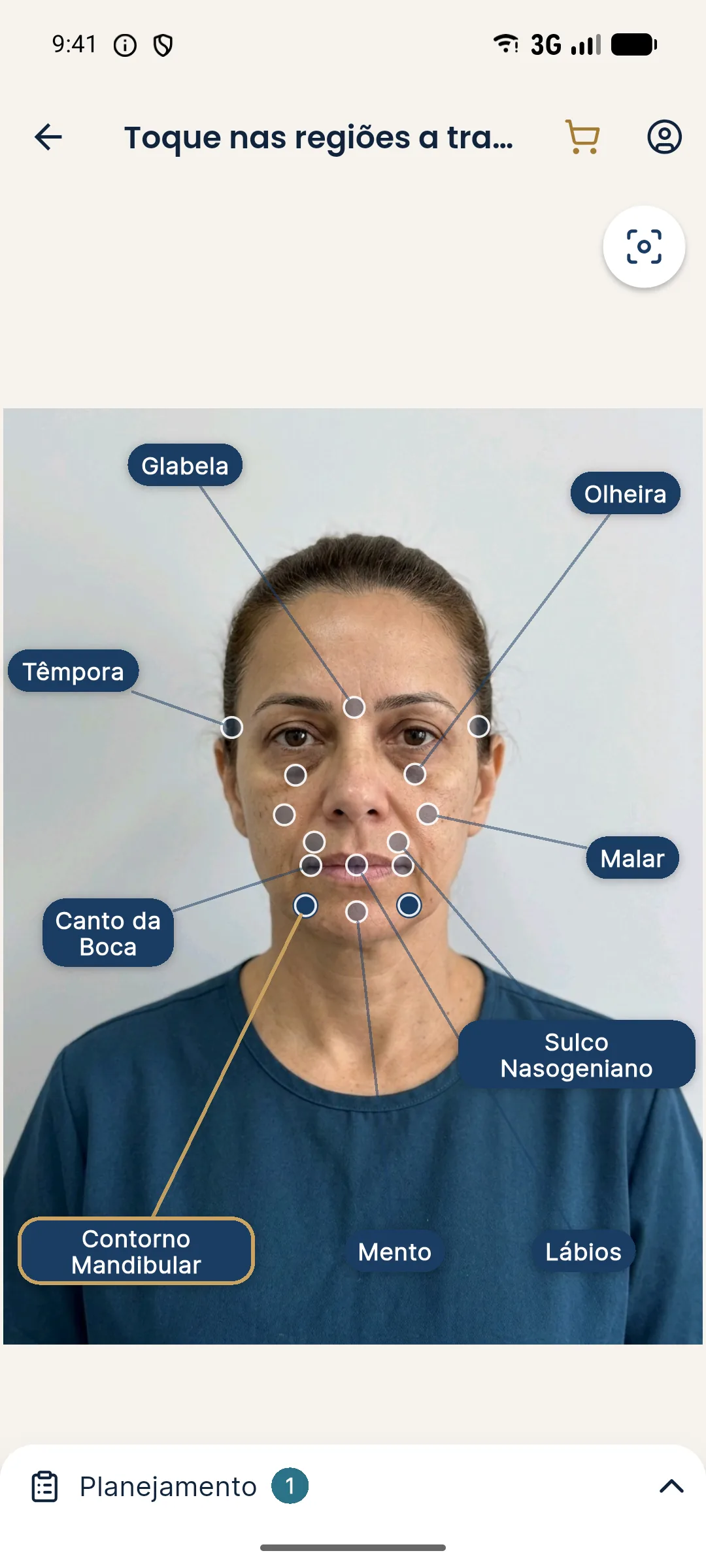
The projection does not change bone, brows, hair (beard) or skin thickness. Tell the patient, so they do not expect to see in the image what facial harmonization does not do. For the intensities and limits, see comparing Subtle, Moderate and Pronounced intensities and limits of 2D simulation.
How do you talk about the brow and upper third?
Brow position and shape weigh heavily in how gender is read, and toxin in the area can alter the position by shifting the muscle balance. It is a fine adjustment that calls for careful assessment, and it is not always wanted. In men, "softening" the glabella too much can remove expression. See temples and brow: combining in the plan and ideal brow position in planning.
What should you ask before starting?
Reasoning quiz
Summary
Masculinizing the face is a matter of proportion, definition and identity. Start from the patient's goal, consider the hormonal stage, treat the chin and jaw with conservative volume, be honest about the limits of injectables and use the simulation as support.
Frequently asked questions
Which areas are usually part of a facial masculinization plan?
In general, the chin, jaw angle and jawline, temples and, in some cases, the brow and glabella. Each area is decided based on the facial assessment and the patient's goal.
Is masculinizing just enlarging the jaw?
No. A masculine look depends on proportion, skin, brow and expression. Enlarging only the jaw can unbalance the face.
Does hormone therapy change this plan?
It can, because testosterone changes skin, fat and muscle over time. The plan should take the stage of therapy into account and be reassessed.
Does Harmy help with simulating this?
It helps you see, subtly, the effect of volume on the chin and jaw. It does not change hair, bone or brows, and the simulation is illustrative.
Harmy images are illustrative simulations generated by AI from the patient's photo to support the conversation between practitioner and patient. They are not a promise of results. Indication, technique, product and volume are solely the decision of the licensed practitioner. This content is for information only and does not replace a clinical assessment.