
Facial Harmonization Plan for Trans Men: Areas and Stages

 BeforeSimulation
Quick facts
- Principle
- The goal is the patient's: the conversation starts with listening, not technique
- Areas under discussion
- Chin, jaw, and contour; sometimes cheekbone and glabella, depending on the concern
- Partnership
- Coordinate with the health care team that follows the patient, if he wishes
- Care
- Respectful language, without presuming goals or demanding justifications
For many trans men, facial harmonization is part of a broader process of gender affirmation. The facial harmonization professional's role is technical and respectful: listen to what the patient wants, assess what is possible safely, and propose a plan he understands and accepts. This begins before any photo or map of areas.
How do you start the consultation?
The first attitude is listening. Ask how the patient prefers to be addressed, use that form throughout the visit and in the paperwork, and let him lead the account. Avoid questions unrelated to the plan, and avoid asking him to justify his identity. The topic is developed in respectful care for trans patients in facial harmonization and in facial harmonization consultation with a trans patient.
What is facial masculinization in facial harmonization?
It is the set of plan choices aimed at giving the face features read as more masculine, when that is the patient's wish. At a general level, differences between feminine and masculine faces show up in a more defined contour, a more projected and square chin, a more defined jaw, and a forehead and glabella that read differently. See differences between feminine and masculine faces and facial masculinization with injectables.
These are generalizations, not rules. Each patient has his own structure, concern, and goal, and the goal is his. Many do not want "everything masculine," but specific adjustments.
Which areas usually come up in the conversation?
| Area | Possible role | Notes |
|---|---|---|
| Chin | Projection and width | A square shape is often read as more masculine; assess the profile |
| Jawline | Definition of the line and angle | Avoid disproportion between chin and jaw |
| Cheekbone | Adjusting how the midface reads | Not always a priority |
| Glabella | Expression and how the forehead reads | Toxin when indicated |
| Lips | Proportion | Often a lower priority |
The table is a starting point for the conversation, and the list of areas is defined with the patient. See chin filler, jaw filler, and chin and jaw: combining them in the plan. For the contour plan, see facial contour definition plan.
How do you handle hormones and general health?
The medical history follows the same logic as with any patient: medications, allergies, diseases, surgeries, and use of anticoagulants. The patient decides what to share, and management of any health treatment belongs to the physician who follows him. The facial harmonization professional's role is to record what is reported, consider the effects on skin and structure in general terms, and adjust the plan. The subject is covered in hormone therapy and facial planning and, from the patient's point of view, in gender transition and facial harmonization.
If the face is going through ongoing changes, the plan tends to be more gradual, with reassessments. This avoids treating a structure that is still changing.
What are the stages of a plan?
Each step is decided with the patient, who can pause or change direction. The structure follows the logic of the three-session facial harmonization plan and of the interval between sessions.
How does the simulation help, and what does it not do?
The simulation can be very useful: it helps the patient visualize the effect of volumes in the chin and jaw, and helps you calibrate expectations. But it does not transform the face or predict the actual result.
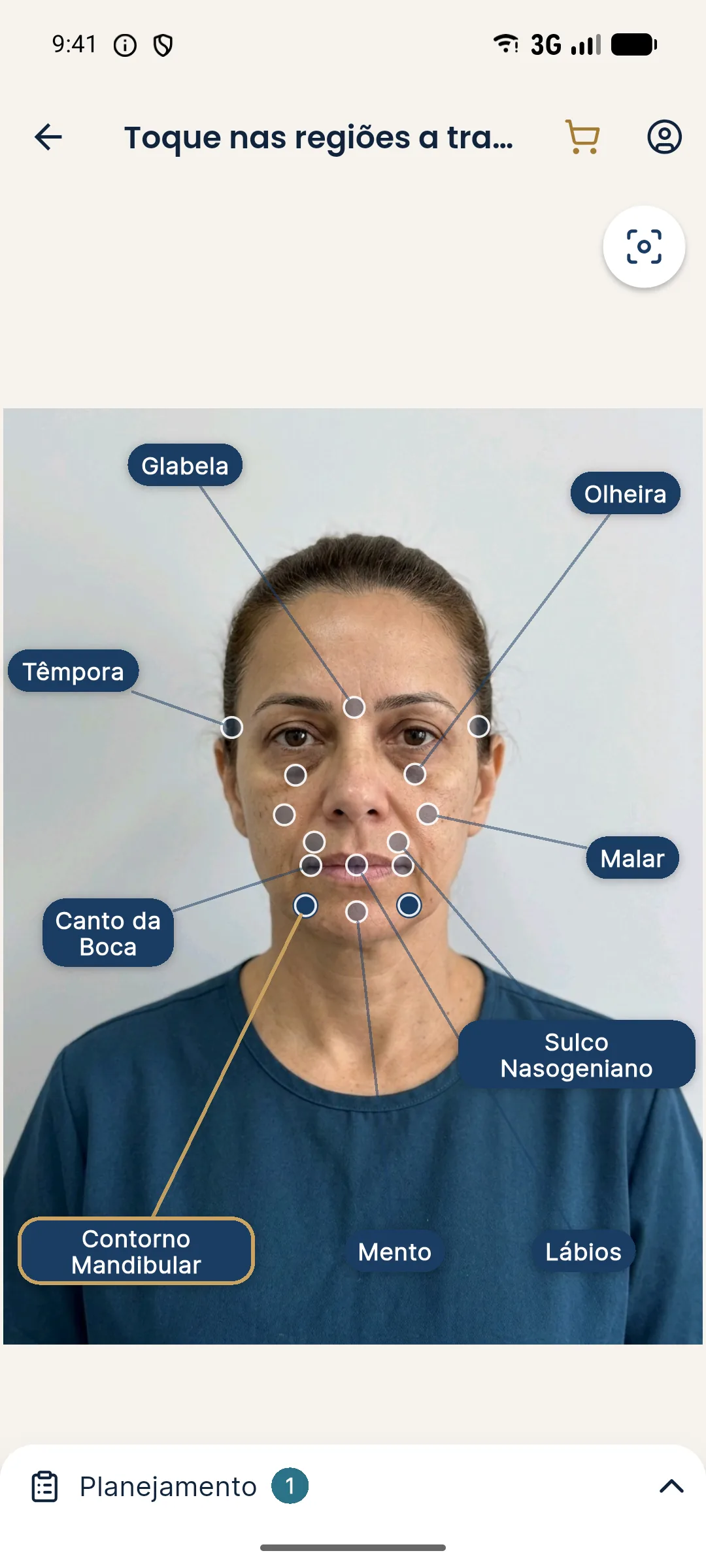
Agree with the patient on how the image will be stored and shared: the face is sensitive personal data, and privacy is especially important in this context. The notice and limits are in explaining that a simulation is not a guarantee and consent and LGPD (Brazil's data protection law) for photos.
What should you record?
Record the name and pronoun indicated, the patient's goals in his own words, the medical history, the staged plan, consent, photos, and instructions. Take care with the storage and sharing of images. If the patient wishes, coordinate with the team that follows him, always with his authorization.
Which ethical and privacy precautions are essential?
A trans patient's privacy carries special weight. Face images, name, and health information should only be shared with express authorization, and never in marketing without specific consent. Check that messages and reminders use the name the patient indicated and do not reveal information to third parties.
What if the patient is already under health care follow-up?
Many patients have their own team. If he wishes, you can coordinate the timing of the plan with that team, always with authorization. The aesthetic plan should not interfere with the patient's health decisions or require him to share what he does not want to.
How do you handle broad expectations?
Some patients bring expectations of a large, fast change. Explain, respectfully, the limits of injectables, propose stages, and show that the plan can be adjusted over time. Larger procedures, when desired, are a matter for other professionals, and referral is part of the care. The patience of a staged plan usually protects the patient from excess and frustration.
Frequently asked questions
Which areas are usually discussed in facial masculinization?
Chin, jaw, and contour usually come up, and sometimes cheekbone and glabella. What goes in depends on what the patient wants and on the professional's assessment.
Do I need to know whether the patient is on hormone therapy?
The medical history should include medications and health conditions, as with any patient. The patient decides what to share, and health management belongs to the physician who follows him.
How do I avoid awkwardness in the consultation?
By asking how the patient wants to be addressed, using that form, avoiding questions unrelated to the plan, and keeping the focus on his goals.
Does the simulation show a masculinized face?
It shows an illustration of pronounced volumes in the chin and jaw, for example. It does not transform the face or predict the result, and it should be presented with that limit.
Harmy images are illustrative simulations generated by AI from the patient's photo to support the conversation between practitioner and patient. They are not a promise of results. Indication, technique, product and volume are solely the decision of the licensed practitioner. This content is for information only and does not replace a clinical assessment.