
Facial contour definition plan

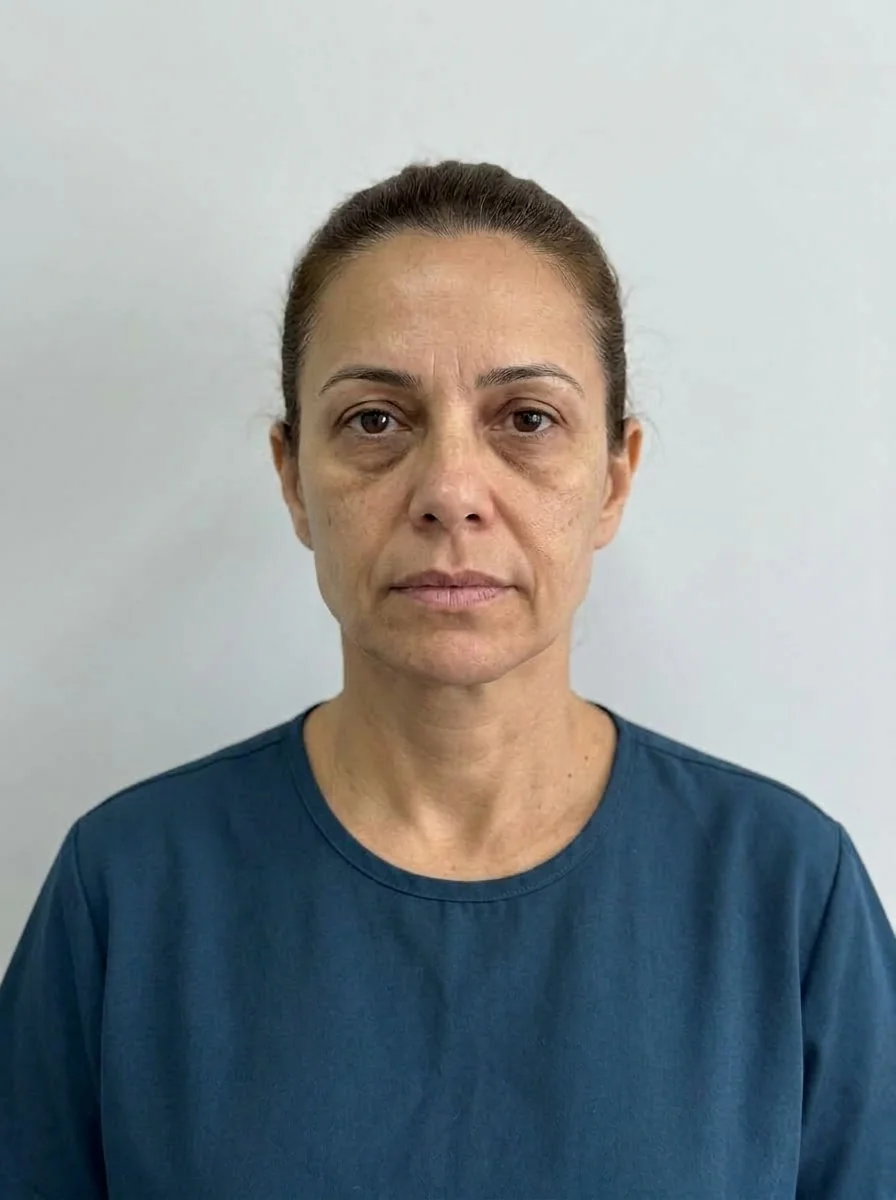 BeforeSimulation
Quick facts
- Goal
- Give the face a clear contour, with chin, jawline and cheekbone in balance
- Usual sequence
- Structure from top to bottom or from the chin outward, reassessing between stages
- Common mistake
- Treating each point in isolation and creating steps between them
- Volumes
- Usual ranges, at the professional's discretion after assessment
Contour definition is what patients mean when they say "a more defined chin", "a sharper jawline" or "a less soft face". The contour is not an area, it is a line that runs through the chin, the jawline and the transition to the cheekbone. That is why the plan has to be thought of in sequence and as a whole, not point by point.
What makes up the reading of contour?
Three components add up for the eye to read "contour":
- Chin. Projection and shape at the base of the face. See chin filler.
- Jawline. The path from the angle to the chin. See jawline filler and the glossary entry jawline.
- Midface. The support of the cheekbone, which holds the face from above and changes how the base reads. See cheekbone filler.
Besides volume, skin quality and excess soft tissue come into play and can hide the contour. A "soft" contour is not always a lack of product: sometimes it is skin, fat or laxity. This distinction is crucial and appears in laxity in the facial contour.
What is the planning sequence?
It is not a fixed rule. In some patients, the chin is the point that changes the whole reading; in others, the jawline is the main concern. The order depends on what, in the assessment, creates the greatest imbalance. See the general reasoning in what to treat first in facial harmonization and structure before detail.
What volumes go into the plan?
Usual ranges help the conversation, never to prescribe. As a planning reference in the app, "Full harmonization" uses jawline 2 ml and chin 1.5 ml, at Moderate intensity, plus cheekbone 2 ml. These values are shortcuts, not a rule. The actual range and distribution depend on:
| Factor | Effect on the plan |
|---|---|
| Bony chin projection | A recessed chin calls for more attention to projection |
| Jaw width and angle | Defines whether the line needs reinforcement |
| Skin thickness | Thin skin shows the product more |
| Sex and contour pattern | See differences between the female and male face |
| Laxity | Calls for strategies beyond volume |
To distribute volume among areas, see percentage distribution of volume between areas and ml per area.
When does volume not solve it?
There are three situations in which adding hyaluronic acid to the contour is not the answer:
- Skin laxity: the product does not replace support. See collagen biostimulator and thread lift as topics for clinical assessment.
- Excess submental fat or double chin: see chin and double chin: combining in the plan.
- Bulky masseter: the width comes from the muscle. See jawline and masseter.
How do you use the simulation?
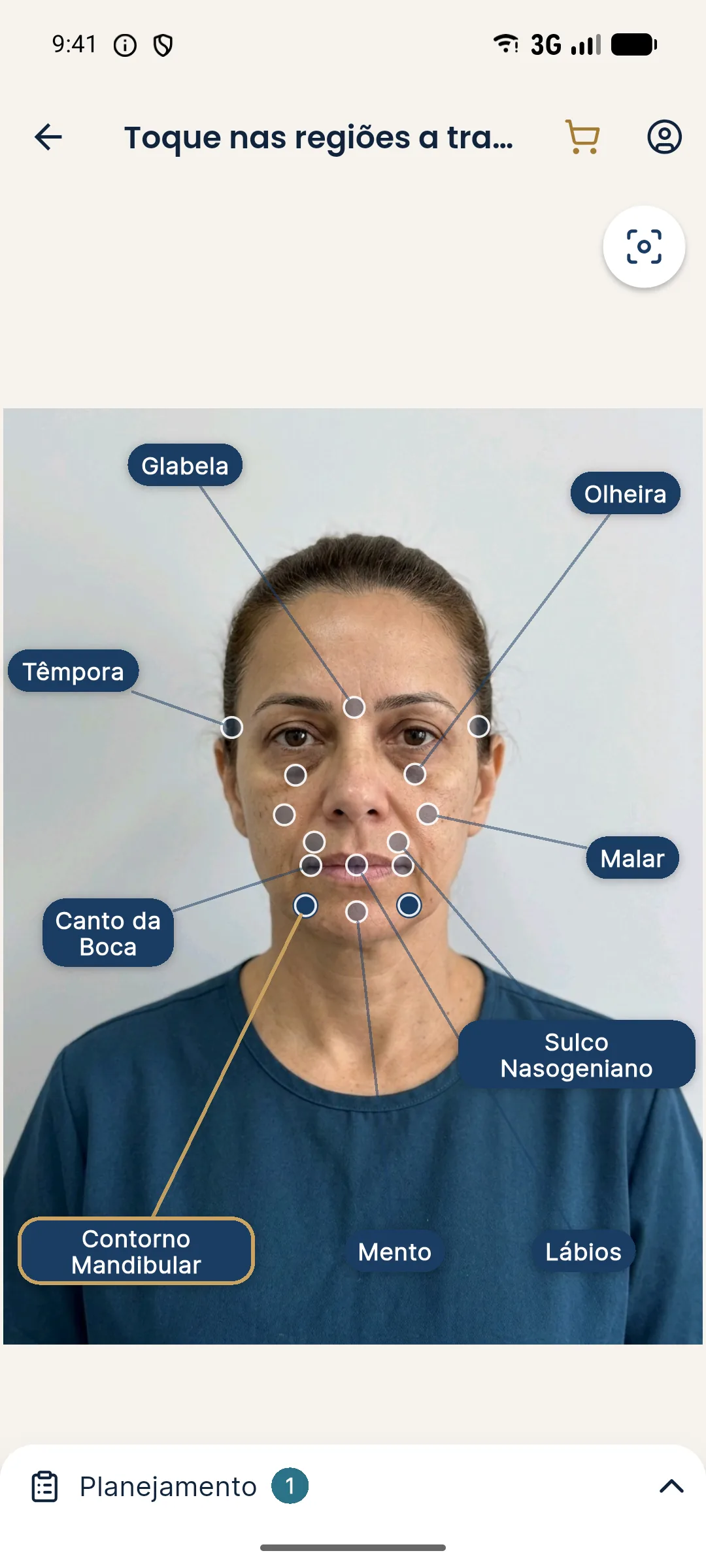
The jawline simulation shows the illustrative effect of a volume on the jawline and is good support for the conversation about expectations. Make two versions: contour with the chin only, and contour with chin and jawline. Compare what each one changes.

See the limits of 2D simulation and presenting the treated area with the magnifier.
How do you close the plan?
Document: which points are included, in what order, the expected volume per area, the reassessment interval and what to do if the patient wants more or less. Explain that the contour is a reading of the whole and that the result may need adjusting. For the interval and the sequence, see interval between sessions.
What mistakes appear in contour plans?
The most common is treating the jawline without looking at the chin and midface. The second is confusing a "soft" contour due to laxity with a contour "lacking volume": adding product to unsupported skin tends to weigh it down and blur the line. The third is ignoring the profile: from the front the contour may seem to need volume, while from the side the problem is chin projection.
There is also the communication mistake: promising a "defined jawline" without explaining that the contour depends on structure, skin and fat. Describe the effect as an improvement in how the contour reads, not as a change in structure.
How do sex and facial pattern come into the conversation?
Female and male contours are usually described differently, and patients bring their own references. Ask which pattern they admire and show what is compatible with their anatomy. Not every patient wants a sharp contour; some prefer a soft line. Listening comes before design.
What signs call for a pause before a new stage?
Swelling still present, new asymmetry, pain, nodules, difficulty chewing or signs of infection call for assessment before any new injection. Postponing is always cheaper than correcting an excess. Record the reason for the pause and the date of the next assessment.
Practical summary
Think of the contour as a line: chin, jawline and cheekbone together. Assess skin and laxity before adding volume, photograph from three angles, plan in stages and use the simulation as an illustration. The final question is always whether the transition between the points came out smooth.
Frequently asked questions
Where should a contour definition plan start?
It depends on the patient. Many plans start with the structure that supports the contour, such as the cheekbone and chin, and only then refine the jawline. The assessment defines the order.
How many ml are used to define the contour?
There are usual ranges per area, which vary widely with anatomy and the concern. The final volume is set by the professional during the assessment and the procedure.
Does a defined contour take more than one session?
Often, because reassessment between stages allows adjusting with less volume and avoiding steps between areas.
Does the simulation show the contour I will get?
It shows an illustration of the marked volume. The actual result depends on the structure, the skin and the patient's response.
Harmy images are illustrative simulations generated by AI from the patient's photo to support the conversation between practitioner and patient. They are not a promise of results. Indication, technique, product and volume are solely the decision of the licensed practitioner. This content is for information only and does not replace a clinical assessment.