
Sagging facial contour: loose tissue or fat?

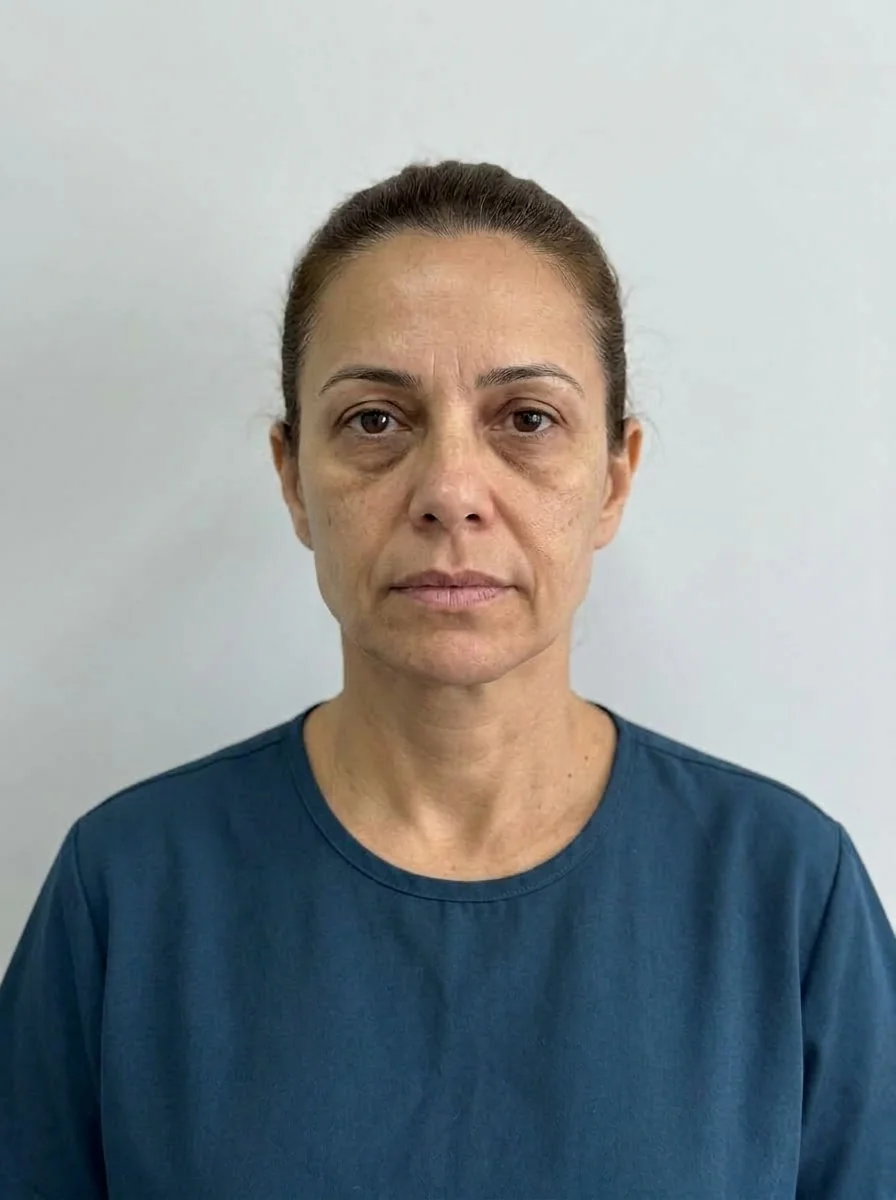 BeforeSimulation
- Highlighted area
Quick facts
- Concern
- Facial contour without definition, with a drooping look along the jawline
- Key reading
- Tell loose tissue (ptosis) apart from excess fat and from loss of bone support
- Warning signs
- Jowls, double chin, loss of the mandibular angle and extra skin under the chin
- Limit
- Excess volume weighs down the contour; significant sagging has limits with injectables
A "loose" facial contour has many faces behind it. In one patient, the jaw lost its angle and the tissue simply descended. In another, there is fat accumulated under the chin, which gives the same look of a contour with no line. In a third, it is the skin that is in excess. The same sentence, "my face is drooping at the bottom", hides opposite indications.
This page separates the situations, explains what the exam should look for and shows where facial harmonization helps, where it gets in the way and where it simply does not solve it. Related concerns: drooping jawline, double chin with small chin and sagging after 40.
Loose contour or contour with fat?
The distinction is the most important clinical decision in this concern. A table helps:
| Feature | Loose contour (ptosis) | Contour with fat |
|---|---|---|
| What you see | Tissue descending at the side, jowls, extra skin | Volume under the chin and on the neck, blurred line |
| Skin pinch | Thin skin, little volume when pinched | Thick layer of fat when pinched |
| With the head raised | Contour improves in part | Contour improves little |
| Old photos | Contour was more defined, no weight loss | Contour changed with weight gain |
| Approach tends to discuss | Support, biostimulation, threads, surgery | Fat reduction, weight control, tissue assessment |
The pinch test and the change in posture are simple and quick. Show the patient: when they lift the chin and the contour lengthens, there is a skin and tissue component; when nothing changes, fat dominates. This helps explain why the same technique does not suit everyone. For fat under the chin, see double chin: assessment and subplatysmal fat.
Which structures make up the contour?
The contour is the sum of bone, ligaments, fat and skin. Each contributes in its own way:
- Bone: the angle and body of the mandible give the frame. Over time, resorption reduces support. See mandibular angle and facial bone loss.
- Mandibular ligament: anchors the skin to the bone and delimits the jowl. When it loosens, tissue descends over it. See mandibular ligament.
- Fat: fat in the lower third and the pre-jowl redistributes. See jowl.
- Platysma: a neck muscle that, with age, forms bands and pulls the contour down. See platysma.
- Skin: thins, loses elasticity and accentuates the feeling of excess.
Understanding this sum avoids the promise that "one product solves it". In general, the plan combines two or three fronts, and the order matters.
What can facial harmonization do?
With judgment, and always at the licensed professional's discretion after assessment:
- Support of the middle third, which reduces lateral excess from above. See cheekbone filler.
- Definition of the angle and body of the jaw, when the bone has lost support. See jawline filler.
- Chin projection, which lengthens the line and improves the transition to the neck. See chin filler.
- Biostimulation, to improve firmness and quality. See biostimulator along the jawline and hydroxyapatite in the jawline contour.
- Thread lift, in selected cases. See PDO threads in the jaw and jowl.
- Toxin in the platysma, when bands pull on the contour. See toxin in platysmal bands.
What facial harmonization does not do: remove skin, permanently remove fat or replace a facelift in significant sagging. Saying so at the start protects the relationship and the patient's decision. For the assessment reasoning, see lower third laxity: assessment.
When is the problem weight loss?
Rapid weight loss (including with the weight-loss medications popular today, such as Ozempic and Mounjaro) can cause loss of facial fat and volume, and the skin does not keep up. The contour looks loose because the contents shrank but the container stayed. See double chin after weight loss, gaunt face after weight loss and Mounjaro and facial sagging.
In these cases, it is worth waiting for the weight to stabilize before planning volume. Planning on a face that is still changing is planning for a moving target. The reasoning is in planning facial harmonization in people who lose weight fast.
How do you show the plan?
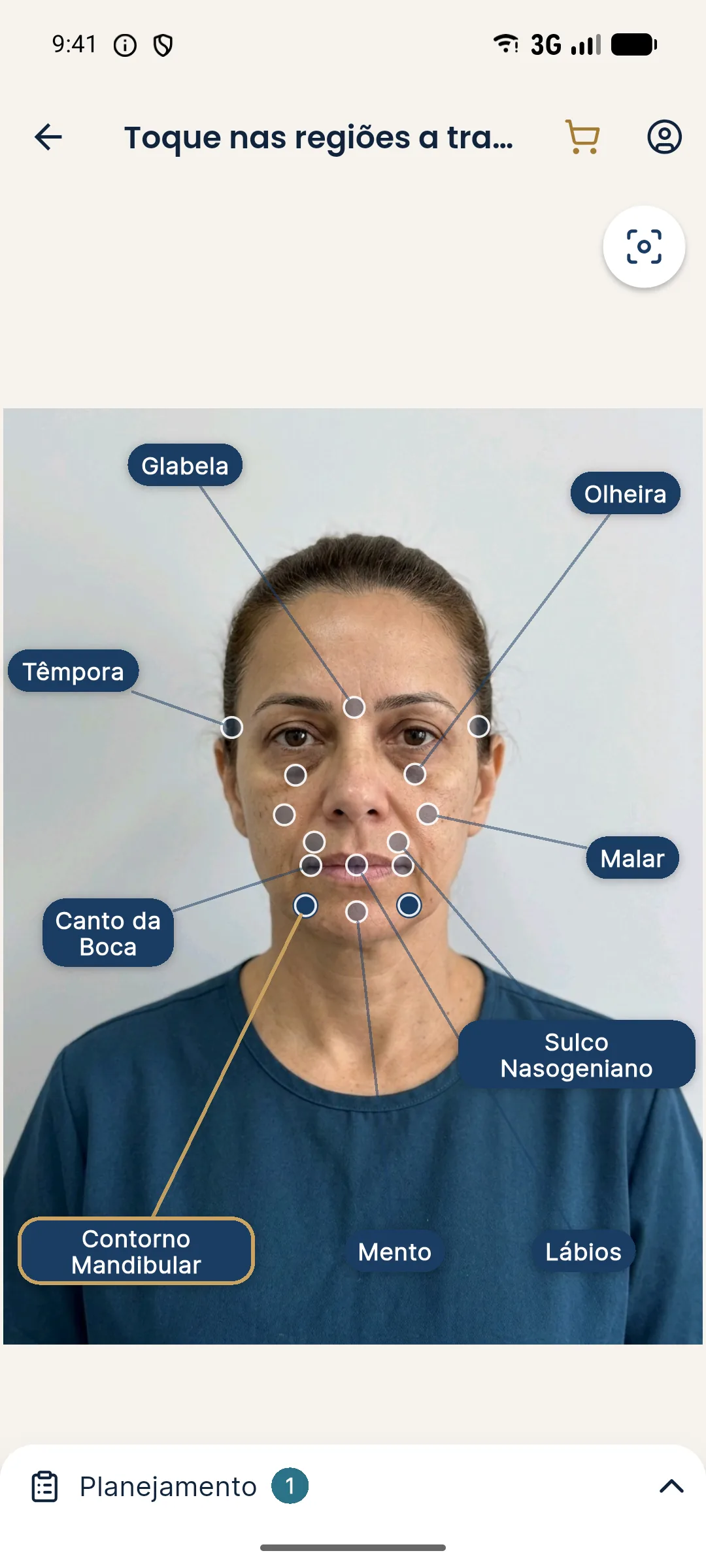
In Harmy, the contour is the Jawline point, with 0.5 to 5 ml in 0.5 ml steps. The simulation on the front photo shows the effect of a discreet volume on the definition of the line, and is useful for the patient to see how the plan changes the contour in a restrained way. The app does not simulate ptosis, extra skin or the effect of threads, and it does not retouch skin.
Record keeping
Record the three photos, the pinch test, the dominant hypothesis and the agreed approach as a range. At follow-ups, repeat the standardization and compare. The history per patient keeps sessions organized, and standardized clinical photography ensures an honest comparison. When the plan goes beyond what facial harmonization delivers, referring clearly is part of the care.
Frequently asked questions
What is a jowl?
It is the buildup of tissue that descends at the side of the chin, at the transition between the cheek and the jaw, forming a "drooping cheek" over the contour. It appears with tissue descent and loss of support.
Are a sagging contour and a double chin the same thing?
No. Contour sagging involves loose tissue along the jawline; a double chin is buildup under the chin, which may be fat, skin or platysma. They often coexist, but call for different approaches.
Does jaw filler help a loose contour?
It can give support and definition in selected cases, but in very loose tissue volume alone has a limit and can weigh things down. The decision belongs to the licensed professional, after assessment.
Does a biostimulator improve the facial contour?
It can improve firmness and the quality of skin and tissue over time, in selected cases. The result is gradual and variable, and does not replace a facelift in significant sagging.
Harmy images are illustrative simulations generated by AI from the patient's photo to support the conversation between practitioner and patient. They are not a promise of results. Indication, technique, product and volume are solely the decision of the licensed practitioner. This content is for information only and does not replace a clinical assessment.