
Percentage Split of Volume Across the Plan's Areas
Quick facts
- Topic
- Splitting the total volume into percentages
- Use
- See proportion between areas, not set a dose
- Limit
- A percentage does not replace assessment
- Example
- Always hypothetical on this page
When a plan has five areas, each with its own ml, it is easy to lose sight of proportion. The cheekbone looks small at 2 ml, but if the total is 5 ml, it holds 40% of the plan. Thinking in percentages does not set a dose, but it shows how much of the plan sits in each place, and that helps you spot imbalances before the injection. This page proposes a model, with hypothetical examples, and the method's limits.
What is the percentage distribution for?
It serves three planning questions:
- Where am I concentrating the volume? An area that holds most of the plan deserves a clear justification.
- Does the plan reflect the concern? If the concern is the under-eye area and 60% of the plan is in the chin, there is a mismatch.
- How does this plan compare with another? Different totals compare better on a percentage basis.
It is not for deciding ml. Volume per area depends on anatomy, skin, product and concern. Usual ranges for each area are in ml per area: ranges in planning, and total per session in total volume per session: ranges.
How do you calculate it?
The math is simple: divide the area's ml by the plan total and multiply by 100. The example below is hypothetical and serves only to illustrate the reasoning.
| Area | Planned ml | Percentage of total |
|---|---|---|
| Cheekbone | 2.0 | 40% |
| Nasolabial fold | 1.0 | 20% |
| Chin | 1.0 | 20% |
| Lips | 0.5 | 10% |
| Under-eye area | 0.5 | 10% |
| Total | 5.0 | 100% |
In this hypothetical example, the cheekbone holds 40% of the plan, which suggests it is the plan's "structure," with the other areas as refinement. If the main concern were the lips, the plan would be poorly aligned with the concern.
How do you read the distribution?
Three patterns show up often.
- Concentrated plan. One area with more than half the total. It can be coherent if it is the concern and the plan's structure; it can be a sign of excess if it is just habit.
- Spread-out plan. Several areas with similar percentages. It addresses many concerns but calls for care with the total and with swelling.
- Cascading plan. A structural area (cheekbone, jaw) with a high percentage and refinement areas (lips, fold, under-eye) with lower ones.
The "structure before detail" logic appears in structure before detail in the facial harmonization plan and prioritization in prioritizing by visual impact in the plan and prioritizing by risk in the plan.
What does the percentage not tell you?
It says nothing about risk. An area with 10% of the plan, such as the under-eye area, may be the one with the highest vascular risk. It also says nothing about individual response: two patients with the same percentage in the cheekbone will have different results. And it does not account for age, skin, body type or sex, which change what each area needs. See volume by body type in planning and volume by sex in planning.
How do you use it with the syringe and the session?
The percentage connects with logistics: how many syringes, in how many sessions, at what interval. Planning in syringe multiples has its own logic, in planning ml in syringe multiples, and splitting the total into stages, in when to split the volume across sessions. In a two-session plan, the percentage distribution can be done per stage: what goes in first and what goes in later.
What about Harmy?
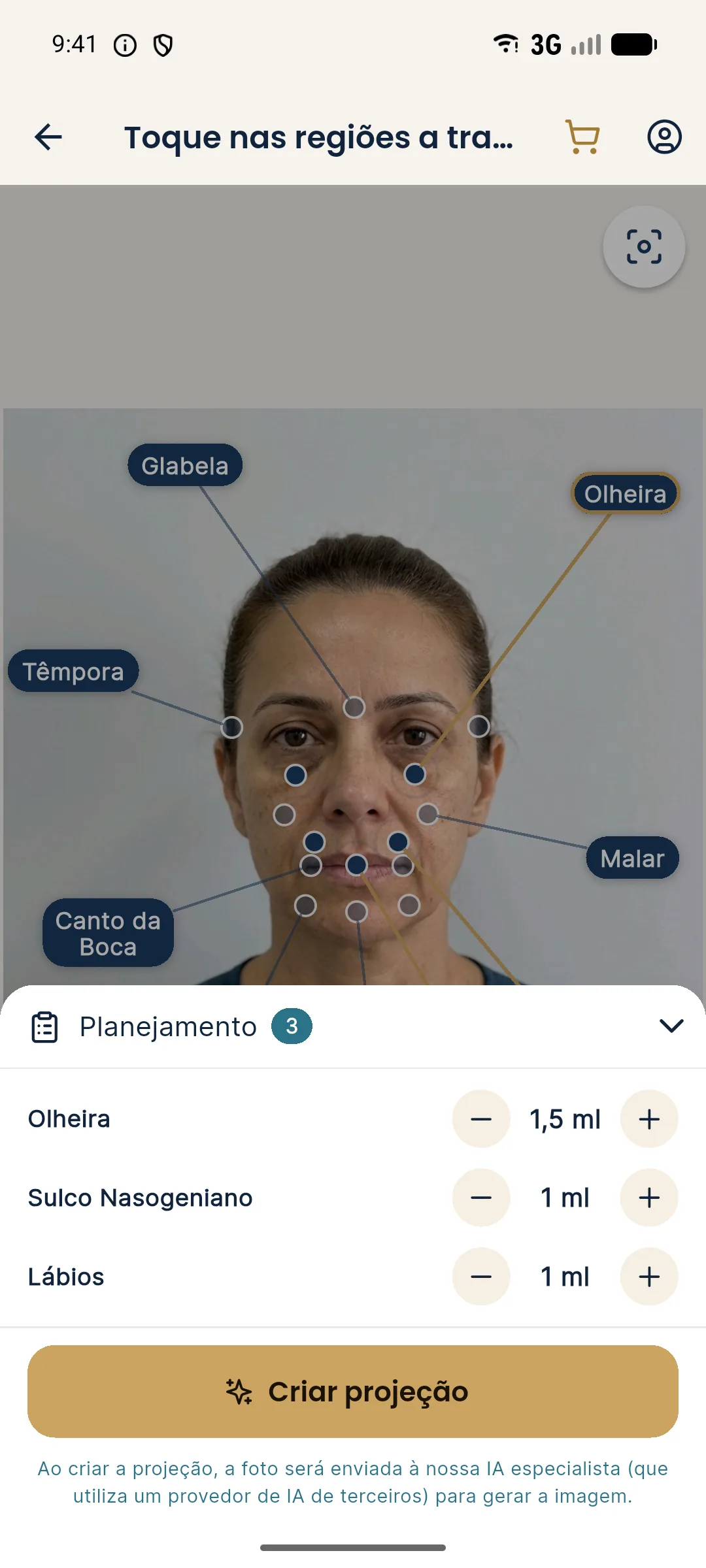
In Harmy, ml per area is entered in steps of 0.5 ml, from 0.5 to 5 ml, and intensity is set per area. The app does not calculate percentages, but the "Show procedures" option displays each area's ml over the After image, which helps talk with the patient about proportion. The plan's total ml comes from the quote, which uses the price per ml of each area.
For the link between plan and quote, see linking plan and quote in facial harmonization and building a quote per ml in Harmy.
When should you drop the percentage method?
Percentages help while the plan has few areas and comparable totals. They lose value in three situations:
- Very small plans. With 1 ml in total, 50% is 0.5 ml, and the number says nothing. In that case, look at absolute ml.
- Areas of different natures. Comparing toxin volume (in units) with filler volume (in ml) on the same basis makes no sense.
- Plans with different products. Each product has its own characteristics, and adding ml of different products mixes things that cannot be compared.
When that happens, use another way of reading: priority order, risk per area or cost per stage. The percentage method is one magnifier among several, and none replaces the in-person exam.
One more note on communication: showing percentages to the patient can sound like an "ideal number." Prefer to use them internally, in planning, and talk to the patient in terms of areas and priorities. If the patient asks for the numbers, explain that they are only an organizing tool.
Finally, keep the planned distribution in the patient record, next to the distribution actually done. The difference between the two shows where the plan was adjusted during the session and why, which is valuable information for later decisions. See recording plan deviations during the session.
Summary
A percentage is a lens for seeing the plan's proportion, not a dose. Use it to check consistency with the concern, compare plans and spot concentration. Always calculate with the real ml, do not copy proportions from other cases and remember that risk does not follow the percentage. All volumes and techniques are at the discretion of the qualified professional, in line with the rules of their professional board in Brazil.
Frequently asked questions
Is there an ideal percentage distribution of volume in the face?
No. Each face has its own concern, anatomy and skin. The percentage serves to visualize the plan's proportion, not as a target to hit.
What is thinking in percentages good for?
To notice whether one area concentrates too much volume relative to the others and to compare plans with different totals on the same basis.
Should the plan keep the same percentages at every session?
Not necessarily. The proportion changes with priority, the patient's response and reassessment.
Does Harmy calculate the percentage distribution?
No. Harmy takes the ml per area and generates the projection. You do the percentage math, and the app shows each area's ml under Show procedures.
Harmy images are illustrative simulations generated by AI from the patient's photo to support the conversation between practitioner and patient. They are not a promise of results. Indication, technique, product and volume are solely the decision of the licensed practitioner. This content is for information only and does not replace a clinical assessment.