
Planning ml in Multiples of a Sealed Syringe
Quick facts
- Problem
- The ideal ml per area rarely matches the syringe volume
- Risk
- Injecting extra just so nothing is left over, or charging for ml that was not used
- Rule of thumb
- Volume follows the clinical indication; the syringe adapts to the plan, not the other way around
- Record
- Note the planned ml, the ml used and what happened to the leftover
Anyone who works with fillers knows the scene: the plan calls for 1.5 ml in the cheekbone, 1 ml in the lips and 0.5 ml in the chin. That adds up to 3 ml, but the product comes in fixed-volume syringes. There is either too much or too little. The temptation to adjust the plan to finish the syringe is human and commercially understandable, and it is one of the shortest roads to excess volume.
This page covers how to think about the planned ml against the reality of the syringe: what to do with the leftover, how to quote without distorting the indication, and how to record it.
Why does the plan not fill the syringe?
The plan comes from the assessment: each area gets the amount that anatomy and the concern call for. The packaging, on the other hand, comes from the manufacturer's logistics. The two logics do not talk to each other. As a result, four typical situations come up:
| Situation | Hypothetical example | Risk |
|---|---|---|
| Small leftover | 1.8 ml plan with a 2 ml syringe | Temptation to inject the rest |
| Large leftover | 1.2 ml plan with a 2 ml syringe | Waste or price pressure |
| Small shortfall | 2.2 ml plan with a 2 ml syringe | Opening another syringe for very little |
| Large shortfall | 3.5 ml plan with two 2 ml syringes | Injecting extra to make up the difference |
Hypothetical example: if the plan adds up to 2.8 ml and you use two 2 ml syringes, 1.2 ml is left over. That does not mean the patient needs 4 ml.
How do you decide the volume without being guided by the packaging?
Follow a decision order that protects the indication:
- Set the ml per area from the assessment, without looking at the syringe. The page ml per area: ranges in planning helps with calibration.
- Add up the total and see how far it is from the nearest syringe multiple.
- If the leftover is small, keep the plan. The leftover is an operating cost, not a reason to inject more.
- If the leftover is large, check whether another area has a real indication and has already been discussed with the patient. If not, do not invent one.
- If you are slightly short, consider splitting into two sessions instead of opening another syringe for very little.
- Record the planned ml and the ml used, and the reason for the difference, if any.
What about storing the leftover?
Reusing the contents of an opened syringe on another day or on another patient is a regulated health matter, and also tied to safety. The rule is to follow the product's package insert and the applicable health regulations, and not to improvise. In any case, do not use the same product on two different patients. If in doubt, check the manufacturer's guidance and your local health authority. For the materials context, see syringes and needles in facial harmonization.
How do you quote without distorting?
The billing model influences behavior. Each one carries a bias:
| Model | Advantage | Bias to watch |
|---|---|---|
| Per syringe | Simple to explain | Encourages "finishing" the syringe |
| Per ml | Proportional to use | The patient may feel they pay for every drop |
| Per area | Predictable | Hides the variation in volume |
| Per plan | Easy to compare | Hard to explain what changes if the plan changes |
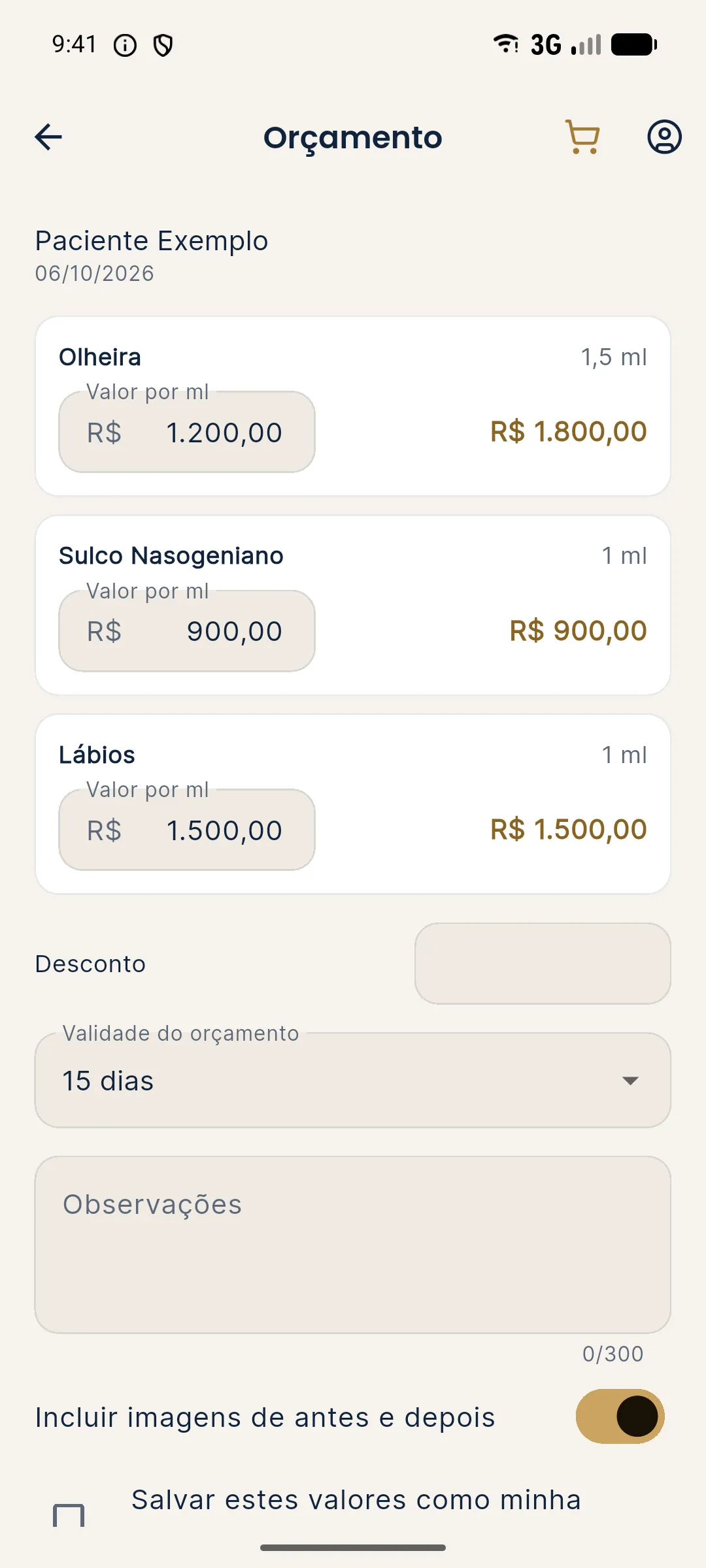
Each model has its defenders; the point is not which is best, but that the patient understands what they are buying and that the quote does not pressure the volume. The in-depth discussion is in pricing per ml and quote per ml or per area.
What should you tell the patient?
Be transparent about the logic. The patient accepts the explanation that "the product comes in fixed volumes" well when they see that the volume injected is not being inflated because of it.
How do you record it?
A simple record avoids future disputes and gives a basis for an audit. Ideally it includes:
- planned ml per area;
- ml actually used per area;
- lot number and expiration date of the product (traceability);
- justification for any difference;
- guidance given to the patient.
See the topic in planned ml vs used ml and what to include in the written treatment plan.
When is it fine to raise the volume a little?
If, during injection, the tissue response calls for a bit more or less, the professional can adjust within what was agreed and with clinical judgment. What is not acceptable is letting the leftover make the decision. When the variation is significant, explain it to the patient and record it. Leftovers are part of the business; excess is not.
How do you handle price pressure?
In many clinics, the cost of the product is high and the leftover hurts. That pain is real, but it is not the patient's. There are three honest ways to reduce waste without compromising the indication: organize the schedule so that product needs are predictable (always respecting the health rules on use per patient), choose presentations whose volume is close to typical use, and price the ml so that it includes the average cost of leftovers.
The third path is the most transparent. If the per-ml price already builds in the average loss, you do not need to "top up" the syringe to balance the books. The patient pays for the ml they use and you absorb the leftover in a predictable way.
What to do when the patient asks "what about the rest?"
The question is legitimate. Answer clearly: the volume injected is the planned one; the package has a fixed volume; the rest is discarded or handled according to health regulations, and does not go to another patient. If the quote is per ml, the patient pays for what was used; if it is per syringe or per area, they know that from the start. Have a sentence ready instead of improvising on the spot.
When does the leftover point to a poorly calibrated plan?
If the leftover is always large or you are always short, review your estimates. Compare planned ml with used ml across several cases. A systematic bias, up or down, is valuable information for correcting your own planning pattern.
Frequently asked questions
Can I inject the rest of the syringe just to avoid waste?
That is not a good criterion. Volume should follow the clinical indication and what the patient agreed to. Injecting extra to use up the product raises the risk of excess.
Can I save the leftover from an opened syringe for another session?
The rules for use, storage and reuse depend on the product, the package insert and the health regulations in force. Follow the manufacturer's and the health authority's guidance, which are the benchmark.
How do I charge when the plan does not add up to a full syringe?
The model must be clear in the quote and agreed beforehand. It can be per syringe, per ml or per area, and the patient must understand what they are paying for. See the page on pricing per ml.
Is planning in ml exact?
It is an estimate. The final volume depends on how the tissue responds at the time of injection and is set by the professional during the procedure.
Harmy images are illustrative simulations generated by AI from the patient's photo to support the conversation between practitioner and patient. They are not a promise of results. Indication, technique, product and volume are solely the decision of the licensed practitioner. This content is for information only and does not replace a clinical assessment.