
What to Include in a Written Facial Harmonization Treatment Plan

Quick facts
- Topic
- Structure of the plan document given to the patient
- Goal
- Give the patient clarity and the professional protection
- Core items
- Concern, areas, volumes, risks, alternatives, costs, follow-up and acknowledgment
- Caution
- The written plan is not an informed consent form or a promise of results
The written treatment plan is the document the patient takes home. It is what they reread once the excitement fades, what they show a partner or family, and, if something goes wrong, what everyone will read closely. A well-written plan makes the patient feel safer, protects the professional more and keeps the relationship transparent. A vague plan, or one full of promises, does the opposite.
This page proposes a structure for a written plan: what to include, in what order, in what language, what to leave out and where Harmy fits. It is not a legal document, and the final wording should be reviewed by your attorney and follow the rules of your professional board. For the internal record of the plan, see facial treatment plan form: fields.
What is the difference between a plan, a quote and a consent form?
Three documents are often confused. Each has its own role.
| Document | What it is for | What it contains |
|---|---|---|
| Treatment plan | Explain what was assessed and proposed | Concern, areas, expected volumes, risks, alternatives, follow-up |
| Quote | Provide prices and terms | Price per area or ml, discount, installments, validity |
| Informed consent form | Record that the patient was informed and agrees | Risks, alternatives, photo authorization, signature |
The plan can come with the quote or separately. The consent form is what legally protects the patient's decision, and informed consent follows the rules of your professional board (in Brazil, CFM, CFO, CFBM or COFEN, depending on the profession). See patient approval of the plan and consent and LGPD for photos.
What items should the written plan include?
A clear structure helps you avoid forgetting anything and keeps the format consistent across patients.
Order matters. Start with the patient and the concern, because they need to recognize themselves in the document. Then the assessment and the proposals, followed by risks, alternatives, costs and acknowledgment. A plan that opens with price and areas reads like a catalog.
How do you write without promising results?
The plan describes what you propose to assess and how. Use verbs such as "assess", "balance", "observe" and "discuss", not "eliminate", "guarantee" or "transform". For each area, write the goal in observable terms along with the caveat that results vary. The reasoning is in observable goals in a facial harmonization plan.
It also helps to write numbers as estimates: "expected volume of up to X ml, to be set during the procedure according to the tissue response". This keeps the ml from becoming a commitment. The difference between planned and used is covered in planned ml vs used ml.
How do you handle risks and alternatives?
Risks must be written in language the patient understands. Listing technical terms is not enough. Include the general risks (swelling, bruising, pain, asymmetry, the need for adjustments) and those specific to the proposed areas, such as vascular risk in areas like the glabella, temples, tear trough and nasolabial fold, where vascular occlusion is possible. State that hyaluronidase is used when needed in the case of hyaluronic acid, and that there is a plan for complications.
Alternatives are part of it too: treating at another time, treating another area, taking a different route or not treating. Writing that "not treating" is a legitimate option shows respect for the patient's decision and lends the plan credibility. See safety and complications in facial harmonization and adjusting the plan based on patient feedback.
Where do images and Harmy fit?
If you attach the projection, label it as an illustration. In Harmy, the sharing image already comes with the clinic header and the simulation notice. The PDF quote includes the price per ml for each area, the discount, the validity in days, notes and, if you want, the images, with the clinic's name and logo.
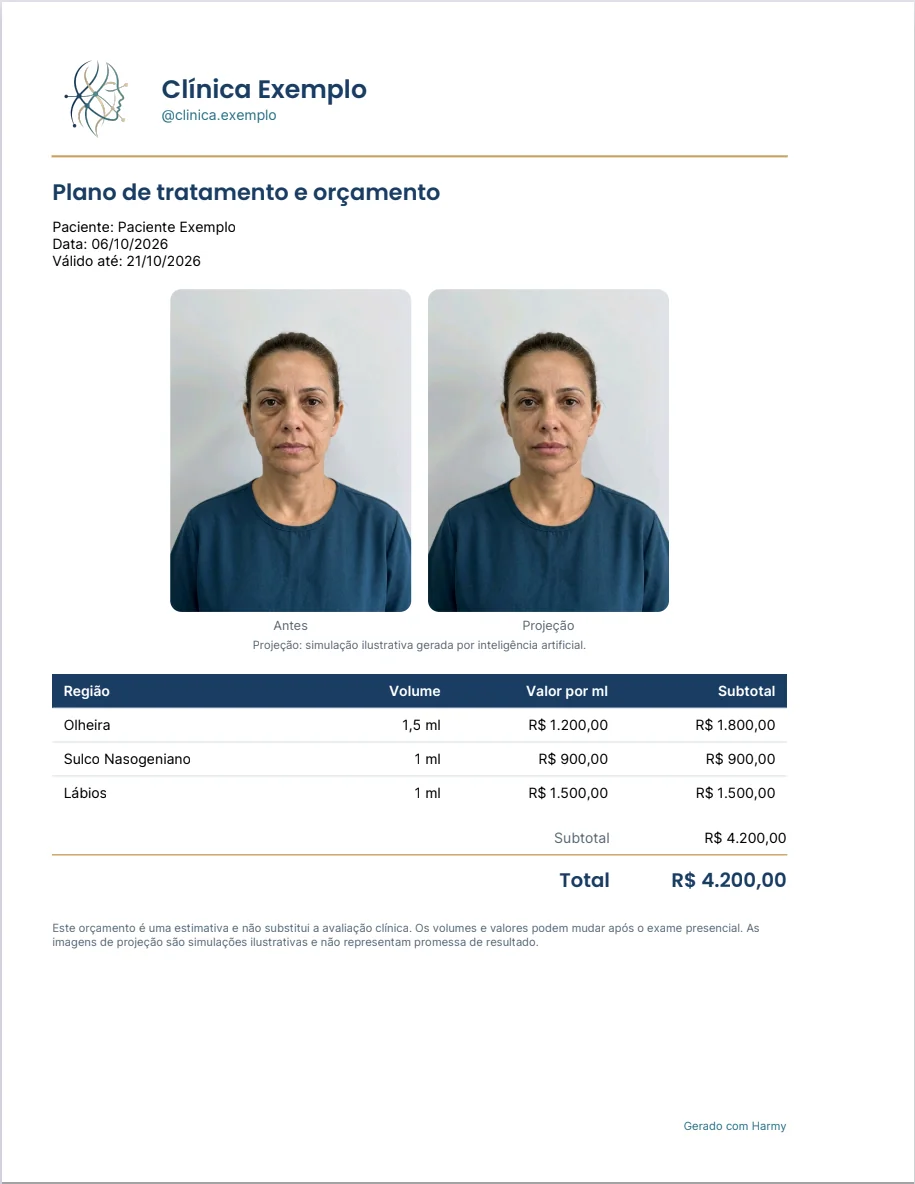
Remember that patient photos are sensitive personal data. Protect the file, restrict access and follow the LGPD (Brazil's data protection law). When using images in advertising, never present the projection as if it were a result.
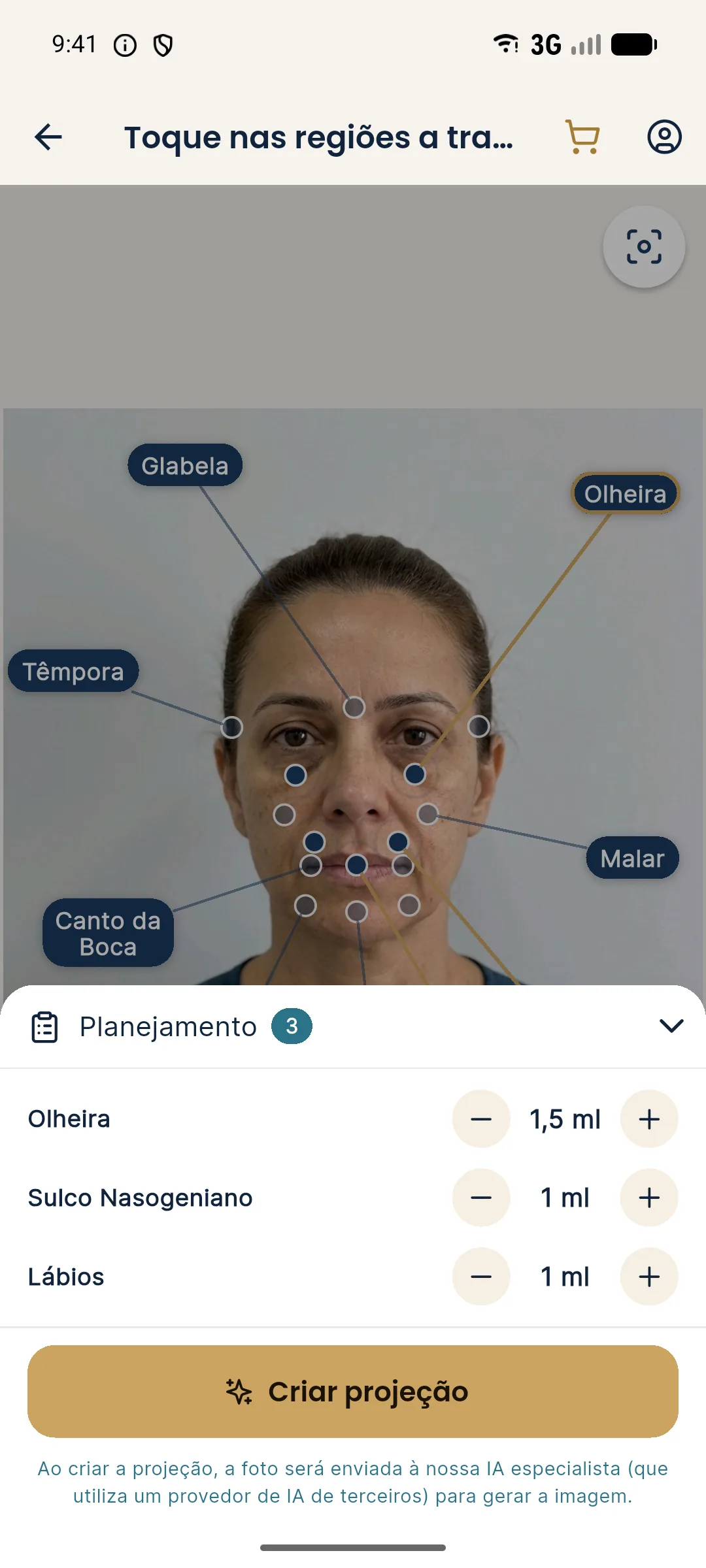
Every decision on the plan, product, volume and technique belongs to the qualified professional, in line with the rules of their professional board. The simulation is illustrative.
Frequently asked questions
Does the written treatment plan replace the informed consent form?
No. The plan describes what was assessed and proposed, while the consent form records that the patient was informed and agrees. The two documents complement each other.
Should the plan state the expected result?
It should state the intent of the plan and the criterion for assessment, not a promise of results. Use assessment verbs and say that results vary.
Do I need to include risks in the written plan?
Yes, in clear language: general risks and those specific to the proposed areas, plus alternatives, including not treating.
Does the Harmy projection belong in the written plan?
It can be attached as an illustration, with a notice that it is an illustrative simulation and not a promise. It is not the plan itself.
Harmy images are illustrative simulations generated by AI from the patient's photo to support the conversation between practitioner and patient. They are not a promise of results. Indication, technique, product and volume are solely the decision of the licensed practitioner. This content is for information only and does not replace a clinical assessment.