
Volume by sex in HOF planning

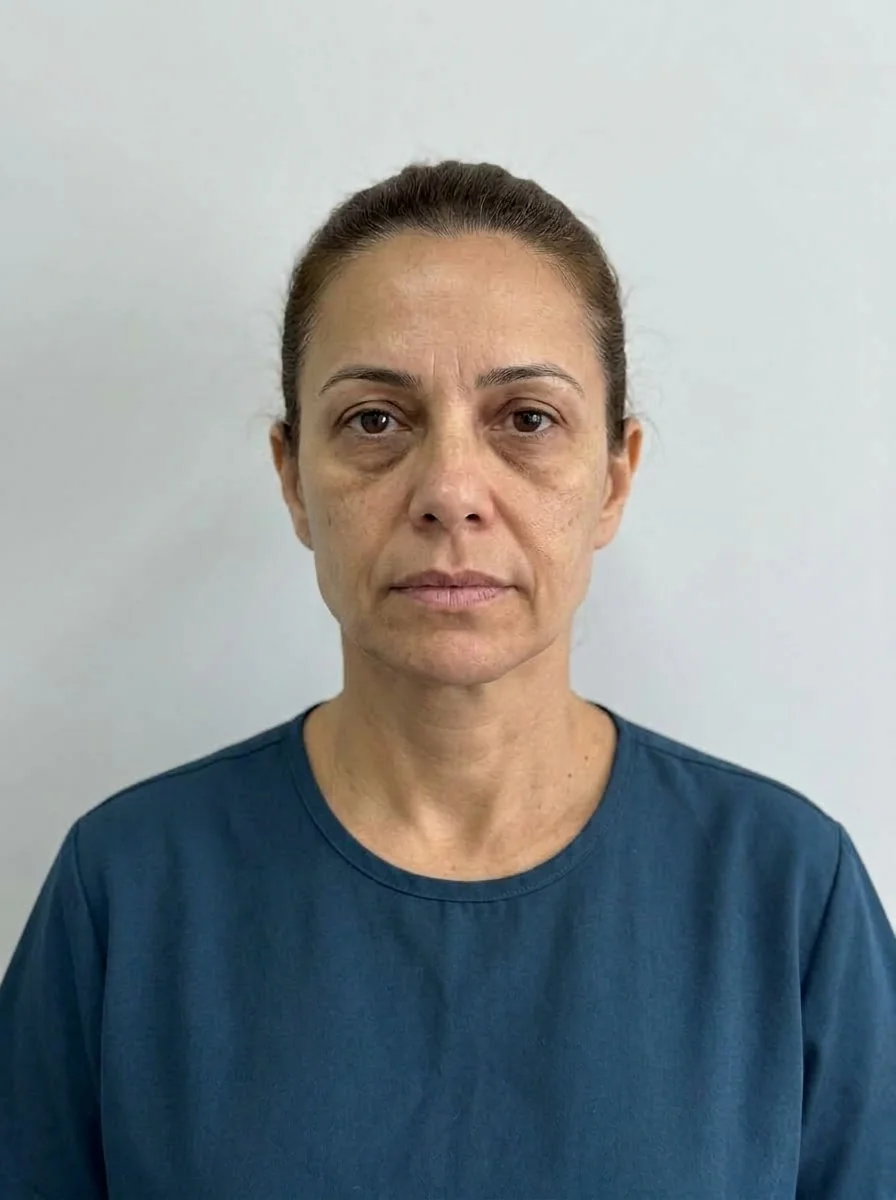 BeforeSimulation
Quick facts
- Core idea
- Proportion tendencies differ, but the patient's goal counts for more than the average
- Points that tend to vary
- Jaw, chin, eyebrow, cheekbone and lips
- Pitfall
- Applying a female or male standard without listening to the patient
- In Harmy
- Same flow for everyone, with ml and intensity adjusted by area
- Who decides
- Licensed professional, after assessment
Talking about "volume by sex" risks reproducing stereotypes: women have full lips and high cheekbones, men have a square jaw and a strong chin. In clinical practice, those tendencies exist as averages, but the face in front of you is almost never the average. What this page proposes is to use typical differences as questions for the exam, not as ready-made answers, always subordinate to the patient's goal. There is no dose table here, and product and volume decisions belong to the licensed professional.
Why do proportions tend to differ?
There are average structural differences between female and male faces: the jaw tends to be more defined in men, the forehead and brows tend to be more prominent, the chin tends to have more projection, and the skin, on average, is thicker. In women, the midface usually has softer curves and the lips tend to have more relative prominence. These tendencies influence what is usually perceived as balanced.
But they are averages, with enormous overlap. There are men with soft features, women with strong jaws and people whose gender identity does not match the sex assigned at birth. So the reasoning is: what does this patient want, and what does their face allow, before any average. See differences between female and male faces and facial identity: how to preserve it.
Where do the differences show up most in the plan?
| Area | Tendency discussed | Planning caution |
|---|---|---|
| Jaw | More defined and angular in men; softer in women | Avoid over-defining a contour the patient wants soft, and vice versa |
| Chin | More projected and wider in men | Look at the profile; avoid changing proportion without a clear goal |
| Cheekbone | High, soft curves are more valued in female faces; in men, more discreet support is usually preferred | Moderate projection, without widening the face |
| Lips | Many men ask for discreet filler | Low volume and attention to a natural look |
| Upper third | Straighter, lower brow in men; more arched in women | Caution with toxin that changes the position too much |
This table organizes questions, not norms. On every row, the decision depends on the patient and the exam. See also ideal chin projection by sex, ideal jaw angle by sex and plan to masculinize the face.
Does the volume range change by sex?
In general, what changes is not a fixed range of ml, but the distribution across areas and the aesthetic goal. A man seeking jaw and chin definition may concentrate the plan on the lower third; a woman seeking softness in the midface may concentrate it on the cheekbone and under-eye. But there are women who want a defined jaw and men who want a projected cheekbone. The rule is: ml comes from the exam and the goal, not from sex.
There is, however, a practical factor. The thicker skin and lower tolerance for a "done" look in many male patients tend to lead to more discreet plans, in stages, with low volume. This is a preference tendency, not a clinical rule. For the logic of ranges and distribution, see ml by area: ranges in planning and percentage distribution of volume across areas.
How to avoid involuntary feminization or masculinization?
This is the most common practical risk. Volume in the cheekbone and lips can feminize a male face without the patient wanting it. Volume in the jaw and chin can masculinize a female face. In both cases, the patient did not ask for the change in how the face reads, and the result can cause dissatisfaction even if technically well executed.
Prevention is to talk about how the face will read in the end and use the simulation to check. When the goal is precisely to change that reading, as in facial feminization or masculinization plans, the conversation is different, and the specific pages offer guidance: plan to masculinize the face, HOF plan for trans women and HOF plan for trans men.
How does Harmy's simulation help?
In Harmy, the flow is the same for everyone: one frontal photo, marking the areas, the ml and the intensity (Subtle, Moderate or Pronounced). The AI respects the volume and changes only what was marked. This lets you check, with the patient, whether the final reading of the face is heading in the desired direction. For example, when simulating the jawline on a female face, the patient may realize the change is more obvious than they imagined.
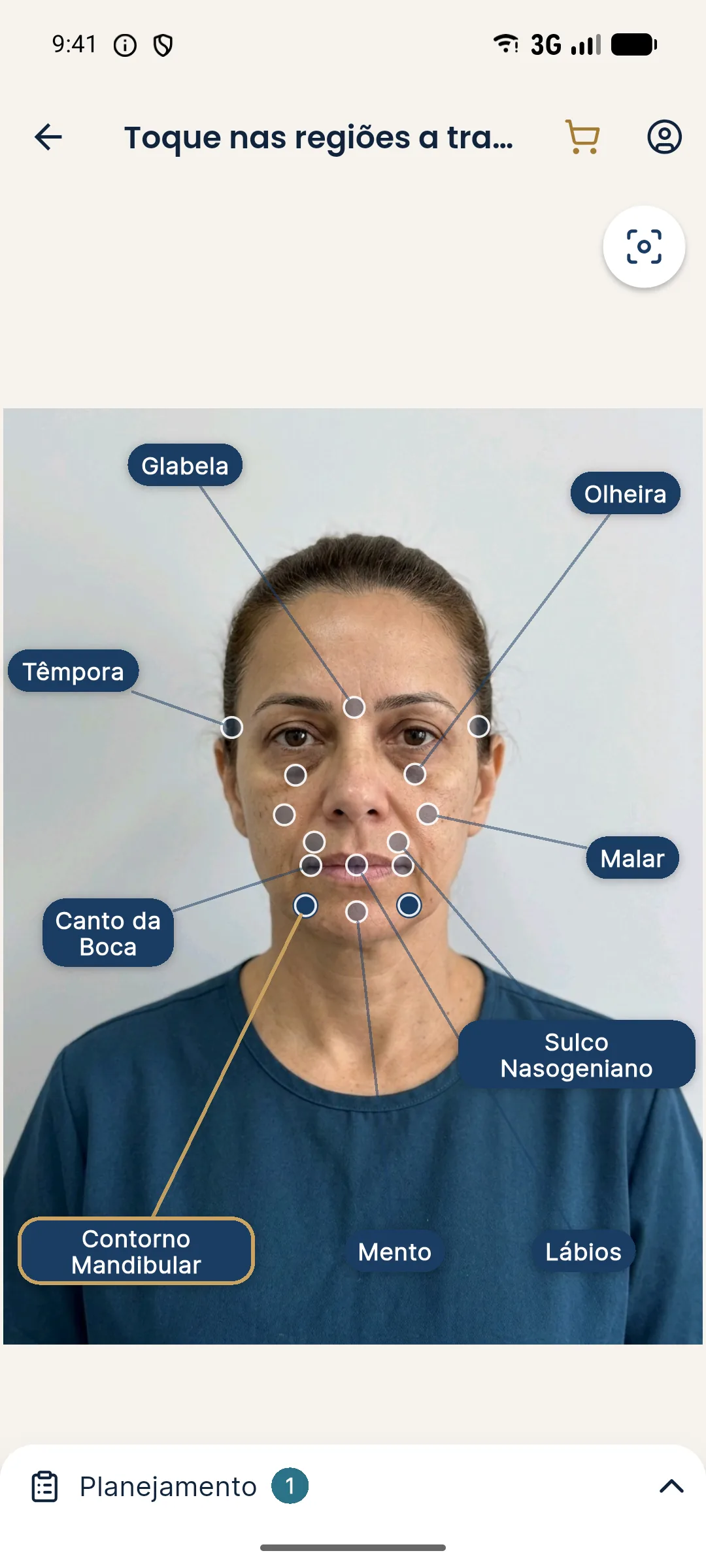
A good use is to generate two projections with different ml distributions and ask which looks more like what the patient wants. For bilateral areas, the ml is the total, split between the two sides. The limitation is the usual one: frontal photo, no profile, no bone structure and no real tissue response. See limits of 2D simulation.
Risks that do not change with sex
The risks of filler are the same for everyone: swelling, bruising, asymmetry, nodules and, rarely and seriously, vascular occlusion. Higher vascular risk areas (glabella, nasolabial fold, temples, nose, tear trough) require their own planning. When hyaluronic acid is used, hyaluronidase must be available on site. Patients with dense beard deserve attention to skin preparation, and patients with oilier skin to complication prevention. Review safety and complications, overview.
How to talk to the patient?
This line avoids imposing a standard and makes room for the patient to say what they want. If they bring a reference photo, talk about what in the photo appeals to them (the jaw, the gaze, the smile) instead of copying the whole face.
Checklist before planning
Quick review
Summary
Proportion differences between female and male faces serve as questions for the exam, not as ready-made answers. Start from the patient's goal, look after the final reading of the face, begin conservatively and use Harmy's simulation to check direction, always as an illustration from a frontal photo.
Frequently asked questions
Is HOF planning different for men and women?
There are proportion tendencies that differ, such as the jaw and chin, but the plan starts from the patient's goal and the exam of the face, not from a fixed standard by sex.
Do men use less volume?
There is no rule. Some areas may call for different approaches, and many men prefer a discreet result, but that is preference, not a norm.
Can I apply a female standard for someone who asks for feminization?
The patient's goal guides, and the plan should preserve identity and respect what they want to change and keep. See the pages on plans for trans patients.
Does Harmy have a male or female mode?
No. The flow is the same for everyone: frontal photo, marking the areas, ml and intensity. The professional is the one who interprets the proportions.
Harmy images are illustrative simulations generated by AI from the patient's photo to support the conversation between practitioner and patient. They are not a promise of results. Indication, technique, product and volume are solely the decision of the licensed practitioner. This content is for information only and does not replace a clinical assessment.