
Drooping eyebrow tail: assessing the lateral third

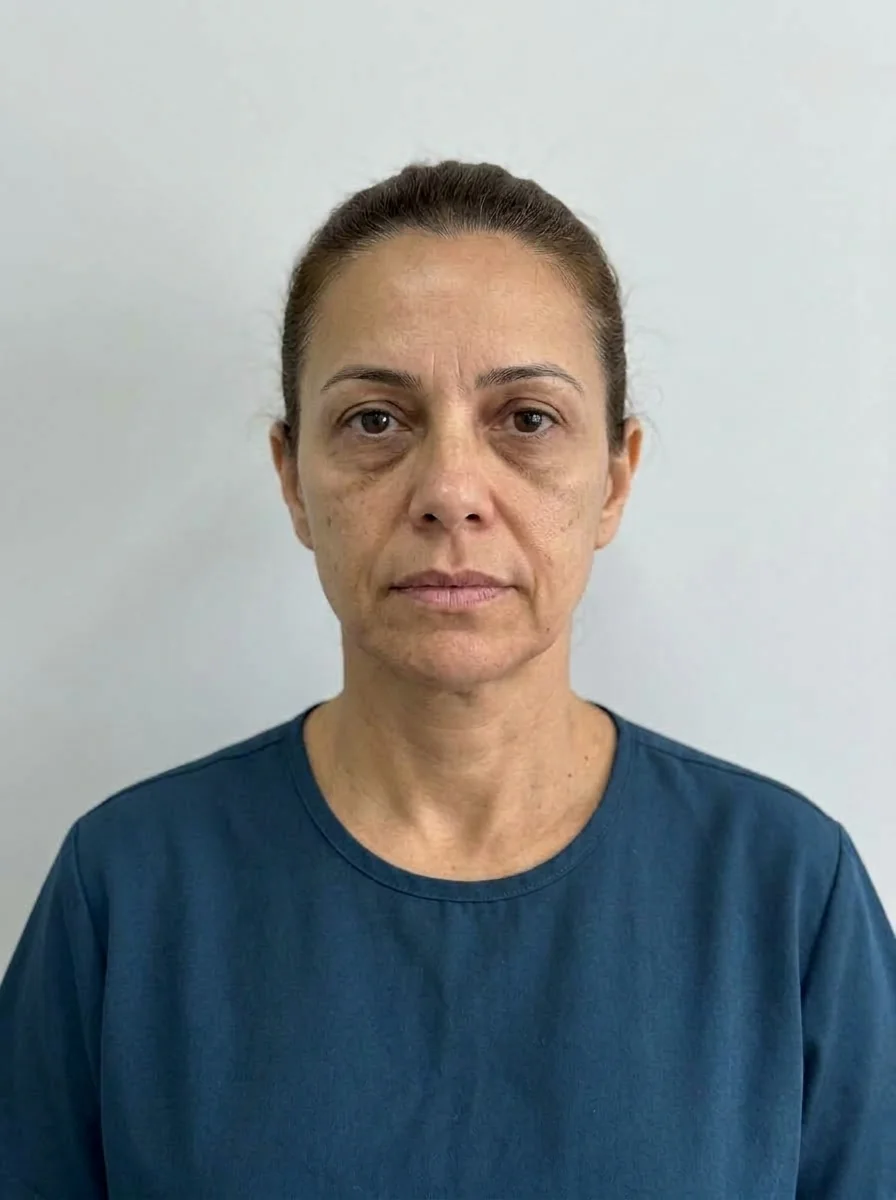 BeforeSimulation
- Muscle
- Highlighted area
Quick facts
- Concern
- The outer end of the eyebrow droops and gives a tired or sad look
- Structures involved
- Frontalis (lifts), lateral orbicularis (lowers), temple (supports) and skin
- Useful test
- Gently lift the tail with a finger and see how the gaze changes
- Caution
- Area of vascular risk; lifting too much produces a surprised expression
The eyebrow tail plays a disproportionate role in how the face reads. When it droops, the eye looks smaller, the outer corner tilts downward, and the expression takes on a tired, sad or aged look. The patient rarely talks about the "lateral third of the eyebrow". They say: "my eyes look droopy" or "I have extra eyelid".
This page focuses on that specific area and its relationship with the temple and nearby muscles. The goal is to know when harmonization helps, when it needs extra care and when it is time to think about surgery.
Why the tail drops first
The eyebrow does not drop uniformly. The lateral third is the most vulnerable for anatomical reasons:
- The frontalis does not reach there. The frontalis muscle lifts the brow, but its fibers sit more in the central and middle forehead. The lateral part has less lifting support.
- The orbicularis pulls down. The lateral portion of the orbicularis oculi muscle pulls the tail toward the corner of the eye.
- The temple loses support. Hollowing of the temporal region removes the bony and soft tissue support that kept the tail in place. See hollow temples and aging of the temples.
- Skin and ligaments give way. The retaining ligaments stretch, and skin hangs over the eyelid.
That is why the face that "tires" usually starts at the corner. See also low eyebrows and drooping outer eye corner.
How to assess the lateral third
The assessment needs two views: the still face and the face in motion.
Compare both sides too, because the droop is rarely symmetric. See asymmetric eyebrows and gaze tilt and lateral corner.
What harmonization offers
The options are modest and targeted. In all of them, the rule is to aim for the minimum effective.
Toxin in the lateral orbicularis and the brow. In some patients, reducing the pull of the lateral orbicularis lets the tail sit a little higher. It is a subtle effect that depends on dose and anatomy. Used without judgment, it can cause ptosis or an artificial lift. See botulinum toxin in the eyebrow and botulinum toxin for crow's feet.
Temple filler. Temple filler can restore support to the lateral part, when the hollowing is evident. The area requires knowledge of the superficial temporal artery and the temporal planes, plus hyaluronidase on hand. See temples and eyebrow: combining in the plan and temple filler: risks.
Biostimulator and threads. The biostimulator in the temple and PDO threads in the brow can be considered in selected cases, with their own indications, risks and limits.
Surgery. With excess eyelid skin or significant ptosis, a surgical evaluation may be the honest recommendation. See blepharoplasty and concerns HOF does not solve.
Timeline of an approach
Between one step and the next, allow the time needed for swelling and the product's effect to settle. Deciding based on a transient image is the most common mistake in this area.
Risks
The lateral third of the eyebrow and the temple combine sensitive vascular and nerve structures. Toxin can cause ptosis, asymmetry and headache. Filler can cause swelling, bruising, irregularity and, more rarely, serious vascular complications, including visual impairment. Knowing the warning signs and keeping hyaluronidase at hand is mandatory. See visual complication after filler, vascular occlusion and complications with botulinum toxin.
How Harmy helps in this area
Harmy's Temple point simulates the volume of the temporal region in the frontal photo. The projection helps show the patient the effect of lateral replacement on the gaze, even though it does not simulate lifting the tail.
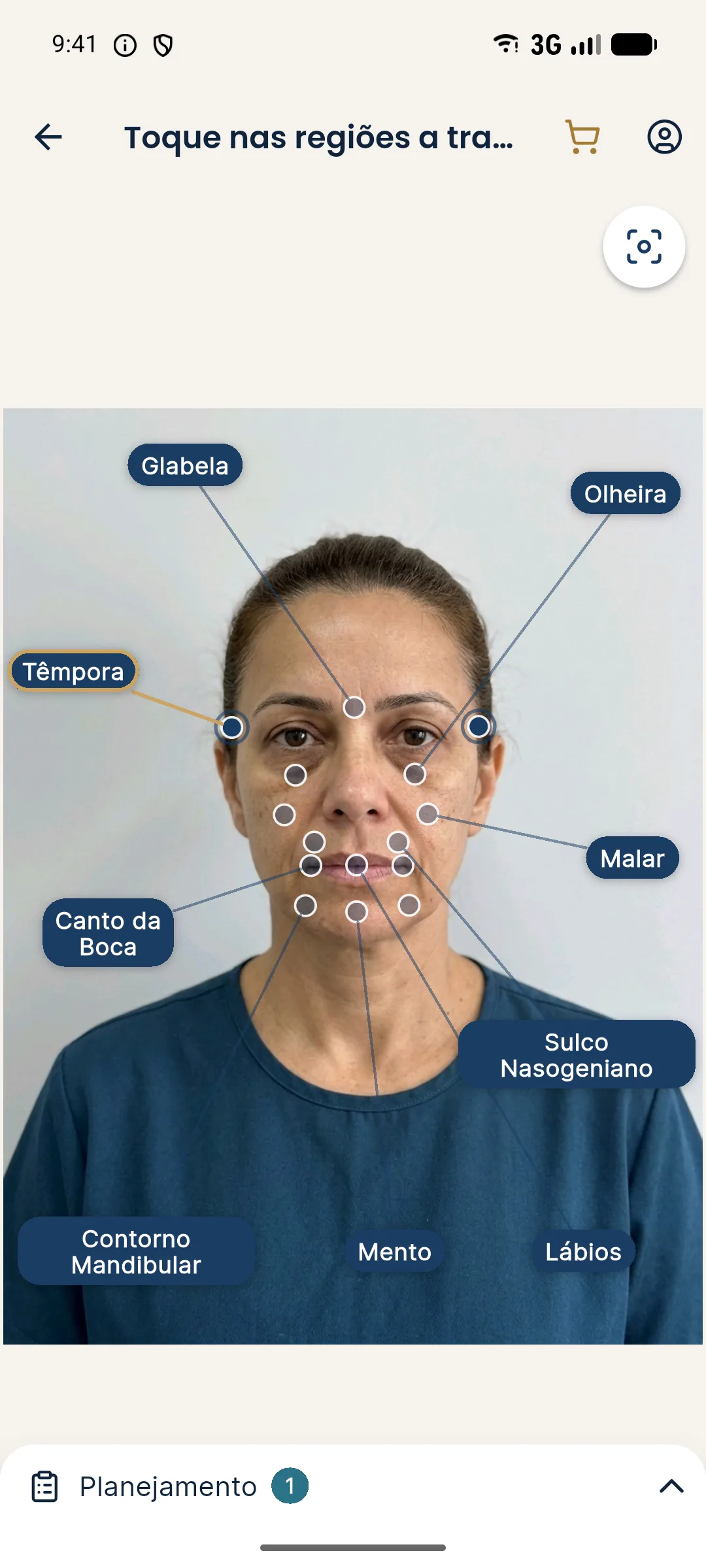
The comparison usually shows a subtle effect, which helps the patient have realistic expectations. If they expected a "lifted" look and see a discreet change, it is better that they find out on screen than after the procedure.
Record
Record the photos, the lift test, the staged plan and the surgery guidance, when applicable. Doses and volumes are at the discretion of the qualified professional, after assessment and in line with the rules of their professional council in Brazil.
Frequently asked questions
Why does the end of the eyebrow droop?
The tail loses frontalis support, is pulled by the orbicularis oculi and suffers from temple volume loss and skin descent. With age, these factors add up.
Does toxin lift the eyebrow tail?
In selected cases, relaxing the lateral orbicularis can let the tail sit slightly higher. It is a subtle effect, subject to individual variation.
Does filling the temple help?
When the temple is hollow, restoring volume can support the area and soften the tail's descent. It is a high vascular risk area and requires experience.
When is surgery the better option?
When there is excess eyelid skin or significant brow ptosis, a surgical evaluation may be more appropriate. Harmonization has limits in these cases.
Harmy images are illustrative simulations generated by AI from the patient's photo to support the conversation between practitioner and patient. They are not a promise of results. Indication, technique, product and volume are solely the decision of the licensed practitioner. This content is for information only and does not replace a clinical assessment.