
Concerns facial harmonization does not solve, and how to refer

Quick facts
- Concern
- Requests that injection, toxin, or threads do not deliver or that are not safe
- Key reading
- Recognizing the limit early protects the patient and your reputation
- Supporting measure
- List of referral situations and a record of the conversation
- Limit
- Saying no clearly and proposing the right path is part of the care
Recognizing what harmonization does not do is as important as knowing what it does. The patient arrives with an expectation, often shaped on social media, and it is up to you to separate what fits in a session from what calls for another professional. A well-delivered "no" avoids complications, dissatisfaction, and ethical problems.
The list below gathers concerns that fall outside the scope of orofacial harmonization (HOF), shows how to identify them, and suggests the referral path. It is not exhaustive, and the exact limit depends on the case and the rules of your professional council.
Why is saying "this isn't for me" a clinical act?
Every procedure carries risk, cost, and expectation. When the concern cannot be treated with injectables, injecting anyway creates risk without benefit, and the patient leaves with the bill and the problem. In addition, the dissatisfaction tends to fall on whoever injected, even if the limitation was predictable.
Stating the limit clearly is also a form of honest marketing. A patient who received a well-made referral usually remembers it and recommends you. The stance is described in how to say no to the patient in HOF and in saying a procedure is outside your competence.
Which concerns usually fall outside the scope?
| Concern | Why HOF does not solve it | Referral path |
|---|---|---|
| Excess skin on the face or neck | Volume and stimulation do not remove surplus tissue | Plastic surgery, for assessment |
| Bone deviation or significant skeletal asymmetry | Injection camouflages, it does not correct the base | Oral and maxillofacial surgery and orthodontics |
| Deep, open, or crossed bite with a functional complaint | The problem is occlusal | Orthodontics and jaw orthopedics |
| Nasal hump or functional septal deviation | Nonsurgical rhinoplasty disguises, it does not remove | Plastic surgery or otolaryngology |
| Active acne, rosacea, melasma, dermatitis | Skin condition in activity | Dermatology |
| Deep atrophic scar | May require specific techniques | Dermatology, with HOF as support |
| Hair loss, baldness | Outside the injectable area of the face | Dermatology or trichology |
| TMJ pain, severe bruxism | Functional origin | Specialized dentistry and physical therapy |
| Disproportionate dissatisfaction with their image | The origin may be psychological | Psychology and psychiatry |
| Facial paralysis or neurological sequela | Neurological cause | Neurology and rehabilitation |
The table is a guide, and each case has nuances. In several items HOF complements, and the approach is agreed with another professional, not replaced.
How do you recognize a patient asking for what HOF does not do?
Some requests are clear signals. Phrases like "I want to get rid of this double chin without surgery," "I want to slim my whole nose," "I want a jaw like that actor's," and "I want to get rid of all this sagging" indicate an expectation beyond what the technique delivers. The role of the consultation is to turn the request into a clinical question: what is causing this, and what can realistically change?
See the conversation on this topic in explaining what harmonization does not solve and the related concern pages, such as double chin even when thin, asymmetric jaw, and deep bite and recessed chin.
How do you refer without losing trust?
Referral is an act of care when it is done well. A few elements help:
- Explain the reason in plain language. "What bothers you comes from the bone, and the injection would only disguise it."
- Offer a concrete path. A name, a type of professional, or a suggested test.
- Show that you remain available. "When you come back from the evaluation, I can complement whatever makes sense."
- Record it. Note the concern, the reason, what was said, and the referral.
- Follow up. A contact after a few weeks shows interest and opens room for the return.
The detailed flow is in referring patients in HOF.
And when the patient insists?
It is a delicate moment. The patient may feel rejected, look for another professional, and come back with the request ready. A few approaches keep the relationship without giving in:
- Restate your position calmly, without repeating the argument in a confrontational tone.
- Propose a second opinion, preferably from a professional you respect.
- Offer a safe, smaller alternative, if one exists, such as a trial session.
- Explain that, if they go elsewhere, the risk and the limitation remain the same.
See also saying no to a patient who demands to do it today and patient who asks for a second opinion.
And the simulation in these cases?
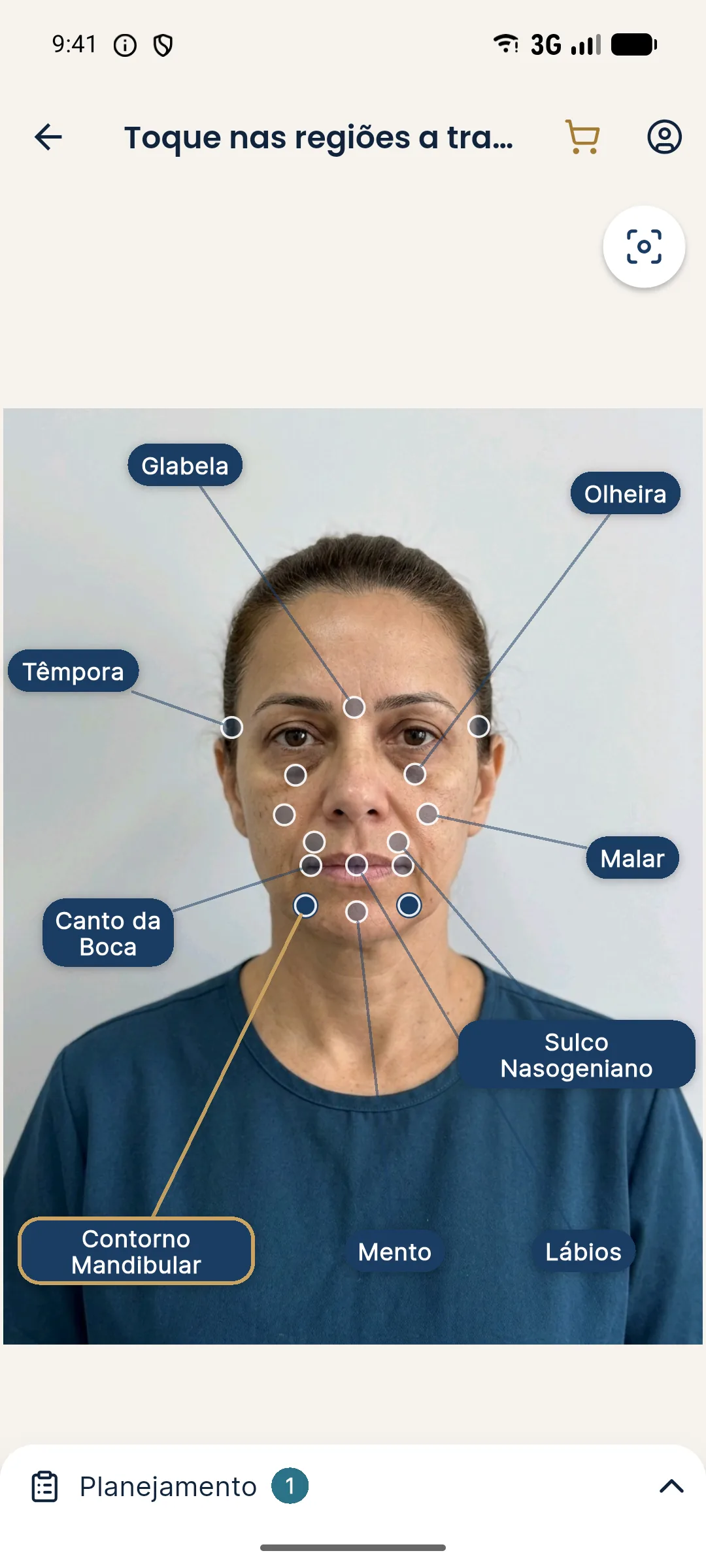
Do not use the projection to convince the patient to accept something you would not recommend. Harmy's simulation shows volume in marked areas, using only the front photo, and does not simulate skin removal, bone correction, or a change in bite. Using it for an out-of-scope concern creates an expectation the technique does not meet.
Records and protection
Always record declined or referred cases: concern, findings, guidance given, name or field of the suggested professional, and the patient's response. The record protects you if questioned and helps handle the return. The patient's photos and data follow the LGPD (Brazil's data protection law) and the rules in consent and LGPD for photos. For the broader limits, see when to say no to the aesthetic plan.
Frequently asked questions
What can orofacial harmonization not solve?
Excess skin, marked bone deviations, functional bite problems, active skin conditions, concerns of psychological origin, and structural corrections that require surgery. HOF can camouflage or complement, but it does not replace those treatments.
How do I refer without losing the patient?
By explaining the reason clearly, offering concrete names and paths, and arranging a follow-up. Patients usually value the professional who recognizes the limit.
Should I record it when I decline a procedure?
Yes. Note the concern, the reason for declining, and the suggested referral, as part of the patient record and according to the rules of your professional council.
What if the patient insists on the procedure I declined?
Hold your position, explain again and, if needed, point to another professional for a second opinion. Injecting against your own clinical judgment under pressure is not a safe path.
Harmy images are illustrative simulations generated by AI from the patient's photo to support the conversation between practitioner and patient. They are not a promise of results. Indication, technique, product and volume are solely the decision of the licensed practitioner. This content is for information only and does not replace a clinical assessment.