
Low eyebrows: causes and how to assess the gaze
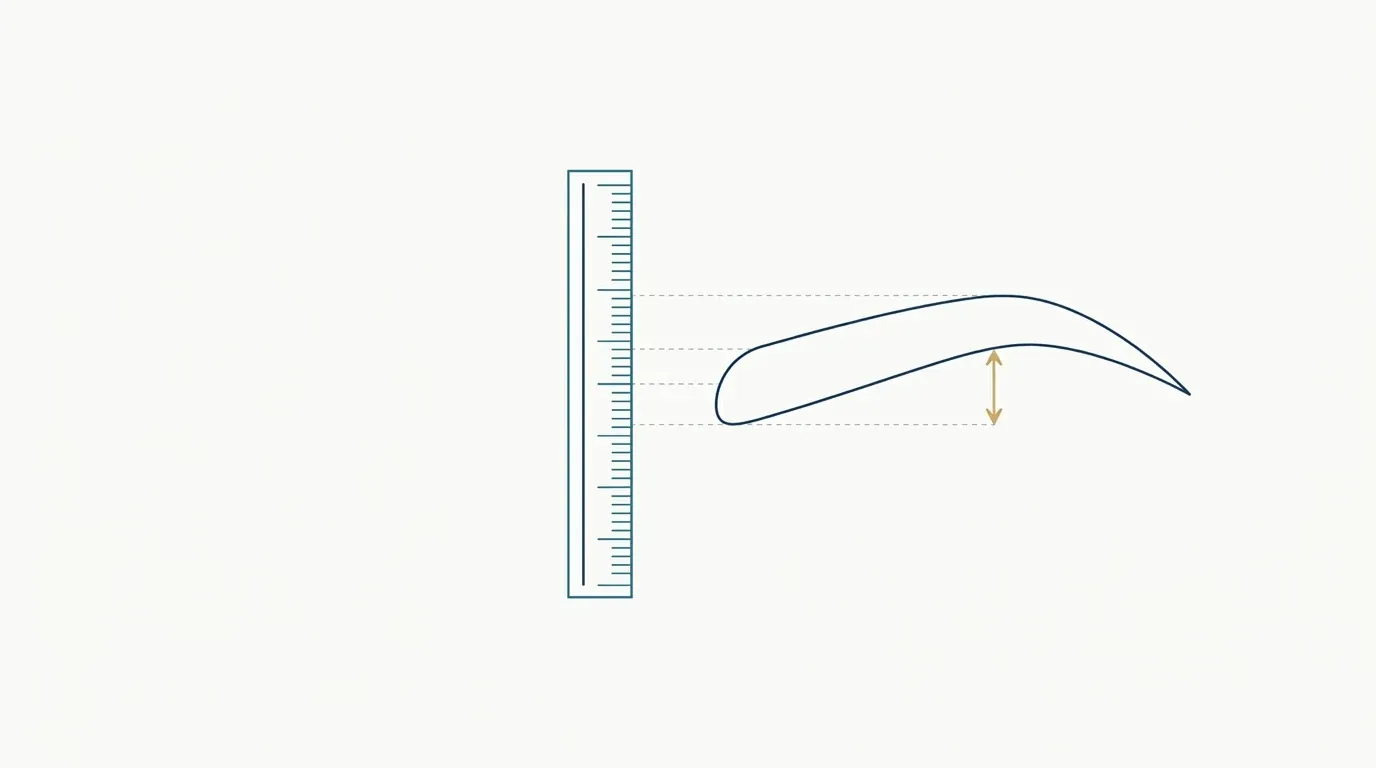
- Muscle
Quick facts
- Concern
- The eyebrows have dropped and the gaze looks heavy or closed
- Three components
- Brow position, excess eyelid skin and depressor strength
- Central question
- Is the problem the brow, the eyelid or both?
- Warning
- Toxin in the forehead without assessing the whole picture can worsen the heavy look
"My eyes look heavy." That is how many patients describe low eyebrows, without knowing that the problem may be in the brows, in the eyelid skin or in the dose of toxin they received. The brow drops over the years, skin gathers over the eye, and the face takes on a closed, tired or overly serious look.
The concern seems simple and is one of the trickiest in HOF, because the usual treatment for forehead lines can worsen the heavy look. This text presents the causes, how to examine, and how to sequence the plan without creating a new problem.
What low eyebrows are
Eyebrow position depends on a balance between forces that lift it and forces that lower it. The frontalis muscle is the only relevant elevator. The depressors include the corrugator, the procerus, the depressor supercilii and the orbital portion of the orbicularis. When the downward forces beat the upward ones, or when skin and tissues lose support, the brow drops.
The visual result is less space between the brow and the eye, a feeling of a small eyelid, and a need to lift the forehead to see well. See the reference position in ideal brow position in planning.
Most common causes
| Cause | How it shows | Note |
|---|---|---|
| Tissue aging | Gradual drop, more at the tail | See aging of the forehead and eyebrow |
| Overactive depressors | Furrowed glabella, brow pulled down | Responds to toxin in selected cases |
| Excess eyelid skin | Skin covers the upper lashes, heavy eyelid | May require surgery |
| True eyelid ptosis | The eyelid drops, not the brow | See eyelid ptosis |
| Toxin effect | Drop after application to the forehead | Temporary, tends to resolve |
| Constitution | Low, straight brow ridge since always | Barely modifiable |
The difference between brow ptosis and eyelid ptosis deserves attention, because the approach is different. In one, the brow is low. In the other, the brow is normal and the eyelid droops. See eyelid ptosis vs. brow ptosis.
How to assess the gaze
The exam should go beyond apparent rest and show what the patient does without noticing. The frontalis is often in constant contraction to compensate, and the "natural" position only appears when it relaxes.
Compensation deserves emphasis. Patients with low brows tend to have deep forehead lines, because the frontalis works all day. Silencing that muscle without an alternative support is the same as removing the prop. See deep forehead lines and heavy look after toxin.
What HOF can adjust
Toxin in the depressors. Relaxing the corrugator, procerus and medial part of the orbicularis can allow a slightly higher brow position, without touching the frontalis. It is the most used strategy when the cause is overactive depressors. See botulinum toxin in the glabellar complex and glabella and forehead: combining in the plan.
Preserve the frontalis. With a low brow, using lower doses or avoiding the central region of the frontalis can maintain the compensation. The decision is at the discretion of the qualified professional.
Lateral support. When the tail loses support, temple volume can be considered. See drooping eyebrow tail and temples and eyebrow: combining in the plan.
Threads and biostimulator. In selected cases, PDO threads in the brow and the collagen biostimulator can be considered, with their own indications, risks and limits.
Surgery. With significant excess skin or marked ptosis, blepharoplasty or surgical brow lifting may be the most appropriate alternative. Referring is not failing; it is doing the job of guiding honestly.
Decision timeline
Recording by area is what makes the second session better than the first. Without it, every cycle repeats the same bets.
Risks
The area is sensitive to errors in dose and injection point. The best-known risk is brow or eyelid ptosis, followed by asymmetry, headache and exaggerated lifting of the tail. With hyaluronic acid in the temples and glabella, vascular risk is added, including visual. Hyaluronidase must be available. See ptosis after botulinum toxin, diplopia after an HOF procedure and complications with botulinum toxin.
The role of eyelid skin in the conversation
Often, the patient attributes to the brow what belongs to the skin. Dermatochalasis, which is excess eyelid skin, is a frequent finding after 40 and changes the approach. It is worth showing this difference in the mirror: holding the eyelid skin back shows whether the gaze opens. When it does, no toxin injection will replace surgery. That honesty preserves the relationship and avoids the cycle of frustrated attempts.
How Harmy fits in
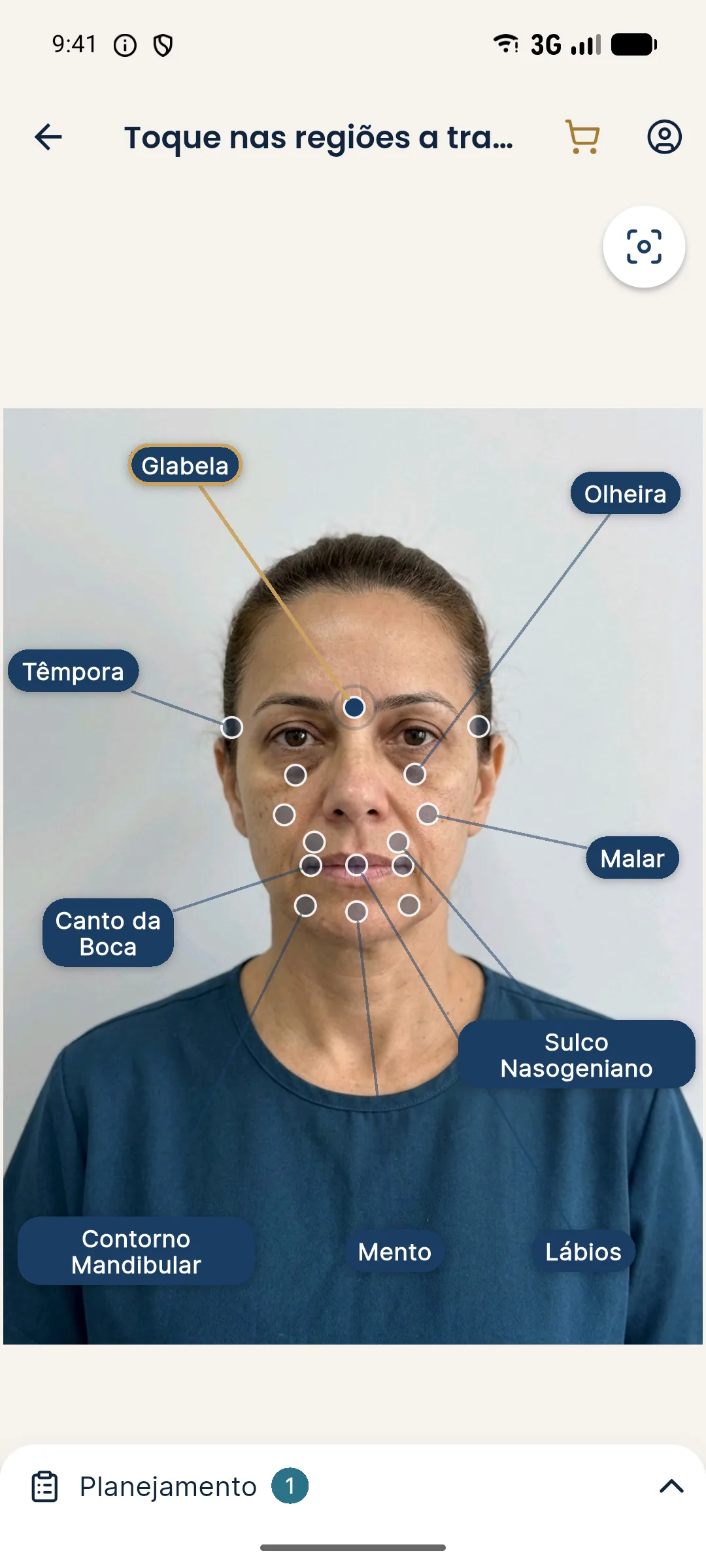
Harmy simulates volume in the marked areas. It does not simulate the brow dropping or lifting, the action of toxin or excess skin. The app's Glabella point serves to plan and quote the area, but the projection does not show the effect on brow position.
Record
Record the relaxation test, the measurements, the classification and the surgery guidance, when applicable. Doses and techniques are at the discretion of the qualified professional, after assessment and in line with the rules of their professional council in Brazil.
Frequently asked questions
What is the normal eyebrow position?
It varies with sex and face shape. In general, on a female face the brow tends to sit slightly above the orbital rim, and on a male face, closer to it. The assessment is individual.
Is a low brow the same as a droopy eyelid?
No. In brow ptosis, it is the brow that drops. In eyelid ptosis, it is the eyelid. They can coexist and be confused, and the exam tells the two apart.
Can toxin lift low eyebrows?
In some cases, relaxing the depressor muscles can let the brow sit slightly higher. The effect is modest, and the opposite, dropping, is also possible.
When is surgery indicated?
When there is significant excess skin or marked ptosis, a surgical evaluation may be the most appropriate option. Harmonization has limits in these cases.
Harmy images are illustrative simulations generated by AI from the patient's photo to support the conversation between practitioner and patient. They are not a promise of results. Indication, technique, product and volume are solely the decision of the licensed practitioner. This content is for information only and does not replace a clinical assessment.