
Glabella and Forehead: Combining in the Upper Third Plan

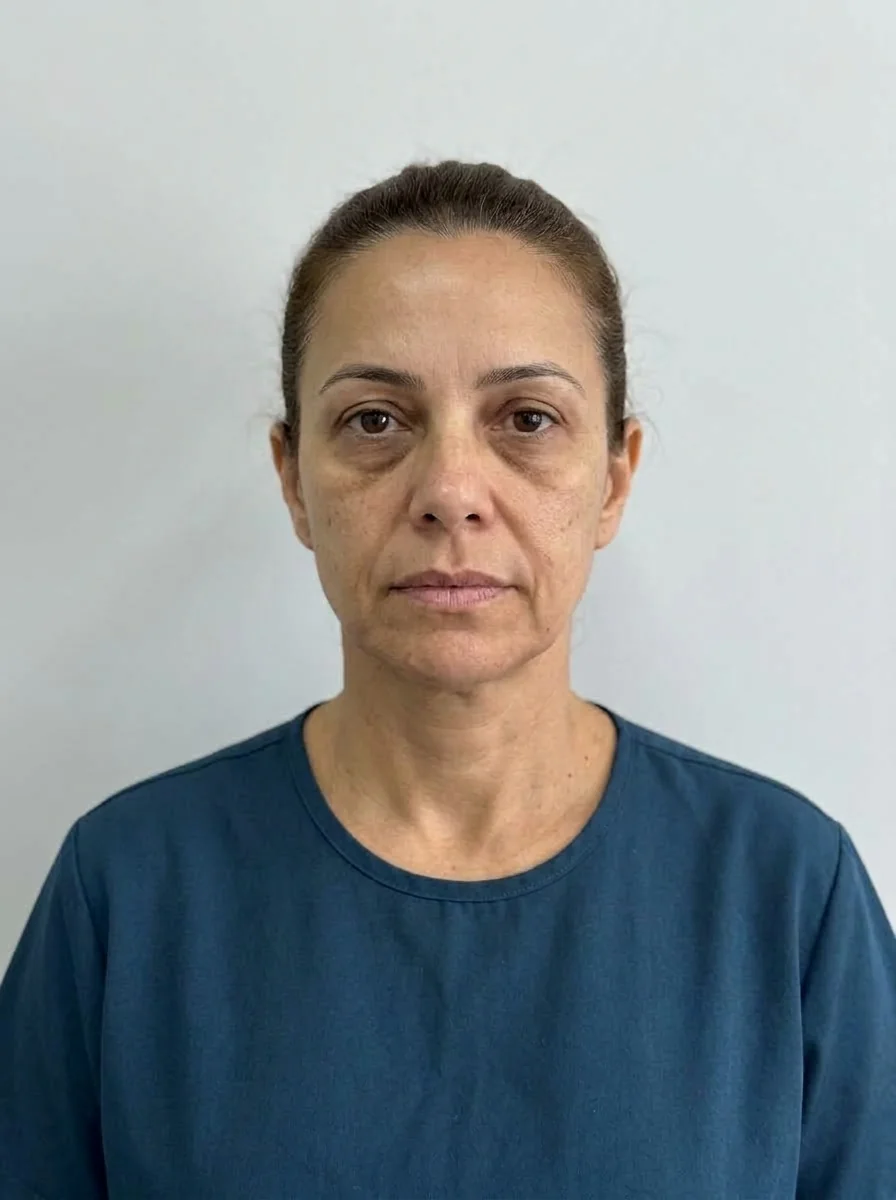 BeforeSimulation
- Muscle
- Highlighted area
Quick facts
- Core idea
- Glabella and forehead are antagonists: treating one without thinking about the other changes brow position
- Muscles
- The frontalis raises the brow; the corrugator, procerus and depressor supercilii lower it
- Risk
- Heavy brow or tired-looking eyes when the balance is lost
- Approach
- Assess brow position and dynamics before deciding
Anyone who looks closely at the upper third notices that the forehead and the glabella work like a seesaw. When one goes down, the other goes up. The frontalis muscle pulls the brow up; the glabellar complex pulls it down and toward the center. The expression of the eyes, which the patient recognizes as "just how I look," comes from the balance between these two sides.
That is why planning the glabella without looking at the forehead, or the forehead without looking at the glabella, is a mistake from the start. This page shows how to think about the two together, what to assess in the photo and the exam, and which precautions lower the risk of heavy-looking eyes or a lifeless expression. It is a planning discussion at review level, without an application protocol.
Why are they antagonists?
Anatomy explains it. The frontalis muscle is a brow elevator: when it contracts, it wrinkles the forehead and opens the eyes. On the other side, the corrugator, the procerus and the depressor supercilii pull the brow down and inward, forming the glabellar lines and the expression of anger or concentration.
| Group | Action | Line it forms |
|---|---|---|
| Frontalis | Raises the brow | Horizontal forehead lines |
| Corrugator | Draws the brow in and down | Vertical lines between the brows |
| Procerus | Lowers the medial region | Horizontal line at the nasal root |
| Depressor supercilii | Lowers the medial part of the brow | Weighs down the eyes |
This interplay of forces means that reducing one group shifts the balance of the other. Reducing the frontalis releases the brow, which may drop; reducing the glabella frees the frontalis, which may raise the brow more than before. The reasoning holds for any approach that changes muscle dynamics, and the outcome depends on the case, the professional and the assessment.
What to assess before deciding?
Assessment at rest and in motion is the starting point. It is worth looking at:
- Baseline brow position. High, medium or low, and the relationship with the brow ridge.
- Forehead dynamics. Does the patient rely heavily on the frontalis to keep the eyes open?
- Glabella dynamics. Are the lines deep at rest or only when frowning?
- Asymmetry. One brow higher, or one side of the frontalis more active.
- Eyelid and excess skin. Dermatochalasis or eyelid ptosis that the forehead compensates for.
- Forehead height and hairline. See forehead and hairline analysis in the plan.
The dynamic exam is in dynamic facial analysis in expression, and brow position is in ideal brow position in planning.
What can go wrong when the balance is lost?
The risks of not thinking about the two together have well-known names: the brow drops and the eyes look heavy; the brow rises too much and gives a surprised look; an irregular shape appears, such as the "Mephisto" brow; or the patient feels the forehead is heavy and expressionless. All are known complications of using toxin in the region, and the subject is covered in ptosis after botulinum toxin and in Mephisto sign.
It is also worth remembering that the glabella is a high vascular risk area. Filler in this area requires deep knowledge of the anatomy, and hyaluronidase should be available. The discussion is in glabellar vascular occlusion and in hyaluronic acid in the glabella.
How to think about the combined plan?
The reasoning, without a protocol, usually follows this logic:
- Identify what the patient wants to change. Lines between the brows? Forehead lines? Heavy-looking eyes?
- Find out what holds the eyes up today. If it depends on the frontalis, any reduction there has a cost.
- Think of the plan as a whole. If the glabella will be treated, the frontalis will be freer, and that goes into the calculation.
- Plan conservatively. In someone with a low brow or excess skin, it is more prudent to start subtle and reassess.
- Book the follow-up. Reassessment shows the real effect and allows adjustment.
The topic crosses with temples and brow: combining in the plan, because the brow is also related to the temple.
How does Harmy fit into this decision?
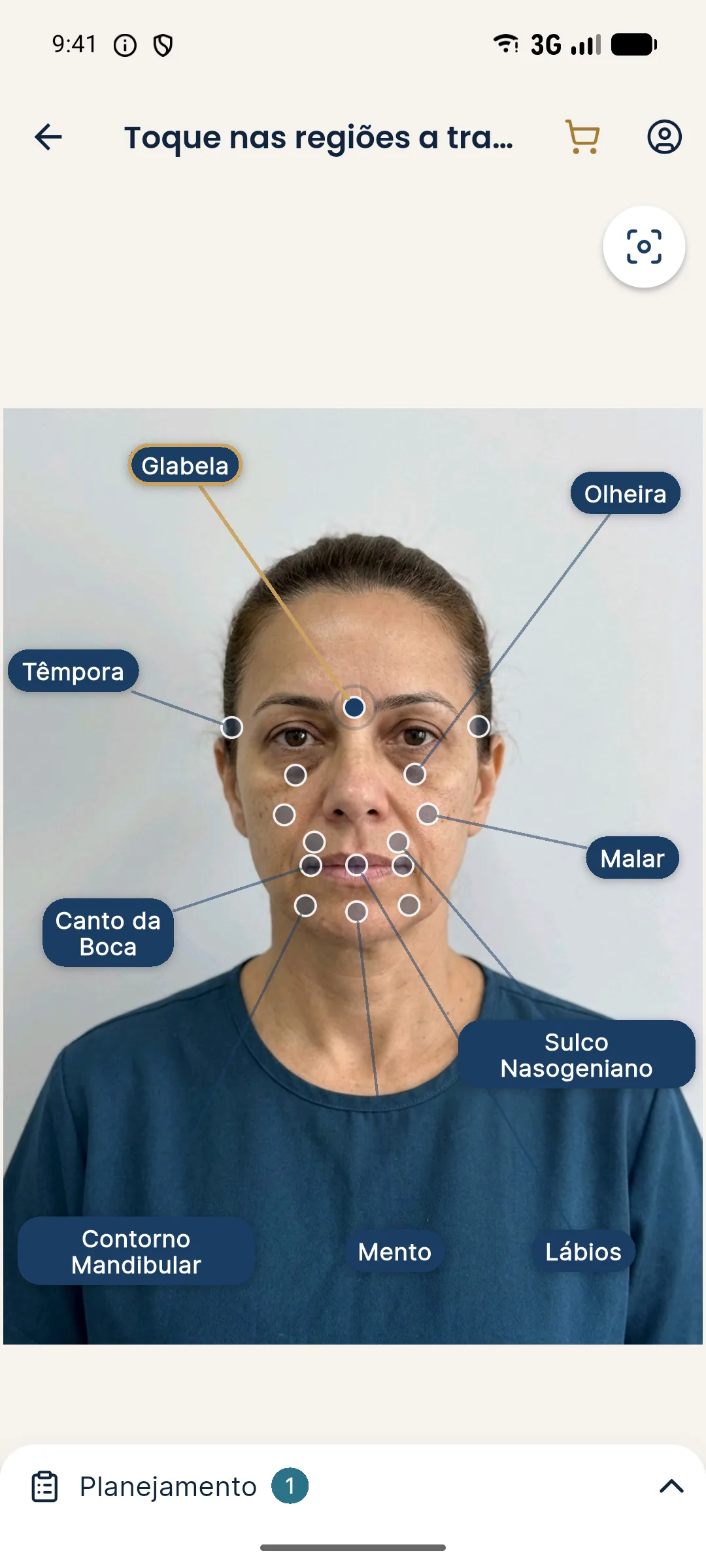
Use the projection to talk about the area and align expectations, and make it clear that the balance between forehead and glabella is a clinical assessment, not a visual one. For using the point in the app, see marking the glabella in Harmy.
How to explain to the patient that it is not "just injecting"?
Many patients ask for one area ("I want to get rid of my forehead lines") without imagining it talks to another. Explain with a simple image and propose assessing in motion, with the patient looking in the mirror. That reinforces care and prepares the patient for possible adjustments at the follow-up. The conversation about the forehead and glabella also appears in explaining the forehead to the patient and explaining the glabella to the patient.
Quiz: the upper third seesaw
Summary
- The frontalis raises the brow; the corrugator, procerus and depressor supercilii lower it.
- Moving one group changes the balance of the other.
- Assess brow position, dynamics, asymmetry and compensation by skin or eyelid.
- Plan conservatively in people who depend on the forehead to keep the eyes open.
- The glabella is a high vascular risk area: keep hyaluronidase available.
- Harmy simulates only the glabella, without representing muscle dynamics.
Frequently asked questions
Why should the glabella and forehead be planned together?
Because the forehead muscles raise the brow and the glabella muscles lower it. Treating one group without assessing the other can shift the brow and change how the eyes read.
Can treating only the forehead cause problems?
It can, in people who use the forehead to keep the brow lifted. Reducing that muscle without assessing the glabella and brow can cause a heavy feeling and tired-looking eyes.
Does the order of assessment matter?
Yes. First assess brow position and forehead dynamics at rest and in expression, then the glabella. The decision about what to treat belongs to the licensed professional.
Does the app simulate the glabella and forehead?
Harmy has the Glabella point. There is no separate point for the forehead, so the projection represents the effect on the glabella and not on the whole forehead.
Harmy images are illustrative simulations generated by AI from the patient's photo to support the conversation between practitioner and patient. They are not a promise of results. Indication, technique, product and volume are solely the decision of the licensed practitioner. This content is for information only and does not replace a clinical assessment.